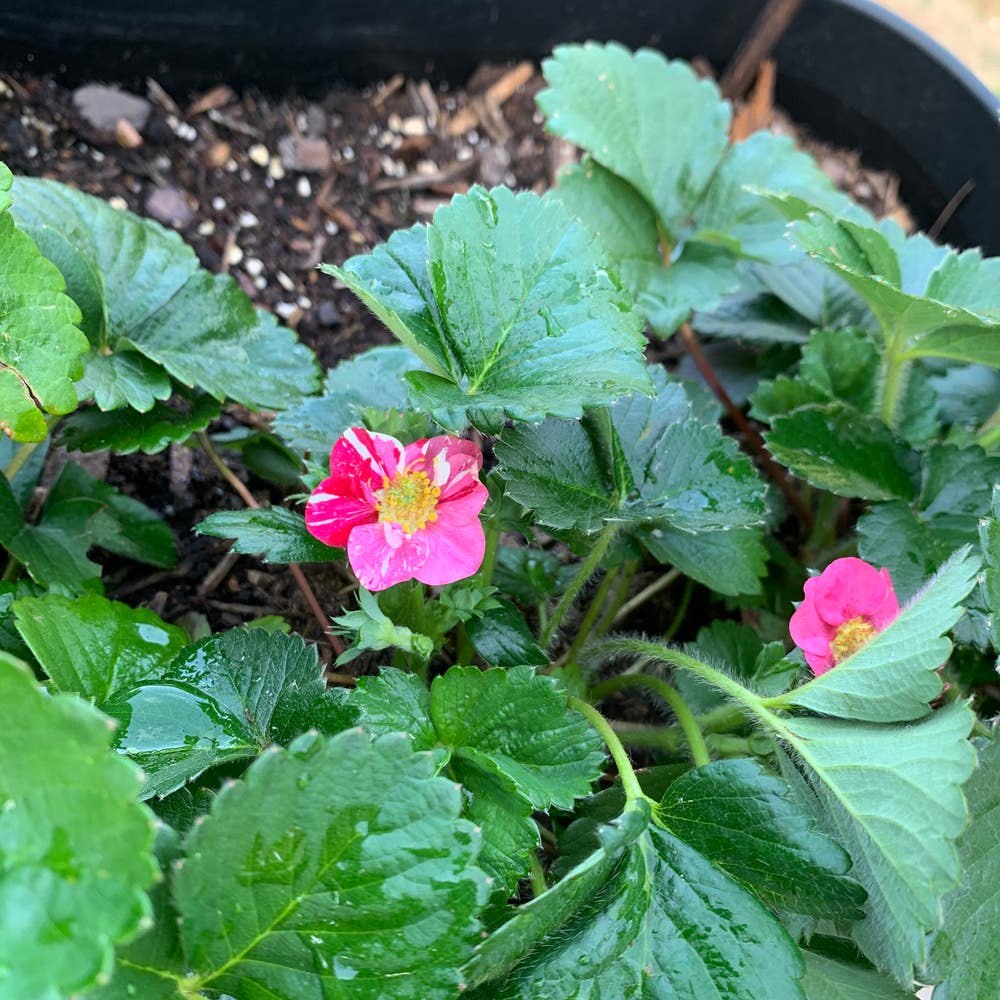
Why Are My Mock Strawberry Leaves Curling?
Potentilla indica
By the Greg Editorial Team
Jun 18, 2024•5 min read
This article was created with the help of AI so we can cover more plants for you. May contain errors. See one? Report it here.
- 🌱 Watering woes? Too much or too little can cause leaf curl.
- 🐛 Pests and diseases lead to curl; early detection and control are key.
- 🥄 Nutrient balance is crucial; deficiencies in boron or calcium can curl leaves.
Spotting the Curl: What Does It Look Like?
🍃 Visual Symptoms
Curling leaves on Mock Strawberries are a visual distress signal. They may exhibit tight spirals or take on distorted shapes that deviate from their natural form. Look for necrotic blotches, indicating dead tissue, which can accompany the curling. Discoloration is another symptom; leaves might shift from their healthy hue to paler greens, or even reds and purples.
🌀 Patterns of Distress
Patterns in leaf curling can be telling. Uniform curling across the plant may suggest environmental stressors or widespread nutrient deficiencies. Random curling could point to localized issues, such as pest infestations or disease. Pay attention to whether the curling is upwards or downwards, as this can hint at different underlying problems, like underwatering or overwatering, respectively.

Rooting Out the Culprits: Common Causes of Curling Leaves
💧 Thirsty Roots or Drenched Soils?
Watering can be a tricky balancing act. Too little and the roots of your Mock Strawberries will send up a distress signal via curled leaves. Too much, and you risk waterlogging the soil, suffocating the roots, and inviting curl-inducing rot.
🐜 Uninvited Guests: Pests
Keep an eye out for pests like spider mites and mealybugs. These tiny invaders are notorious for causing leaf curl in Mock Strawberries. Early detection is crucial; a good look under the leaves can save you a heap of trouble.
🦠 When Plants Get Sick: Diseases
Diseases such as leaf scorch and powdery mildew are silent assassins when it comes to leaf curl. Fungal infections thrive in certain conditions, and prevention often boils down to smart watering and sanitation practices, like removing affected leaves.
🌱 Hungry for Nutrients
Nutrient deficiencies, particularly a lack of boron or calcium, can lead to leaf curl. It's not always about the soil's nutrient content; sometimes it's about the plant's ability to absorb those nutrients, which circles back to proper watering.

Turning Over a New Leaf: Fixing the Curl
💧 Balancing the Watering Act
Overwatering and underwatering are the Goldilocks dilemma of plant care. Your Mock Strawberry wants its soil just right—moist, not soggy, nor bone-dry. Stick a finger in the soil; if it's parched two inches down, it's time to water. If it's a swamp, hold off. Adjust your routine with the seasons—plants guzzle more in the summer heat and sip less when indoor heating dries out the winter air.
🐜 Evicting Pests
Pests are uninvited guests with a taste for Mock Strawberry leaves. Aphids, spider mites, and slugs can turn leaves into their personal salad bar. Get up close and personal with your plant; if you spot tiny critters, it's eviction time. Insecticidal soap or neem oil can send them packing. For slugs, a beer trap is like a pub crawl they'll never crawl back from.
🤒 Healing the Sick: Disease Control
Diseases can make leaves curl faster than a bad hair day in humidity. Fungal foes like powdery mildew or leaf spot require a clear-cut strategy. Remove affected leaves and apply a fungicide—think of it as plant medicine. Keep the foliage dry and improve air circulation; it's like giving your plant room to breathe in a crowded elevator.
🌱 Feeding Your Plants Right
Nutrient deficiencies can leave Mock Strawberries feeling as underwhelmed as a diner at a salad bar missing the toppings. A balanced fertilizer is the sprinkle of cheese and croutons they crave. Go for a water-soluble type with equal parts nitrogen, phosphorus, and potassium. But don't overdo it—too much, and you'll need to flush the soil like a detox after a junk food binge.

Keeping Them Straight: Prevention Strategies
🌱 Consistent Care Routine
Establish a routine for watering and care that's as reliable as your morning alarm. It's not just about giving your Mock Strawberries a drink; it's about creating a rhythm they can dance to.
👀 Vigilant Plant Checks
Inspect your plants like you're looking for Waldo. Regular checks for pests, diseases, and other signs of distress are crucial. It's the difference between a thriving Mock Strawberry and one that's just pretending.
🌡️ Temperature and Humidity Monitoring
Be the boss of your plant's climate. Use a thermometer and hygrometer to ensure your Mock Strawberries aren't sweating it out or shivering in their boots.
🐜 Pests and Diseases: The Early Bird Special
Catch those pesky intruders early. If you spot something off, act fast—like you're swatting away a mosquito that's eyeing your arm.
📔 Keep a Plant Diary
Log your care routine like it's your plant's personal biography. Noticed a change? Write it down. It's like being a detective in your own garden.
💨 Airflow is Your Friend
Space your plants to let them breathe. Good airflow is like social distancing for plants—it keeps the bad stuff at bay.
💧 Water Wisely
Water carefully, as if your plants are wearing white sneakers that can't get dirty. Direct water to the roots and keep those leaves dry.
🚮 Debris-Free Zone
Keep it clean around your Mock Strawberries. Clear away fallen leaves and debris like you're tidying up before guests arrive—it prevents pests and diseases from crashing the party.
🌦️ Seasonal Adjustments
Rotate and adapt your care with the seasons. Less water in winter, more shade in summer—like changing your wardrobe to suit the weather.
🚫 Pest Patrol
If you spot pests, don't invite them to stay. Show them the door quickly, like unwelcome solicitors.
⚠️ Safety First
This content is for general information and may contain errors, omissions, or outdated details. It is not medical, veterinary advice, or an endorsement of therapeutic claims.
Always consult a qualified healthcare professional before using any plant as food, medicine, or supplement.
Never eat any plant (or feed one to pets) without confirming its identity with at least two trusted sources.
If you suspect poisoning, call Poison Control (800) 222-1222, the Pet Poison Helpline (800) 213-6680, or your local emergency service immediately.
Spotted an error? Please report it here.
Banish those curly Mock Strawberry woes with personalized care reminders 🍓 from Greg, ensuring your green friends thrive in perfect harmony.