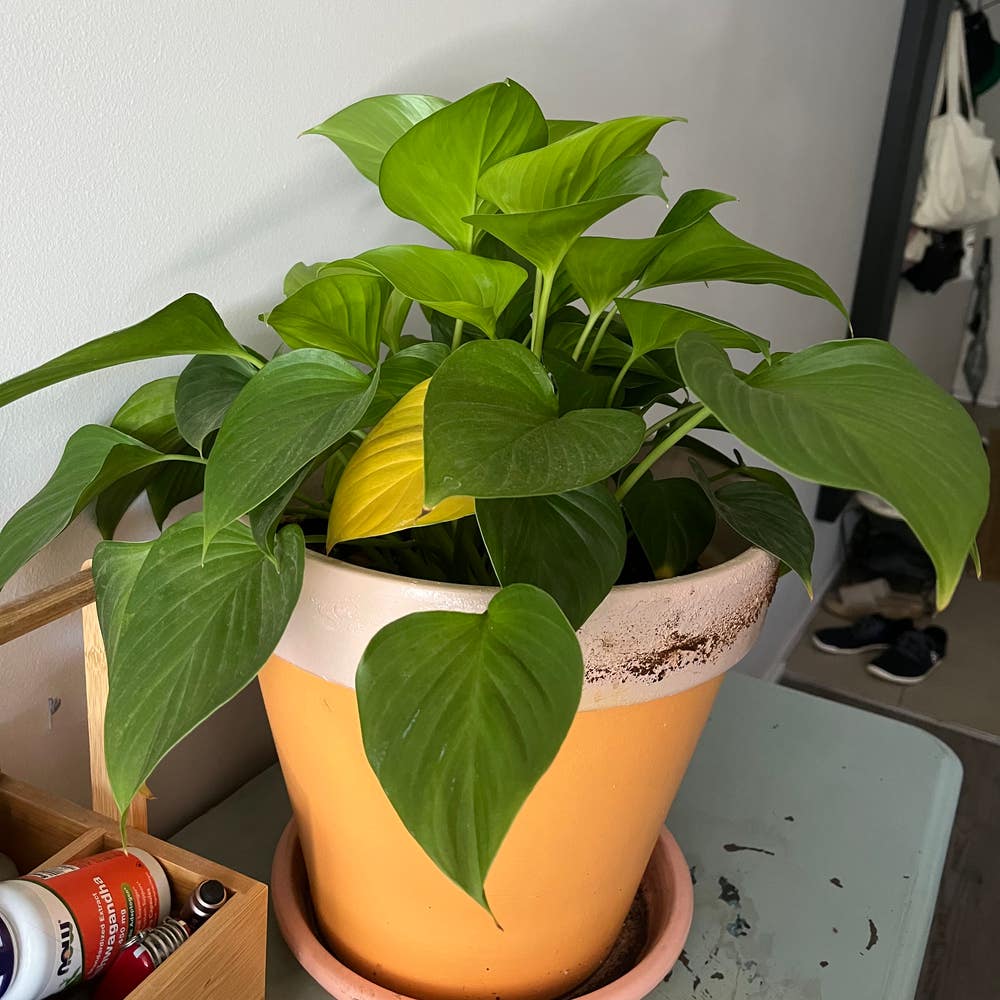
💧 Why Are My Homalomena aromatica Leaves Mushy?
Homalomena aromatica
By the Greg Editorial Team
Apr 20, 2024•4 min read
This article was created with the help of AI so we can cover more plants for you. May contain errors. See one? Report it here.
Save your Homalomena from a soggy fate 🌿—discover the signs and solutions for overwatered, mushy leaves.
- Overwatering leads to mushy leaves, yellowing, and musty odors.
- Root rot? Trim and repot with well-draining soil.
- Prevent issues with proper pots and a consistent watering routine.
Spotting the Trouble: Signs Your Homalomena Aromatica is Too Wet
🌊 Overwatering and Its Telltale Signs
Yellowing leaves, a musty odor, and that all-too-familiar squish under your fingertips—overwatering signs are hard to miss. If your Homalomena Aromatica's leaves are more limp than a teenager on chore day, you're likely dealing with too much H2O. Leaf mushiness is a direct cry for help from your waterlogged plant.
🚱 When the Pot Doesn't Help: Poor Drainage Symptoms
A pot without proper drainage is like a bathtub without a plug—water has nowhere to go. If your soil clings to your fingers like a needy pet, it's a red flag. Terra cotta pots with drainage holes are your best bet, as they let the soil breathe and prevent the dreaded root rot. Remember, a snug pot means less soggy soil and a happier plant.
The Root of the Problem: Dealing with Root Rot
🚨 Recognizing Root Rot in Homalomena Aromatica
Root rot in Homalomena Aromatica is like a bad relationship—it's not going to get better if you ignore the warning signs. Yellowing leaves and a general look of despair are your plant's way of saying, "We need to talk." If the leaves are more limp than a forgotten salad, it's a red flag. But the true test is in the sniff: a foul smell from the soil is the equivalent of an S.O.S. flare. Gently unpot the plant and inspect the roots. Healthy ones are firm and white, while the rotten ones are brown and squishy, like overcooked pasta.
🛠️ Saving Your Plant from the Brink
Caught root rot red-handed? It's time for an intervention. First, remove your Homalomena Aromatica from its pot with the care of a bomb squad technician. Shake off the old soil and take a good, hard look at the roots. Trim the damage with sterilized shears—think of it as cutting ties with the unhealthy parts of your plant's life. Next, repot with fresh, well-draining soil in a pot that's snug but not tight, like the perfect pair of jeans. Remember, drainage holes are non-negotiable—they're your plant's escape route from waterlogging. After the operation, keep a close eye on your patient; recovery requires attention and the right amount of TLC.
Turning Things Around: Fixing Mushy Leaves
🚰 Adjusting Your Watering Routine
Wait for the top inch of soil to dry out before you even think about watering again. Overwatering is like giving your plant a death hug. Use a moisture meter or the good old finger test to avoid guesswork.
🍽️ Upgrading Your Plant's Home for Better Drainage
Choose a pot that's got more holes than a detective story. Terra cotta is the MVP here, letting the soil breathe and reducing the risk of waterlogging. Mix in perlite or coarse sand to your soil to keep it from clumping like last week's laundry.
Keeping Leaves Firm and Healthy: Prevention Tactics
💧 Watering Wisdom: Best Practices to Keep Leaves Perky
Consistency is your plant's best friend when it comes to watering. Establish a routine that's as reliable as your morning coffee. Check the soil's top inch; if it's dry, it's time to water. Remember, your Homalomena aromatica isn't a camel—it doesn't store water for the long haul.
👀 Vigilance and Care: Regular Checks and Balances
Inspect your plant like it's a priceless piece of art. Look for early signs of distress, such as yellowing leaves or a wilted demeanor. Adjust your care tactics with the precision of a Swiss watchmaker. Rotate your plant for even light exposure and avoid the dreaded one-sided growth. Keep your tools clean, because hygiene matters as much to your plant as it does in a five-star restaurant kitchen.
⚠️ Safety First
This content is for general information and may contain errors, omissions, or outdated details. It is not medical, veterinary advice, or an endorsement of therapeutic claims.
Always consult a qualified healthcare professional before using any plant as food, medicine, or supplement.
Never eat any plant (or feed one to pets) without confirming its identity with at least two trusted sources.
If you suspect poisoning, call Poison Control (800) 222-1222, the Pet Poison Helpline (800) 213-6680, or your local emergency service immediately.
Spotted an error? Please report it here.
Avoid the dreaded mushy leaves on your Homalomena aromatica by using Greg to monitor 🚰 and adjust your watering routine for perfect plant health!