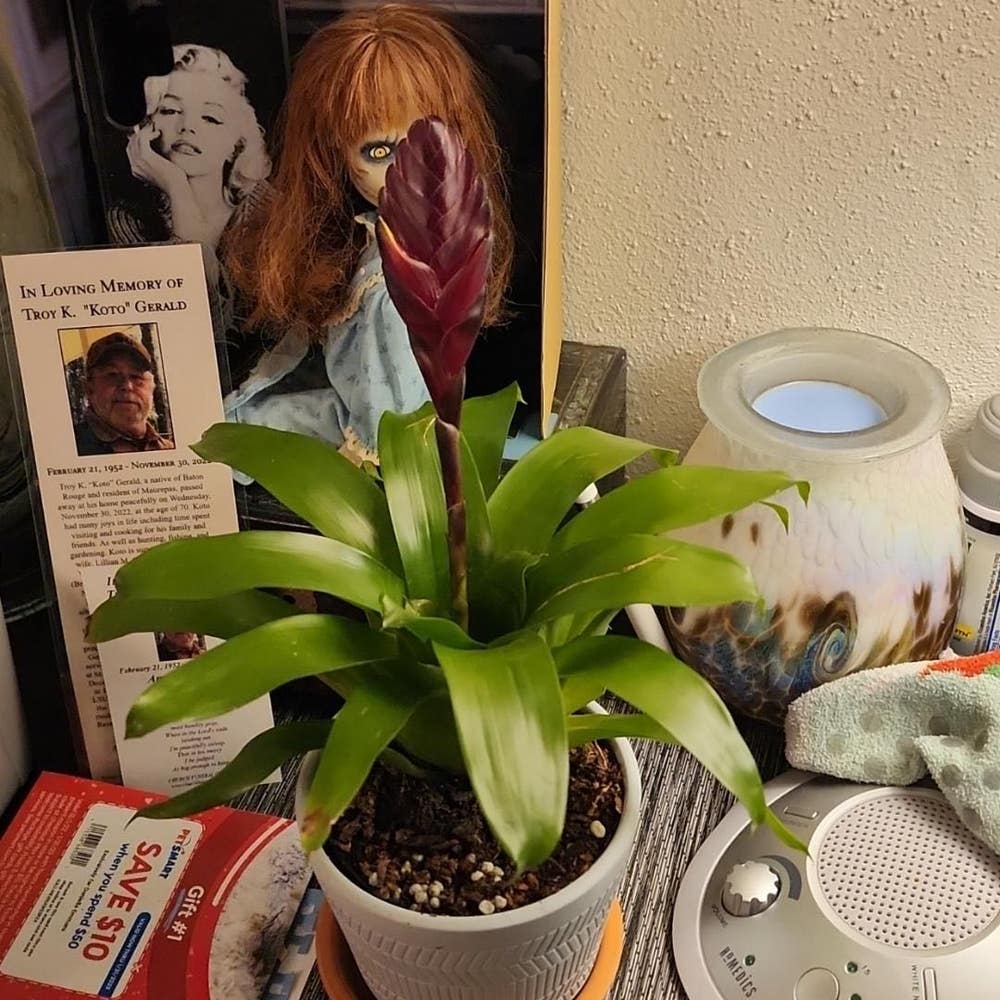
What to Know About Growing Your Flaming Sword Outdoors ⚔️
Vriesea carinata
By the Greg Editorial Team
Nov 23, 2024•7 min read
This article was created with the help of AI so we can cover more plants for you. May contain errors. See one? Report it here.
- 🌞 Flaming Sword needs 4-6 hours of sunlight daily for optimal growth and flowering.
- 💧 Water every 1-2 weeks, allowing soil to dry to prevent root rot.
- 🌱 Use well-draining soil with pH 5.5-7.0 for best growth results.
Outdoor Care Requirements
🌞 Sunlight Needs and Ideal Exposure
Flaming Sword plants thrive in full sun to partial shade, requiring 4-6 hours of direct sunlight each day. Insufficient light can lead to stunted growth and fewer flowers, so finding the right spot is crucial for a vibrant display.
💧 Watering Requirements and Frequency
These plants need consistent moisture, but it's essential to let the top inch of soil dry out between waterings. Typically, watering every 1-2 weeks works well, but adjust based on rainfall and humidity levels to avoid waterlogged conditions that can cause root rot.
🌱 Soil Preferences and Amendments
Flaming Sword prefers well-draining, organic-rich soil to support healthy growth. To enhance moisture retention without waterlogging, consider incorporating compost or peat moss, and aim for a slightly acidic to neutral soil pH of 5.5-7.0.
🌿 Fertilization Schedule and Types
Fertilize your Flaming Sword every 4-6 weeks during the growing season to keep it thriving. A balanced, water-soluble fertilizer, such as 20-20-20, is recommended; simply dilute it in water and apply it directly to the soil or foliage for optimal results.
With these outdoor care requirements in mind, you can ensure your Flaming Sword flourishes beautifully. Next, let’s explore the various planting options available to you.
Planting Options
Benefits and Drawbacks of Container Planting 🌱
Container planting offers several advantages for growing your Flaming Sword. First, it provides mobility, allowing you to easily move plants to optimize sunlight exposure or protect them from harsh weather.
Additionally, you have complete control over soil quality, enabling you to choose specific potting mixes that suit your plant's needs. The aesthetic flexibility of containers can enhance your garden design, offering varied styles and colors.
However, there are some drawbacks to consider. Limited root space in containers may restrict growth potential, which can affect the overall health of your plant.
Moreover, containers tend to dry out faster than in-ground planting, necessitating more frequent watering. This can be a challenge, especially during hot summer months.
Benefits and Drawbacks of In-Ground Planting 🌍
In-ground planting provides a more natural growth environment for your Flaming Sword. It allows for greater root expansion, which can lead to healthier, more robust plants.
Another advantage is better moisture retention; soil in the ground typically holds moisture longer than potting mixes. This can be particularly beneficial during dry spells.
On the downside, in-ground planting offers less mobility. If conditions change, relocating your plants can be difficult.
Additionally, soil quality can vary significantly from one location to another, meaning you may need to amend the soil to ensure optimal growth conditions. This extra step can add to your workload.
Choosing the Right Option for Your Space 🏡
When deciding between container and in-ground planting, assessing your space availability is crucial. Consider factors like sunlight, drainage, and your aesthetic preferences to determine the best fit.
Evaluating climate conditions is equally important. Some options may offer better protection from the elements, ensuring your Flaming Sword thrives in its environment.
Ultimately, the right choice will depend on your specific circumstances and gardening goals.
Protection from Weather and Pests
🌞 Strategies for Weather Protection
Extreme Heat
When temperatures soar, your Flaming Sword needs a little extra care. Providing shade can be as simple as using shade cloth or strategically planting near taller plants to shield it from harsh sunlight.
Mulching is another effective strategy. Applying organic mulch around the base helps retain soil moisture, ensuring your plant stays hydrated during those sweltering days.
Extreme Cold
Cold snaps can be tough on your Flaming Sword, but there are ways to protect it. Use frost cloths to cover your plants or bring containers indoors when temperatures plummet.
Choosing the right planting location is crucial. Opt for sheltered spots that minimize exposure to cold winds, giving your plant a fighting chance against the chill.
Heavy Rain
Heavy rainfall can lead to waterlogged conditions, which are detrimental to your Flaming Sword. Ensure proper drainage in your garden to prevent this issue.
Consider raised beds as a solution. They not only improve drainage but also help manage water more effectively, keeping your plants healthy and thriving.
🐛 Common Outdoor Pests and Management
Outdoor pests can be a nuisance, but identifying them early can save your Flaming Sword. Common culprits include aphids, mealybugs, and snails, all of which can wreak havoc on your plant.
Managing these pests can be straightforward. Use neem oil or insecticidal soap for treatment, and don’t underestimate the power of hand-picking to remove them directly.
🦠 Diseases and Prevention Methods
Your Flaming Sword may face diseases like root rot and leaf spot, which can hinder its growth. Understanding these common issues is the first step in prevention.
To keep your plant healthy, focus on proper watering techniques and ensure good air circulation. Additionally, consider planting disease-resistant varieties to minimize risks and promote robust growth.
With these strategies in place, your Flaming Sword will be well-equipped to handle the elements and fend off pests. Next, let’s explore how seasonal changes impact your care routine.
Seasonal Care
Seasonal Changes and Their Impact 🌦️
Understanding seasonal changes is crucial for the health of your Flaming Sword.
In spring, this plant enters an active growth phase, so it's time to increase both watering and fertilization to support its vibrant growth.
As summer rolls in, keep a close eye on pests and ensure your Flaming Sword has adequate moisture during the heat.
When fall arrives, prepare for cooler temperatures by reducing watering frequency, allowing the plant to acclimate.
Finally, winter demands extra care; protect your Flaming Sword from frost and limit fertilization to give it a restful period.
Adjusting Care Routines 🔄
Adjusting your care routines is essential as the seasons change.
In summer, increase watering to combat heat stress, while in winter, cut back on watering to prevent over-saturation.
Fertilization should also be adjusted; apply more frequently during the growing season and scale back during dormancy to avoid nutrient buildup.
Special Considerations for Climate Zones 🌍
Climate zones play a significant role in how you care for your Flaming Sword.
In tropical zones, regular watering is key, and minimal protection is needed due to milder conditions.
Conversely, in temperate zones, you’ll need to provide increased weather protection and may even consider relocating your plant indoors during harsh winter months.
With these seasonal care tips, your Flaming Sword will thrive throughout the year, setting the stage for a flourishing garden. Next, let’s explore troubleshooting common problems to keep your plant healthy and vibrant.
Troubleshooting Common Problems
🛠️ Common Problems and Solutions
Flaming Sword plants can face a few common issues that are easy to troubleshoot.
Yellowing Leaves: This often signals overwatering or a nutrient deficiency. Adjust your watering schedule and consider fertilizing to restore balance.
Stunted Growth: If your plant isn’t thriving, it might not be getting enough light. Relocating it to a sunnier spot can make a significant difference.
🤔 Addressing Misconceptions About Care
Many gardeners believe that the Flaming Sword is too challenging to grow outdoors.
In reality, with the right care and conditions, this vibrant plant can flourish beautifully in your garden.
🌱 Tips for Beginners and Advanced Growers
For those just starting out, container planting is a fantastic option. It allows for easier management and mobility, making it simpler to find the right conditions.
Advanced growers should consider experimenting with different cultivars and propagation techniques. This can lead to exciting new growth and a deeper understanding of the plant's needs.
As you navigate the challenges of growing your Flaming Sword, remember that every problem has a solution. With patience and care, you’ll be rewarded with a stunning display of color and life in your outdoor space.
Next, let’s explore how to provide seasonal care to keep your Flaming Sword thriving throughout the year.
⚠️ Safety First
This content is for general information and may contain errors, omissions, or outdated details. It is not medical, veterinary advice, or an endorsement of therapeutic claims.
Always consult a qualified healthcare professional before using any plant as food, medicine, or supplement.
Never eat any plant (or feed one to pets) without confirming its identity with at least two trusted sources.
If you suspect poisoning, call Poison Control (800) 222-1222, the Pet Poison Helpline (800) 213-6680, or your local emergency service immediately.
Spotted an error? Please report it here.
Transform your outdoor Flaming Sword into a vibrant showstopper 🌟 with Greg's tailored watering reminders and expert care tips to keep it thriving all year long!