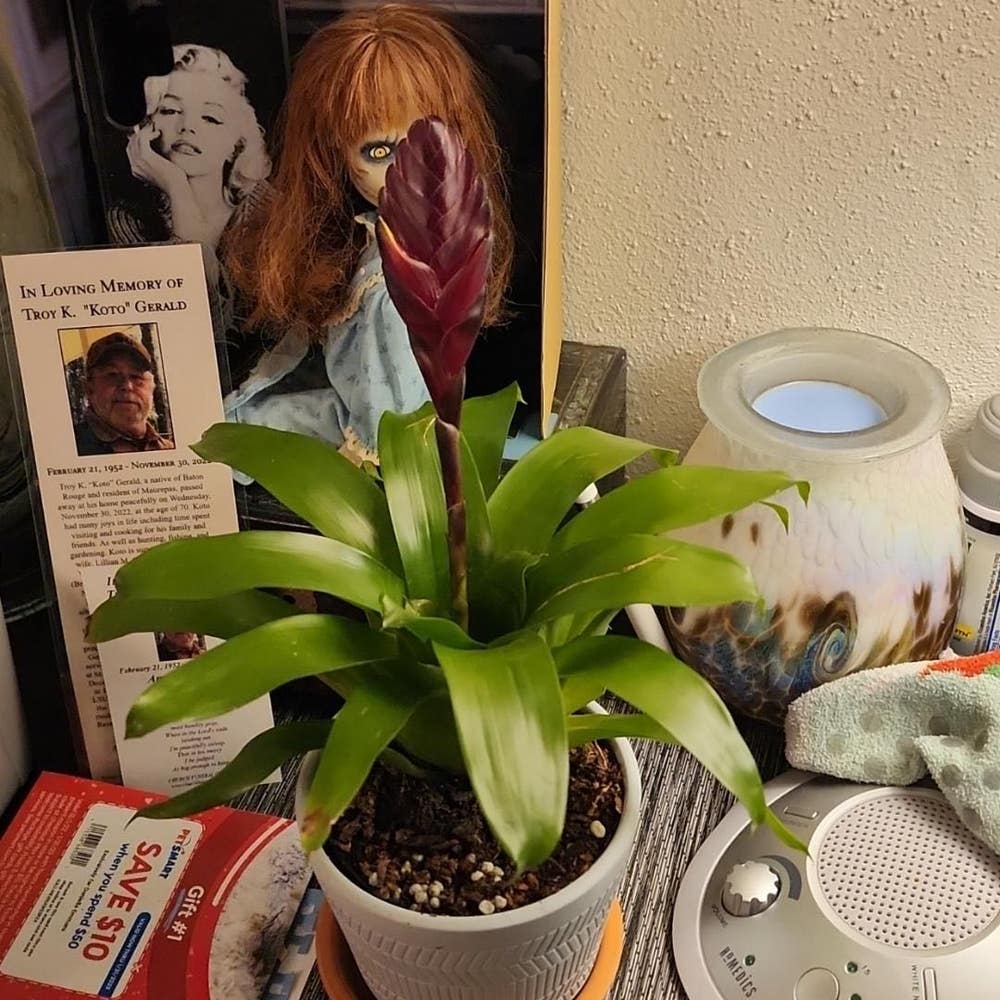
🗡 Is Direct Sunlight Good for My Flaming Sword?
Vriesea carinata
By the Greg Editorial Team
Jun 18, 2024•4 min read
This article was created with the help of AI so we can cover more plants for you. May contain errors. See one? Report it here.
- 🌞 Direct sunlight can sunburn the Flaming Sword; bright, indirect light is best.
- 🍂 Brown patches, faded leaves signal too much sun; move to shadier spot.
- 🏡 Adjust location seasonally and use window direction for optimal light exposure.
Sunlight Needs for Flaming Sword
🌞 Defining Direct Sunlight for Plant Parents
Direct sunlight is the unfiltered, full-intensity embrace of the sun's rays, akin to a spotlight on a stage. Indirect sunlight is more like ambient lighting, providing a gentle glow without the harshness. For the Flaming Sword, understanding this distinction is crucial to its well-being.
🌿 Flaming Sword's Sunlight Preferences
The Flaming Sword plant flourishes in bright, indirect light. It's a bit like a celebrity that prefers the spotlight without the paparazzi's harsh camera flashes. Too much direct sun, and you'll find your Flaming Sword's leaves looking more sunburnt than sun-kissed.

Protecting Your Flaming Sword from Sunburn
🌞 Recognizing the Signs of Too Much Sun
Your Flaming Sword is a drama queen when it comes to sun exposure. Brown patches or faded leaves? That's its way of saying, "I've had enough!" If the leaves look like they've been through a desert trek without sunscreen, it's time to act.
🚑 Quick Fixes for Too Much Exposure
Caught your Flaming Sword turning crispy? Move it out of the sun, stat. Think of it as an emergency evacuation from a beach at high noon. Then, give it a spa-like treatment in a shadier spot to recover. Remember, no plant enjoys a sunburn, not even the Flaming Sword with its fiery name.

Tailoring Sunlight to Your Home Environment
🌞 Window Wisdom: Direction Matters
Your Flaming Sword's tan isn't just about quantity of light, but quality. Here's the lowdown:
- North-facing windows: The introverts of the window world, offering a soft, consistent light that won't overwhelm your Flaming Sword.
- South-facing windows: The life of the party in the Northern Hemisphere, dishing out the most intense light. In the Southern Hemisphere, swap this with north-facing windows.
- East-facing windows: The gentle morning light is like a soft wake-up call for your plant.
- West-facing windows: The intense afternoon sun can be too much; it's like throwing your plant into a midday desert.
🌍 Hemisphere Hints: Adjusting for Your Location
Location, location, location—it's not just for real estate. The hemisphere you're in flips the script on sunlight:
- In the Northern Hemisphere, south-facing windows are your go-to for maximum light. But for the Flaming Sword, that's often too much of a good thing.
- In the Southern Hemisphere, it's north-facing windows that bask in the glory of the sun. But again, moderation is key.
Remember, your Flaming Sword craves that bright, but not direct, light. So, position it to avoid the plant equivalent of a nasty sunburn. If you're in a bind with a too-sunny window, a sheer curtain can be the sunscreen your green buddy needs. And if you're feeling crafty, a DIY shade cloth can work wonders, especially during those scorching afternoons. Keep an eye on your plant's response and adjust its spot to keep that vibrant color without the crispy edges.

Seasonal Sunlight Strategies for Flaming Sword
🌞 Summer Sun vs. Winter Light
Adjusting your Flaming Sword's location with the changing seasons is key. During summer, the plant should be kept in a spot that receives bright, indirect light. Direct sunlight can be too intense, leading to leaf burn. Conversely, in winter, when sunlight is less intense and days are shorter, you may need to move your Flaming Sword closer to a window to maximize light exposure. However, avoid drafty spots that could cause temperature stress.
🌅 Long-Term Sunlight Management
Creating a year-round sunlight plan is like being a DJ for your Flaming Sword—you're constantly adjusting the dials to hit the sweet spot. In spring and fall, the light is moderate, so your Flaming Sword can probably stay put. But as the seasons shift, keep an eye on the light intensity and duration. Rotate the plant occasionally to ensure even growth. Remember, it's not just about survival; it's about helping your Flaming Sword thrive.
⚠️ Safety First
This content is for general information and may contain errors, omissions, or outdated details. It is not medical, veterinary advice, or an endorsement of therapeutic claims.
Always consult a qualified healthcare professional before using any plant as food, medicine, or supplement.
Never eat any plant (or feed one to pets) without confirming its identity with at least two trusted sources.
If you suspect poisoning, call Poison Control (800) 222-1222, the Pet Poison Helpline (800) 213-6680, or your local emergency service immediately.
Spotted an error? Please report it here.
Ensure your Flaming Sword avoids sunburn and stays radiant 🌿 with Greg's tailored light exposure monitoring and care reminders.