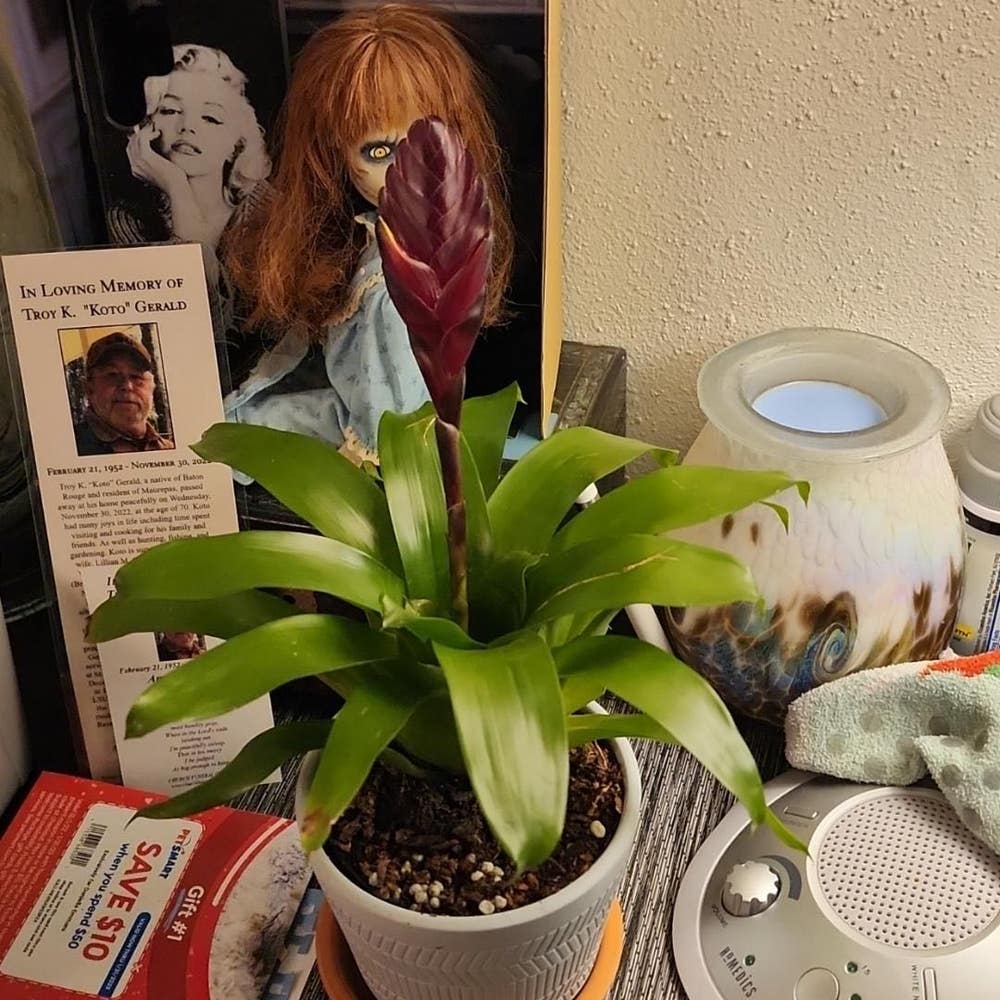
Ultimate Guide to Winter Care for Flaming Sword ⚔️
Vriesea carinata
By the Greg Editorial Team
Nov 23, 2024•4 min read
This article was created with the help of AI so we can cover more plants for you. May contain errors. See one? Report it here.
- 💧 Water Flaming Sword every 2-4 weeks in winter; let soil dry completely.
- ❄️ Protect from frost using cloth and move indoors during cold snaps.
- 🌞 Provide bright, indirect light and monitor for nutrient deficiencies to ensure health.
Winter Care Requirements
🌨️ Adjusting watering schedule for winter
During winter, it's crucial to adjust your watering schedule for your Flaming Sword. Aim to water every 2-4 weeks, allowing the soil to dry out completely between waterings.
Watch for signs of overwatering, such as yellowing leaves and root rot. These indicators can signal that your plant is receiving too much moisture, which can be detrimental during the colder months.
❄️ Fertilizing during dormancy
Fertilizing your Flaming Sword during its dormant period requires a thoughtful approach. Use a low-nitrogen, balanced fertilizer, applying it only once at the beginning of winter if necessary.
Keep an eye out for signs of nutrient deficiency, including pale leaves and stunted growth. These symptoms can indicate that your plant needs a little extra support to thrive.
🏠 Indoor care considerations
When caring for your Flaming Sword indoors, maintaining the right environment is key. The ideal temperature range is between 15°C to 24°C (59°F to 75°F), ensuring your plant stays comfortable.
Humidity is also important; aim for moderate levels to keep your plant healthy. Lastly, place your Flaming Sword in bright, indirect light to promote optimal growth and vitality.
As you prepare for the winter months, remember that proper care during this season sets the stage for a vibrant spring. Transitioning to frost protection strategies will help ensure your Flaming Sword remains healthy and resilient.
Frost Protection Strategies
Methods to Protect from Frost 🌨️
Protecting your Flaming Sword from frost is crucial for its survival during winter. Here are some effective methods to ensure your plant stays safe:
Covering Plants: Use frost cloth or burlap to cover your Flaming Sword during particularly cold nights. This simple barrier can help trap heat and shield your plant from icy winds.
Bringing Potted Plants Indoors: If your Flaming Sword is in a pot, consider moving it indoors during cold snaps. This not only protects it from frost but also allows you to maintain a stable environment.
Mulching: Apply mulch around the base of outdoor plants to insulate the roots. This extra layer helps retain warmth and moisture, providing a protective barrier against the cold.
Signs of Frost Damage and Recovery ❄️
Even with precautions, frost damage can still occur. Recognizing the symptoms early can make a significant difference in recovery.
Symptoms of Frost Damage: Look for wilting, browning leaves, and a mushy texture. These signs indicate that your Flaming Sword has been affected by the cold.
Recovery Steps: If you notice frost damage, start by pruning any damaged leaves. This helps the plant redirect its energy towards healthier growth.
Monitoring Temperatures: Keep an eye on weather forecasts and temperatures. Being proactive can help you take necessary actions before frost hits again.
By implementing these frost protection strategies, you can ensure your Flaming Sword thrives even in the coldest months. As winter transitions to spring, your plant will be ready to flourish with the right care and attention.
Spring Preparation and Recovery
🌱 Preparing for Spring Growth
As winter fades, you'll notice signs that spring is on the horizon. Look for increased daylight and rising temperatures, which signal it's time to prepare your Flaming Sword for its growing season.
To help your plant transition, gradually reintroduce it to outdoor conditions. This hardening off process involves slowly acclimating your plant to the elements over a week or two, ensuring it can thrive in its environment.
Adjusting your watering and fertilization schedules is also crucial as spring approaches. With the warmer weather, your Flaming Sword will require more frequent watering and a boost from fertilizers to support its growth.
❄️ Assessing and Treating Winter Damage
Before diving into spring care, inspect your Flaming Sword for any signs of winter damage. Look for frost damage, such as wilting or browning leaves, and assess the overall health of the plant.
Pruning is essential for encouraging new growth. Trim away any dead or damaged foliage to promote a healthier, more vibrant plant.
If you notice any persistent issues, consider applying fungicides as a preventive measure. This can help protect your Flaming Sword from potential diseases as it enters the growing season.
With these steps, your Flaming Sword will be well-prepared to flourish in the spring. Transitioning from winter care to a vibrant growing season is an exciting journey, and your plant will thank you for it!
⚠️ Safety First
This content is for general information and may contain errors, omissions, or outdated details. It is not medical, veterinary advice, or an endorsement of therapeutic claims.
Always consult a qualified healthcare professional before using any plant as food, medicine, or supplement.
Never eat any plant (or feed one to pets) without confirming its identity with at least two trusted sources.
If you suspect poisoning, call Poison Control (800) 222-1222, the Pet Poison Helpline (800) 213-6680, or your local emergency service immediately.
Spotted an error? Please report it here.
Keep your Flaming Sword thriving this winter ❄️ by using Greg's tailored watering reminders and expert tips to protect it from frost and ensure it gets the care it needs!