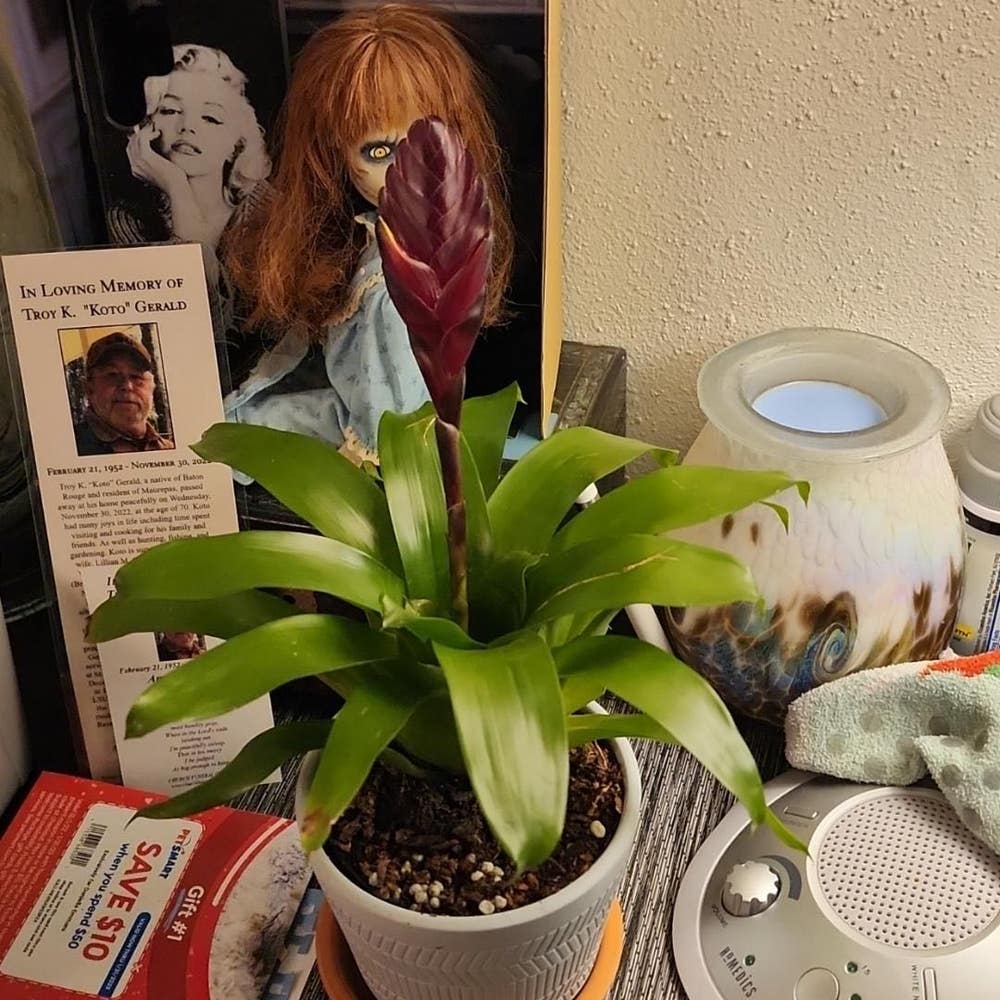
🔥 How to Prune Flaming Sword
Vriesea carinata
By the Greg Editorial Team
Jun 18, 2024•4 min read
This article was created with the help of AI so we can cover more plants for you. May contain errors. See one? Report it here.
- Prune post-bloom to encourage new growth and remove spent flowers.
- 🌿 Use sharp, sterilized shears for clean cuts and disease prevention.
- Monitor and adjust care post-pruning for a healthy recovery.
Best Time to Prune Your Flaming Sword
🌸 Recognizing Pruning Time
Seasonal cues are your best bet for knowing when to prune your Flaming Sword. If you notice the flowers are on their last leg or the leaves look like they've seen better days, it's time to grab your shears. Typically, the plant will flaunt its fiery blooms during the summer, but it's not a stickler for schedules; you might see some action at other times too.
✂️ Pruning After Blooming
Pruning post-bloom isn't just busywork; it's about encouraging rebirth. Once the Flaming Sword's blooms have taken their final bow, that's your cue to step in. Clean cuts are crucial here—think of it as surgery for your plant. You want to remove spent flowers to make room for new growth and possibly even a new generation if you're dealing with pups. It's like telling your plant, "Hey, you did great, but let's keep the show going."

Pruning Techniques for a Healthy Flaming Sword
🛠️ Essential Tools for the Job
Pruning your Flaming Sword begins with armament. Pruning shears are your bread and butter, perfect for most cuts. Keep them as sharp as a tack; a dull blade is a one-way ticket to plant trauma. For the love of foliage, don't forget to sterilize—rubbing alcohol or a bleach solution will do the trick to prevent turning your plant into a petri dish for diseases.
🪓 Making the Cut
When it's time to make the cut, think surgeon, not lumberjack. Clean cuts on leaves and stems are crucial; they heal faster and prevent issues down the road. Be strategic—prune parts that are overgrown or look like they're on the brink of death. It's not just about survival; it's about thriving.
🩹 Dealing with Damaged Parts
Spotting damaged foliage is like finding a needle in a haystack, but it's a necessary evil. Get rid of the dead weight—literally. Dead or damaged leaves are nothing but a drag on your plant's moxie. Snip them off and watch your Flaming Sword bounce back like it's got a new lease on life.

Encouraging Beautiful Growth
🌱 Thinning Out Overgrowth
To thin out overgrowth, you're not just giving your Flaming Sword a trim; you're making a tactical move. Look for crowded leaves that are stifling the plant's style and snip them away. This isn't just about aesthetics; it's about redirecting energy to the parts of the plant that will benefit most from it.
✂️ Shaping Your Flaming Sword
Shaping your Flaming Sword is like being a sculptor, except your medium is very much alive and kicking. Start by visualizing the desired shape. Then, with shears in hand, remove leaves that disrupt this vision, aiming for a balanced, pleasing form. It's not about going full Edward Scissorhands; it's about strategic snips for a stunning silhouette.

Aftercare: Ensuring a Speedy Recovery
💉 Post-Pruning Care Tips
Watering and feeding after pruning are like the first aid for your Flaming Sword plant. It's been through the botanical equivalent of a minor surgery, so it's crucial to get the recovery process right.
💧 Watering Wisdom
Water your plant with the precision of a surgeon. Too much and you risk root rot; too little and the plant won't bounce back. Maintain the usual watering schedule, but stay alert to the soil's moisture level—think of it as the plant's pulse.
🌱 Feeding Finesse
Hold off on the heavy fertilizers; your Flaming Sword isn't ready for a feast. Instead, consider a light application of a balanced, water-soluble fertilizer to encourage recovery without overwhelming the plant.
👩⚕️ Monitoring Plant Health
Keep a watchful eye on your green patient for signs of stress or recovery. New growth is a green light, but any wilting or discoloration might signal an SOS. Adjust care as necessary, and remember, vigilance is key to nurturing your plant back to health.
⚠️ Safety First
This content is for general information and may contain errors, omissions, or outdated details. It is not medical, veterinary advice, or an endorsement of therapeutic claims.
Always consult a qualified healthcare professional before using any plant as food, medicine, or supplement.
Never eat any plant (or feed one to pets) without confirming its identity with at least two trusted sources.
If you suspect poisoning, call Poison Control (800) 222-1222, the Pet Poison Helpline (800) 213-6680, or your local emergency service immediately.
Spotted an error? Please report it here.
Prune your Flaming Sword to perfection 🌟 with Greg's tailored reminders and care tips, ensuring a vibrant display of foliage and flowers.