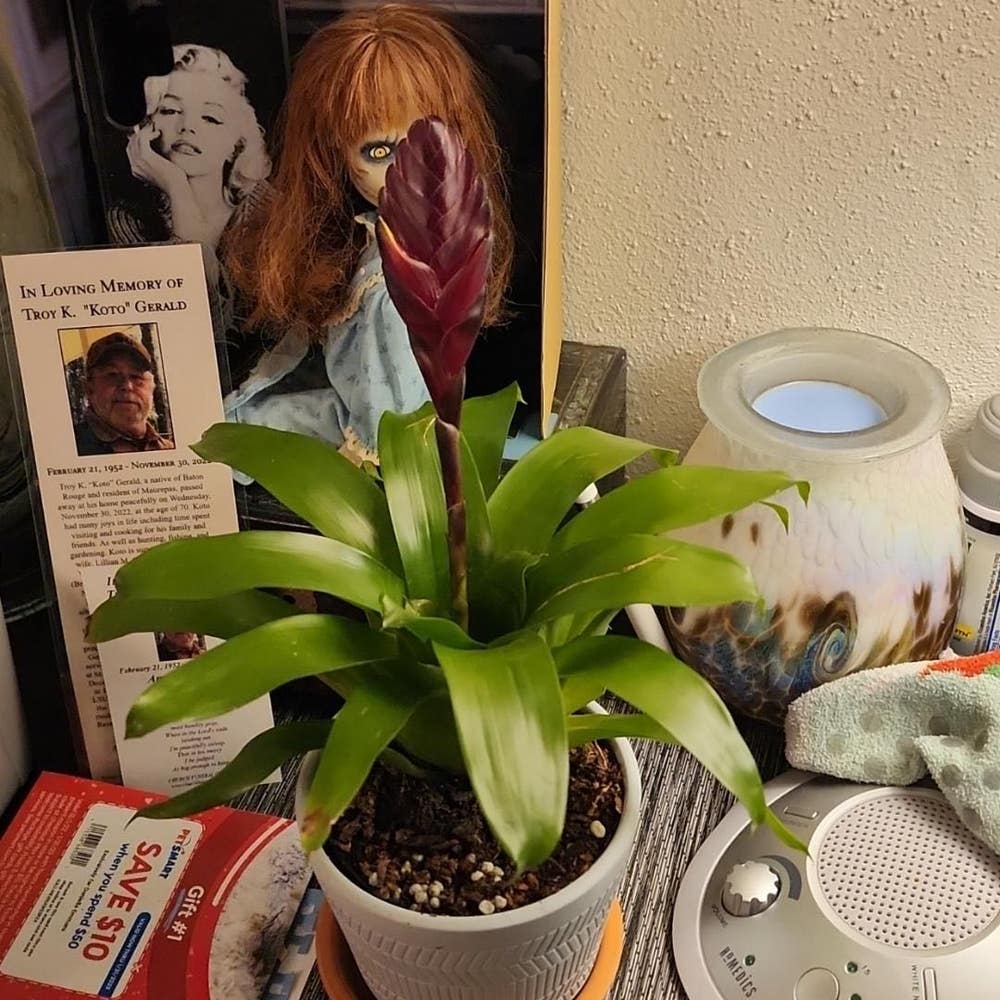
🔥 Why Flaming Sword Is Not an Annual
Vriesea carinata
By the Greg Editorial Team
Nov 23, 2024•3 min read
This article was created with the help of AI so we can cover more plants for you. May contain errors. See one? Report it here.
- 🌱 Flaming Sword is a perennial, thriving for years with unique growth habits.
- 💧 Its thick, waxy leaves retain moisture, enhancing resilience in dry conditions.
- 🌼 Extended flowering cycle attracts pollinators, boosting reproductive success over time.
Flaming Sword as a Perennial
🌱 Genetic Characteristics
Vriesea splendens, commonly known as the Flaming Sword, belongs to the bromeliad family. This classification highlights its unique genetic adaptations that contribute to its longevity and resilience in various environments.
🌿 Physiological Traits Supporting Perennial Classification
The Flaming Sword exhibits a rosette growth pattern, which is essential for its survival. This structure allows the plant to efficiently collect water and nutrients, maximizing its growth potential.
Additionally, its thick, waxy leaves play a crucial role in moisture retention. This adaptation helps the plant thrive in conditions where water may be scarce.
⏳ Long-Term Lifecycle
The lifespan of the Flaming Sword can span several years to even decades. This impressive longevity is complemented by distinct growth phases, including periods of dormancy and active growth cycles.
🌼 Growth and Reproductive Strategies
While the Flaming Sword may establish itself slowly, it demonstrates sustained growth over time. This gradual development is a hallmark of perennials, contrasting sharply with the rapid life cycle of annuals.
Flowering cycles are another critical aspect of its reproductive strategy. The Flaming Sword blooms for an extended duration, showcasing vibrant flowers that attract pollinators.
In terms of seed production, this plant employs mechanisms that differ from annuals. It produces seeds less frequently, focusing on quality over quantity.
❓ Misconceptions and Exceptions
There are conditions under which the Flaming Sword might be mistaken for an annual. Environmental stressors, such as extreme temperatures or improper care, can lead to misconceptions about its classification.
Regional variations also play a significant role in how this plant is perceived. Its adaptability to different climates can influence its growth patterns and longevity.
🌸 Garden Design and Planting Strategies
Incorporating the Flaming Sword into perennial garden designs offers numerous advantages. Its aesthetic appeal and long-term investment potential make it a favorite among gardeners.
Planning for long-term growth involves strategic companion planting and seasonal care. These practices ensure that the Flaming Sword thrives alongside other plants in your garden.
🌟 Maximizing Longevity in the Garden
To manage the Flaming Sword effectively as a perennial, consider your watering practices and fertilization schedule. Consistent care will enhance its health and longevity.
Implementing best practices, such as proper pruning techniques and pest management, is essential. These steps will help you maintain a vibrant and thriving Flaming Sword in your garden.
As we explore the next section, we'll delve into the specific garden design and planting strategies that can further enhance the beauty and longevity of the Flaming Sword.
⚠️ Safety First
This content is for general information and may contain errors, omissions, or outdated details. It is not medical, veterinary advice, or an endorsement of therapeutic claims.
Always consult a qualified healthcare professional before using any plant as food, medicine, or supplement.
Never eat any plant (or feed one to pets) without confirming its identity with at least two trusted sources.
If you suspect poisoning, call Poison Control (800) 222-1222, the Pet Poison Helpline (800) 213-6680, or your local emergency service immediately.
Spotted an error? Please report it here.
Unlock the perennial potential of your Flaming Sword 🌺 with Greg's tailored care tips and watering reminders, ensuring it flourishes in your garden for years to come!