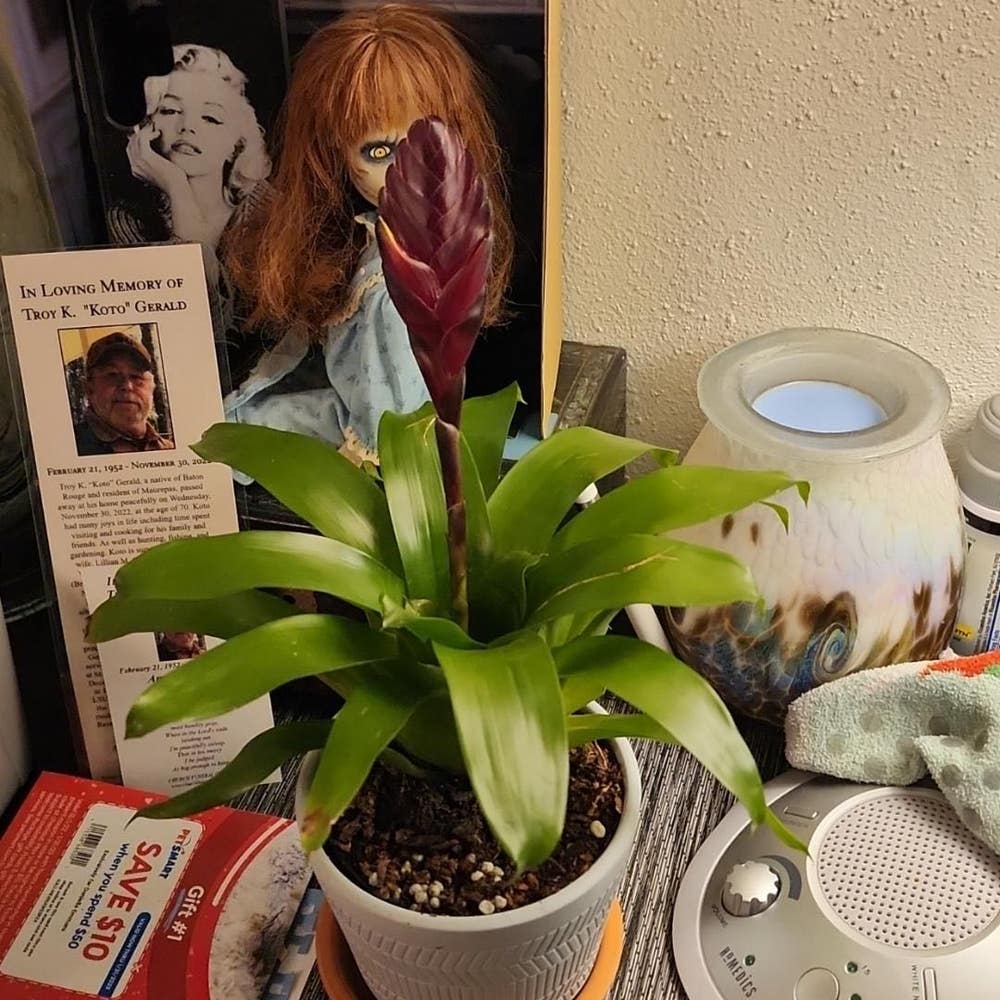
🐛 What Are The Bugs on My Flaming Sword?
Vriesea carinata
By the Greg Editorial Team
Jun 18, 2024•4 min read
This article was created with the help of AI so we can cover more plants for you. May contain errors. See one? Report it here.
- Spider mites and scale insects: Control with water, predators, or soaps.
- Mealybugs, thrips, aphids: Eliminate with soaps, oils, predators, or water jets.
- Prevent pests: Regular check-ups, cleanliness, and optimized plant conditions.
Sap-Sucking Pests: The Usual Suspects
🕷️ Spider Mites
Tiny but destructive, spider mites can turn your Flaming Sword plant into their personal buffet. Webbing on leaves and a speckled, yellowed appearance are dead giveaways. To fight back, a blast of water or the introduction of predatory insects like ladybugs can send them packing. For more stubborn cases, reach for organic miticides.
🐞 Scale Insects
These sneaky critters masquerade as part of your plant, but don't be fooled. Look for bumps on stems and leaves to spot them. Swipe them off with alcohol-soaked cotton swabs or apply insecticidal soap to kick them to the curb. Remember, scales are tough; persistence is key.
🦠 Mealybugs
When you spot fluffy white clusters, you've got mealybugs. These pests are like uninvited guests who refuse to leave. Insecticidal soap and neem oil are your weapons of choice here. Apply diligently, and you'll reclaim your plant's territory.

Soil-Dwelling Pests: Root of the Problem
🦟 Fungus Gnats and Fruit Flies
Identifying the Intruders: Adult Flies and Larvae
Fungus gnats and fruit flies are houseplant party crashers. Adult gnats are those tiny black flies that love to zig-zag around your plant, while their larvae are the uninvited guests in the soil, looking like white worms with shiny black heads. If you see them, it's time to roll up your sleeves.
Nipping it in the Bud: Soil Treatments and Traps
Potato slices can be your first line of defense. Place them on the soil and watch the larvae gather. After a few days, you'll find a mini buffet gone wrong. Sticky traps are another must-have; they're like flypaper for gnats, trapping adults and reducing their numbers.
Water wisely—bottom watering keeps the topsoil dry and unappealing for gnat reproduction. It's like serving drinks from under the table, so the pests don't notice. If you're up for playing the long game, introduce Bacillus thuringiensis subsp. israelensis (Bti) into your watering routine. It's like sending in the special forces to target those larvae.
For a more nuclear option, a hydrogen peroxide mix can be used to drench the soil, wiping out larvae and eggs without harming your plant. Remember, overwatering is like sending out open invitations to these pests, so keep that soil on the drier side to avoid unwanted soirees.

Flying and Crawling Critters: Thrips and Aphids
🐜 Thrips
Thrips are stealthy invaders that can be hard to spot until their damage is glaringly obvious. Look for silvery trails, stippled leaves, and tiny black specks of excrement as signs of their presence.
Regular inspections are crucial; catch them early to prevent a full-scale invasion. If you find thrips, a blast of water can be your first line of defense, physically dislodging these pests from your plant.
For more persistent problems, prune and dispose of infested areas immediately. Introducing natural predators like ladybugs or lacewings can help control the population, while sticky traps can monitor and reduce their numbers.
When the situation calls for it, systemic insecticides can be effective, but use them as a last resort to protect the beneficial bugs.
🐞 Aphids
Aphids are sap-suckers that leave a sticky mess and weakened plants in their wake. Spot them as clusters of tiny, pear-shaped insects, often on the undersides of leaves.
A strong water jet can knock aphids right off your plants, providing immediate relief. For an eco-friendly approach, recruit natural predators like ladybugs to the scene.
If aphids persist, insecticidal soap or neem oil can be applied, ensuring thorough coverage for maximum effect. In dire situations, systemic insecticides are an option, but always follow label instructions and consider the environmental impact.
Quarantine new plants to prevent these pests from hitching a ride into your garden. Remember, cleanliness and vigilance are your best allies in the fight against these critters.

Proactive Pest Control: Keeping Bugs at Bay
👩⚕️ Regular Plant Check-Ups: The First Line of Defense
Vigilance is your plant's best friend. Like a regular health check-up, inspect your Flaming Sword for early signs of pest encroachment. Catching these critters early is akin to heading off an invasion before the enemy breaches the gates.
🧹 Cleanliness is Key: Maintaining a Bug-Unfriendly Environment
A spotless habitat for your plant is a no-go zone for bugs. Ensure leaves are dust-free and the surrounding area is clear of plant debris. Think of it as setting up a perimeter—no clutter means no places for pests to hide.
🛡️ Optimizing Conditions: Strengthening Flaming Sword Against Attacks
Your Flaming Sword thrives in certain conditions; perfect those, and it becomes a fortress. Ensure adequate humidity and airflow to deter pests that prefer dry, stagnant environments. Overwatering is a cardinal sin—it's practically sending out invites to a bug house party, so keep the soil moisture balanced.
⚠️ Safety First
This content is for general information and may contain errors, omissions, or outdated details. It is not medical, veterinary advice, or an endorsement of therapeutic claims.
Always consult a qualified healthcare professional before using any plant as food, medicine, or supplement.
Never eat any plant (or feed one to pets) without confirming its identity with at least two trusted sources.
If you suspect poisoning, call Poison Control (800) 222-1222, the Pet Poison Helpline (800) 213-6680, or your local emergency service immediately.
Spotted an error? Please report it here.
Eradicate pests from your Flaming Sword with ease and keep them at bay with custom care alerts 🌱 from Greg, ensuring your plant's health and happiness.