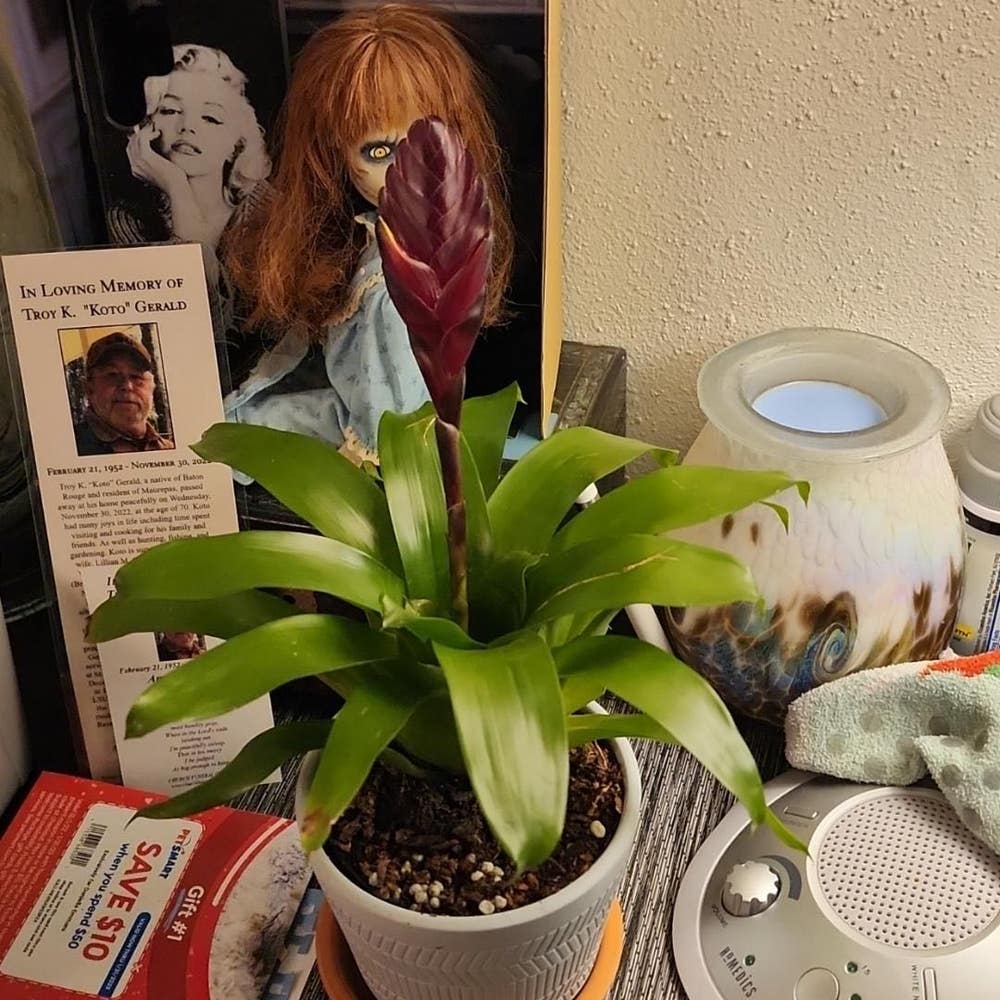
🗡 How Often Should I Water My Flaming Sword?
Vriesea carinata
By the Greg Editorial Team
Jun 18, 2024•4 min read
This article was created with the help of AI so we can cover more plants for you. May contain errors. See one? Report it here.
- Wilting and dry soil? Time to water your Flaming Sword.
- 🍂 Yellow leaves or mushy roots? You're overwatering.
- Season and growth stage dictate Flaming Sword watering frequency.
Spotting the Thirsty or Drowned Flaming Sword
🚰 Signs Your Flaming Sword Needs a Drink
Wilting leaves are the Flaming Sword's non-verbal way of saying, "Hey, I could use a little hydration over here." If your plant's leaves droop like they've given up on life, it's a cry for water.
Perform the dry soil test; if your finger comes out clean after a quick dive into the soil, it's time to water. The top inch should be dry before you even think about reaching for that watering can.
🚱 Too Much Water? Here's How to Tell
When leaves start to turn yellow, it's not trying to keep up with fashion trends; it's a sign you might be loving it a little too much with water. Ease up, tiger.
Root rot is the silent killer; if your plant's roots are more mushy than firm, you've got a problem. Think of it as the plant version of soggy cereal – nobody likes that.
Keep an eye out for a wet soil situation. If it's staying soggy longer than a poorly drained swamp, you're overdoing it. Remember, this isn't a water park for roots.

When to Water: Flaming Sword's Schedule
💧 Seasonal Watering Shifts
Summer is the Flaming Sword's time to shine. During these warmer months, it's all about growth and vibrancy. Water more frequently, but don't drown the party—keep the soil slightly moist. If it's hot enough to rock shorts and a tee, you can let water chill in the rosette, but only if it's above 65°F (18°C).
Come winter, your Flaming Sword prefers a dry spell. It's like a bear hibernating; less is more. Wait for the soil to dry out completely before giving it another sip. Hold off on the fertilizer—your plant is on a diet during these cooler, dormant months.
🌱 Growth Stage Watering
When your Flaming Sword is just a seedling, think of it as a baby needing frequent but gentle care. Water little and often to encourage growth without overwhelming the young roots.
For a mature Flaming Sword, it's less needy. It's got its roots down and can handle a bit more tough love. Allow the top inch of soil to dry out before going in with the watering can. This mature stage is all about balance—like a tightrope walker, but with a watering schedule.

Watering Techniques That Keep Your Flaming Sword Happy
💧 The Right Way to Water
Bottom watering and top watering are the two main contenders in the Flaming Sword hydration game. Bottom watering caters to the roots directly, encouraging them to grow downward. It's like a stealthy ninja, delivering moisture without disturbing the soil surface or splashing the leaves. However, don't forget to occasionally top water to flush out salts and minerals—think of it as a detox for your plant's soil.
🚰 Ensuring Proper Drainage
The right pot and soil mix are your Flaming Sword's best friends. Drainage holes are non-negotiable; they're the escape route for excess water, preventing your plant's roots from throwing a pool party. A soil mix with good drainage is like a VIP pass for water—only the right amount gets to hang out with the roots. Add river sand or perlite if your soil is more clingy than necessary. Remember, a Flaming Sword's roots like their space; they're not into big, crowded pot situations. Keep it snug, not suffocating.

Adapting to Your Environment
🌡️ Adjusting for Humidity and Temperature
Humidity and temperature are the invisible puppeteers of your Flaming Sword's well-being. Indoors, your heated living room might turn into the Sahara, demanding more frequent watering. Conversely, a cool, misty bathroom might mean less. Check the soil before you water, and adjust your routine to your home's microclimates.
Reading the Room (or Garden)
Your Flaming Sword's thirst is as unique as your environment. Bright light and dry air? Expect to water more often. A plant corner that's more shaded and humid? Ease up on the hydration. Use a moisture meter to avoid guesswork, and remember, your plant's vibe will tell you if it's partying or parched. Keep your eyes peeled for those subtle leafy signals.
⚠️ Safety First
This content is for general information and may contain errors, omissions, or outdated details. It is not medical, veterinary advice, or an endorsement of therapeutic claims.
Always consult a qualified healthcare professional before using any plant as food, medicine, or supplement.
Never eat any plant (or feed one to pets) without confirming its identity with at least two trusted sources.
If you suspect poisoning, call Poison Control (800) 222-1222, the Pet Poison Helpline (800) 213-6680, or your local emergency service immediately.
Spotted an error? Please report it here.
Let Greg customize 🌱 your Flaming Sword's watering schedule, adapting to seasonal changes and your home's environment for a perfectly hydrated plant.