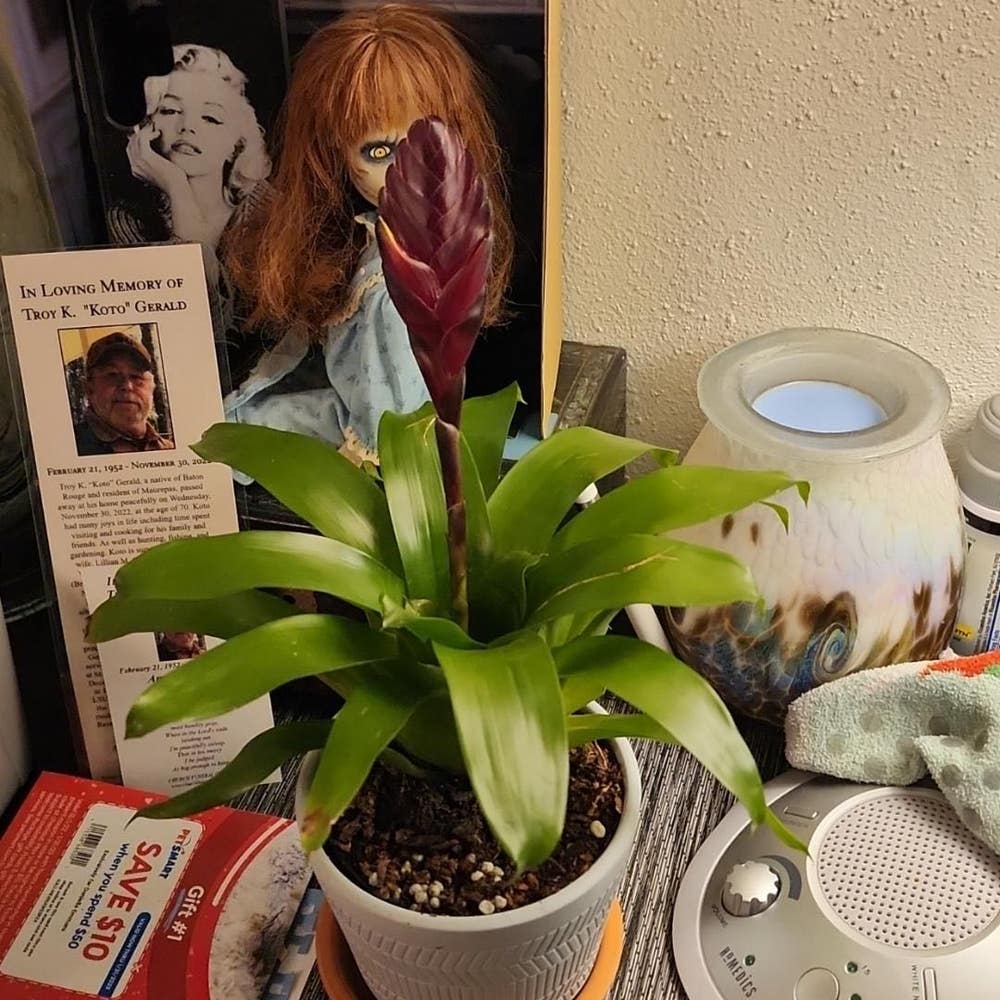
Why Are My Flaming Sword Leaves Mushy?
Vriesea carinata
By the Greg Editorial Team
Jun 18, 2024•4 min read
This article was created with the help of AI so we can cover more plants for you. May contain errors. See one? Report it here.
- Overwatering leads to mushy leaves, root rot, and fungal infections.
- Act fast to treat root rot: remove mushy roots, adjust watering.
- Prevent issues with well-draining soil, consistent watering, and clean tools.
Spotting the Trouble: Signs Your Flaming Sword is Too Wet
🚰 Telltale Signs of Overwatering
Yellowing leaves and a wilted appearance can be your Flaming Sword's cry for help against overwatering. If the leaves look more like a sad, deflated balloon than a vibrant blade, it's time to reassess your watering habits. Overwatering can also invite unwanted guests like mold and fungus, turning your plant's home into a microscopic jungle gym.
🦠 Recognizing Root Rot Symptoms
When roots get more water than they can handle, they start to throw in the towel. If you notice your plant's roots are soft and brown rather than firm and white, it's a clear sign of root rot. Stems that feel like overcooked noodles are a giveaway that the problem has escalated.
🍄 Identifying Fungal Infections
Fungal infections are like the uninvited party crashers of the plant world. Look out for a smattering of brown spots with a soggy, rotten vibe. If your plant's soil feels like a wet sponge and the pot weighs a ton, it's a waterlogged warning signal. Tiny spots often spell fungal trouble, while larger ones might point to bacterial issues.

Getting to the Root: Causes of Mushiness
💦 The Perils of Overwatering
Overwatering is like giving your plant an all-access pass to a buffet it never wanted. Roots drown in excess moisture, leading to a soft, mushy mess. Remember, your Flaming Sword is not a water lily; it doesn't need to swim.
🚱 How Poor Drainage Leads to Root Rot
Think of poor drainage as a blocked escape route during a flood. Water builds up, and roots start to rot, turning into a brown sludge incapable of supporting your plant. It's not just about watering less; it's about letting the water out.
🍄 Fungal Foes: Infections that Soften Leaves
Fungi love a good, damp environment as much as mold loves bread. They invade your plant's roots, causing leaves to go from firm to mushy quicker than a forgotten peach. Good air circulation and well-draining soil are your best defenses against these microscopic party crashers.

Saving Your Flaming Sword: Immediate Actions
💧 Adjusting Your Watering Routine
Water wisely. Your Flaming Sword's thirst is modest. Let the soil approach dryness before you even think about watering. Room temperature water is your friend here—no cold shocks, please. If it's warm, a little water in the rosette won't hurt, but don't make it a pool party.
🚨 Emergency Care for Root Rot
Act fast—root rot waits for no one. Unpot your plant with care and inspect the roots. Snip the slimy suspects, the brown and mushy roots, and repot in fresh, well-draining soil. A clean pot is a must. If the rot's widespread, a fungicide might just be your hero. Follow the label like it's plant gospel.
🍄 Fungal Infection First Aid
Caught a case of the fungus? Stop watering and start with removing any affected leaves. Treat with a fungicide that knows how to handle powdery mildew. Keep the air moving; stillness is the enemy. And remember, misting is more than just a pastime—it's a fungal deterrent.

Long-Term Care Strategies
💧 Perfecting Your Watering Technique
Consistency is your Flaming Sword's best friend when it comes to watering. Find that sweet spot where the soil is moist but not soggy, and stick to it. Watering should be responsive to the plant's needs, which means checking the soil before giving it a drink. If the top inch is dry, it's time to water; if not, hold off.
🌱 Soil and Drainage Mastery
Your Flaming Sword's soil should be the Usain Bolt of substrates—quick to drain yet able to hold onto the necessary moisture. To achieve this, mix in some perlite or coarse sand. This isn't just about drainage; it's about aeration too. Roots need to breathe, and compacted soil is like a stuffy room with no windows.
🍄 Keeping Fungus at Bay
Fungus is the party crasher of the plant world. Prevent uninvited guests by ensuring good airflow and avoiding waterlogged conditions. Clean your tools like you're prepping for surgery, and remove any dead or dying foliage on sight. If you spot signs of a fungal fiesta, a copper-based fungicide might just be the bouncer you need.
⚠️ Safety First
This content is for general information and may contain errors, omissions, or outdated details. It is not medical, veterinary advice, or an endorsement of therapeutic claims.
Always consult a qualified healthcare professional before using any plant as food, medicine, or supplement.
Never eat any plant (or feed one to pets) without confirming its identity with at least two trusted sources.
If you suspect poisoning, call Poison Control (800) 222-1222, the Pet Poison Helpline (800) 213-6680, or your local emergency service immediately.
Spotted an error? Please report it here.
Banish mushy leaves and embrace a thriving 🌟 Flaming Sword plant with Greg's smart watering insights that teach you when to water and when to wait.