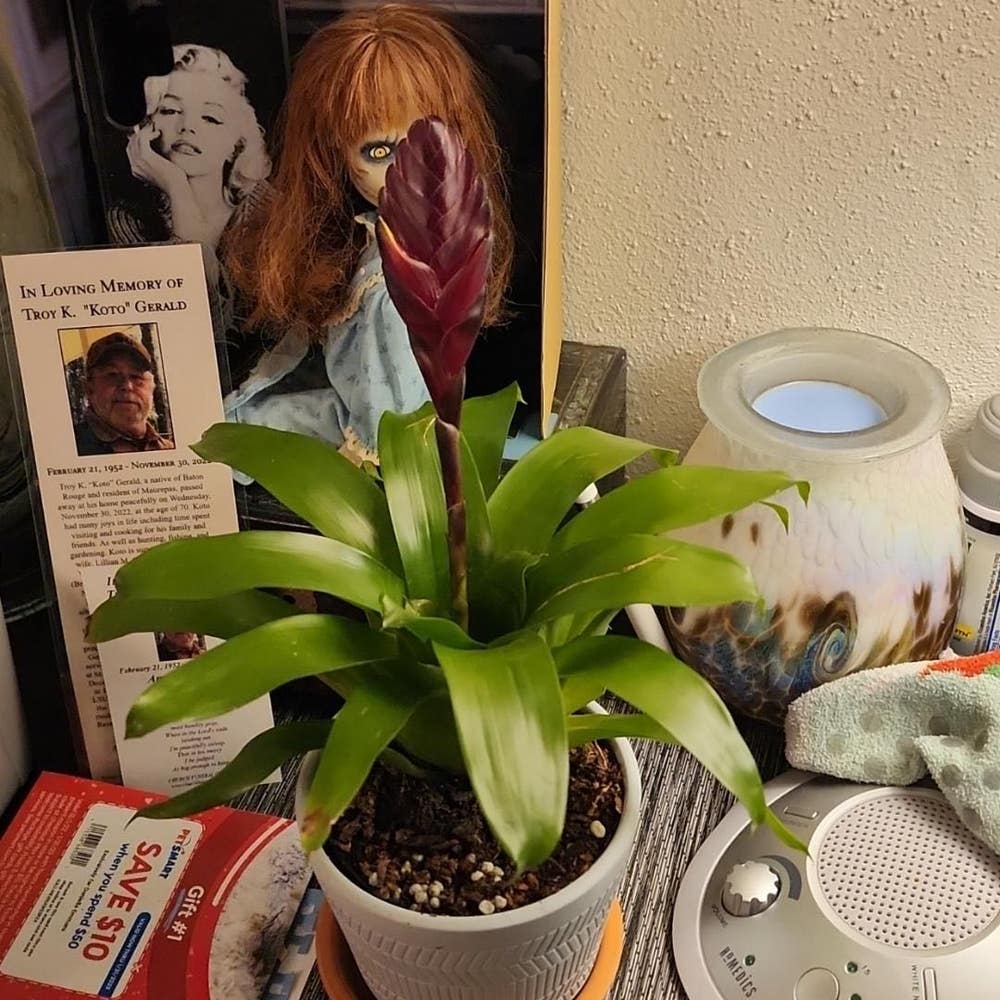
Should I Repot My Flaming Sword And If So, How?
Vriesea carinata
By the Greg Editorial Team
Jun 18, 2024•4 min read
This article was created with the help of AI so we can cover more plants for you. May contain errors. See one? Report it here.
- Roots peeking out? Time to repot your Flaming Sword.
- 🌱 Spring/summer repotting aligns with growth cycles.
- Choose the right pot—size, material, and drainage matter.
Spotting the Telltale Signs It's Time to Repot
🌱 Root Rundown
Roots making a break for it outside the pot? That's your Flaming Sword's version of sending up a flare. When roots peek out of drainage holes or circle the topsoil, they're not just exploring—they're cramped.
Roots should be comfortably contained, not squished like sardines. A root ball resembling a bird's nest signals it's time for a bigger nest. If your plant's roots are more tangled than your headphones, they're begging for space.
💧 Growth and Watering Giveaways
Slowed growth isn't your plant's way of being lazy—it's a cry for help. When your Flaming Sword's growth spurts are more like growth stutters, consider repotting.
Thirsty soil that drains faster than your phone on a video call? That's a sign. If water runs through the pot like it's late for a meeting, your plant's roots are likely hogging all the room. The soil should retain moisture like a sponge, not repel it like oil on water.

Timing Is Everything: When to Repot
🌱 Growing Season Goldmine
Spring and early summer are the sweet spots for repotting your Flaming Sword. This period aligns with the plant's natural growth cycle, where it's primed to stretch its roots and flourish in a new pot.
❄️ Dormancy Dilemma
Avoid repotting during the plant's rest period, typically in the colder months. This is when your Flaming Sword conserves energy and might not recover well from the stress of a move.

The Repotting Rodeo: A Step-by-Step Guide
🏠 Prepping the New Home
Size matters. Choose a pot that's a notch bigger than the old one—your Flaming Sword's roots like a cozy upgrade, not a mansion. Ensure the pot has drainage holes; standing water is a no-go for these tropical treasures. A layer of gravel or clay pebbles at the bottom sets the stage for good drainage.
🌱 The Gentle Uproot
Time to evict your plant—gently. Tilt the pot and coax the Flaming Sword out. If it plays hard to get, a little squeeze on the pot's sides or a run-around with a knife should do the trick. Inspect the roots; trim the circling ones and consider repotting any pups into their own spaces.
🌿 Perfect Potting Mix
Your Flaming Sword craves a soil mix that drains like a dream. Grab a Bromeliaceae mix or make your own with potting soil and a dash of river sand. Airy is key—your plant's roots need to breathe. Before you tuck your plant in, water it a day or two in advance to avoid a dry, stressed-out transplant.

Picking the Perfect Pot: Materials Matter
🏺 Terracotta vs. Plastic vs. Ceramic
When it comes to repotting your Flaming Sword, the pot material is not just a style choice—it's a survival factor for your plant.
Terracotta pots are the go-to for many plant enthusiasts. Their porous nature allows for airflow and moisture control, which is great for preventing root rot. However, they're heavy and can dry out soil quickly, so if you're not on top of watering, your Flaming Sword might thirst more than it should.
Plastic pots are the lightweight champs. Easy to shuffle around, but they hold onto moisture like a sponge. If you're prone to overwatering, these could be your nemesis, leading to soggy soil and unhappy roots.
Ceramic pots, often glazed and stylish, retain moisture better than their terracotta cousins. They're less breathable, though, so make sure your Flaming Sword doesn't end up swimming in excess water.
🚫 What to Avoid
Some materials are like kryptonite to your Flaming Sword. Metal pots can heat up too much, cooking the roots. Glass containers, while chic, can lack drainage, leading to waterlogging. And let's not forget about cheap plastic—it might degrade over time, releasing nasties into the soil.
In short, match the pot to your plant's needs and your own habits. Your Flaming Sword will thank you with vibrant growth.
Aftercare: Helping Your Flaming Sword Settle In
💧 Initial Watering Wisdom
After repotting, water your Flaming Sword immediately to help it recover from the shock. But remember, this plant detests soggy feet, so ensure the soil is well-draining. Moderation is key; keep the soil moist but not waterlogged.
🛡️ Shielding from Shock
Post-repotting, your Flaming Sword is like a vampire in daylight—it hates direct sun. Shade is its sanctuary. Place it in indirect light to prevent additional stress and scorching. Think of it as a cozy, protective umbrella for your tropical friend.
👀 Monitoring and Adjusting
Keep a hawk-eye on your plant for signs of distress. Drooping or yellowing leaves? Time to tweak your care routine. Adjust watering as needed, and resist the urge to fertilize for at least a month. Your Flaming Sword will signal when it's back to its feisty self.
⚠️ Safety First
This content is for general information and may contain errors, omissions, or outdated details. It is not medical, veterinary advice, or an endorsement of therapeutic claims.
Always consult a qualified healthcare professional before using any plant as food, medicine, or supplement.
Never eat any plant (or feed one to pets) without confirming its identity with at least two trusted sources.
If you suspect poisoning, call Poison Control (800) 222-1222, the Pet Poison Helpline (800) 213-6680, or your local emergency service immediately.
Spotted an error? Please report it here.
Ensure your Flaming Sword flourishes 🔥 by using Greg to pinpoint the ideal repotting moment and provide tailored aftercare from this article's insights.