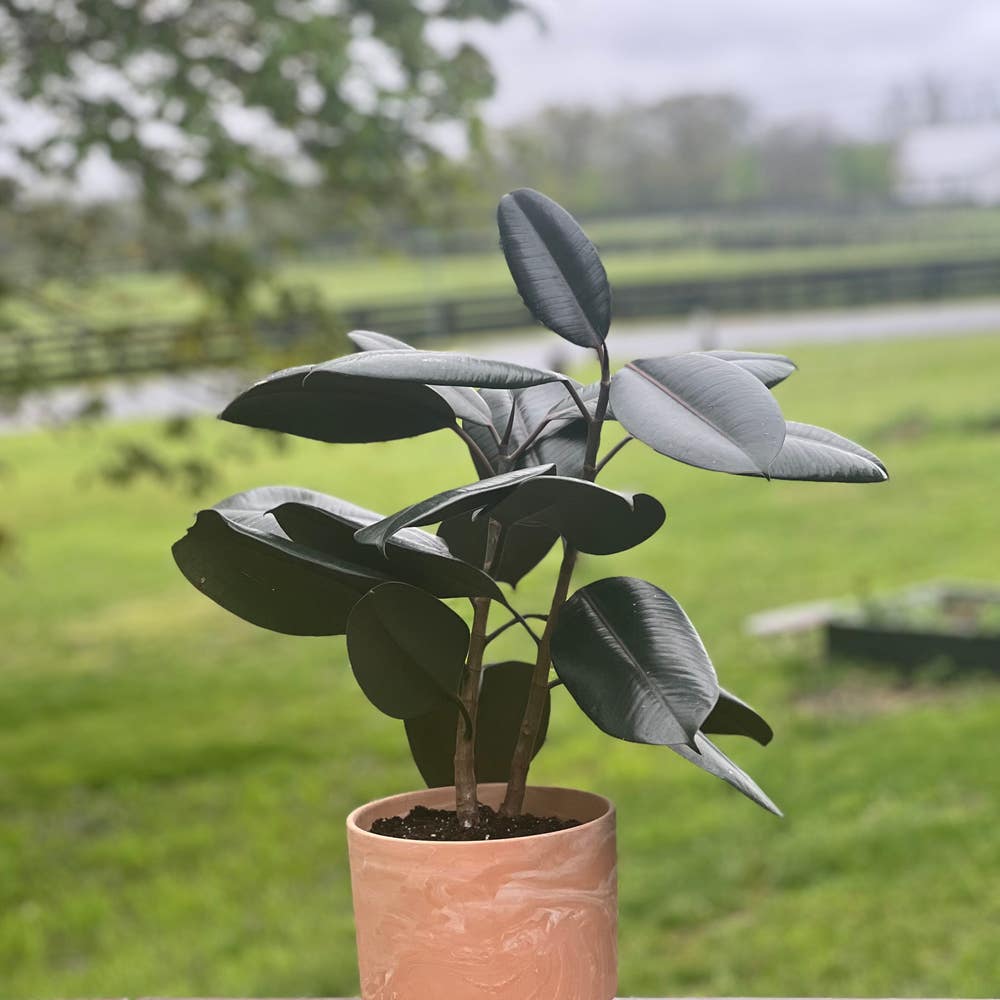
🌳 4 Best Companion Plants for Burgundy Rubber Tree
Ficus elastica 'Burgundy'
By the Greg Editorial Team
Sep 30, 2024•3 min read
This article was created with the help of AI so we can cover more plants for you. May contain errors. See one? Report it here.
Elevate your indoor garden 🌱 with perfect plant pairings that enhance beauty and health for a thriving oasis!
- 🌱 Snake Plant and ZZ Plant thrive alongside Burgundy Rubber Trees with similar care needs.
- 🌸 Pothos and Peace Lilies enhance aesthetics and improve air quality in your indoor garden.
- ❌ Avoid Spider Plants and English Ivy; they compete for resources and attract pests.
Best Companion Plants
🌱 Snake Plant
Similar care needs
The Snake Plant thrives in the same indirect light conditions as the Burgundy Rubber Tree. It also requires infrequent watering, making it a perfect match for the rubber tree's sensitivity to overwatering.
Air purification benefits
Not only does the Snake Plant look great, but it also filters indoor air pollutants. This complements the air-purifying qualities of the rubber tree, creating a healthier living space.
🌿 Pothos
Visual appeal and trailing growth
Pothos adds a touch of elegance with its attractive trailing vines. This enhances the indoor aesthetics, making your plant arrangement visually appealing.
Pest management properties
This hardy plant acts as a natural pest-repellent. It helps deter common houseplant pests, keeping your rubber tree safe and thriving.
🌵 ZZ Plant
Low light tolerance
The ZZ Plant is known for its ability to thrive in low light. This makes it an ideal companion for the rubber tree, which prefers indirect light.
Resilience and low maintenance
With minimal care requirements, the ZZ Plant allows for a harmonious coexistence. Its resilience means you can enjoy a lush indoor garden without the stress of constant upkeep.
🌸 Peace Lily
Complementary aesthetics
The Peace Lily features lush green foliage and striking white blooms. This visual appeal beautifully complements the Burgundy Rubber Tree, enhancing your indoor decor.
Air quality improvement
Beyond aesthetics, the Peace Lily also improves indoor air quality. It works synergistically with the rubber tree to create a fresher, healthier environment.
These companion plants not only enhance the beauty of your space but also contribute to a healthier atmosphere. By selecting compatible plants, you can create a thriving indoor garden that benefits both your plants and your well-being.
Plants to Avoid
🌱 Spider Plant
Competition for nutrients
Spider plants may seem harmless, but they can actually compete for nutrients and water with your burgundy rubber tree. This competition can hinder the growth of both plants, making it a less-than-ideal companion.
🍃 English Ivy
Potential pest attraction
While English ivy adds charm, it can attract pests that may affect your rubber tree. This increases management challenges, turning your indoor oasis into a potential battleground.
🎻 Fiddle Leaf Fig
Similar care needs leading to competition
Fiddle leaf figs share similar light and water requirements with rubber trees. This overlap can create competition for resources, making it tough for both plants to thrive together.
Choosing the right companions is crucial for a healthy indoor garden. By avoiding these plants, you can ensure your burgundy rubber tree flourishes without unnecessary stress.
Encouragement for Exploring Companion Planting
Companion planting offers a wealth of benefits, especially when selecting plants that thrive together. By choosing compatible plants, you not only enhance their growth but also create a vibrant, harmonious indoor environment.
Exploring garden diversity through companion planting can transform your space. It adds visual interest and promotes healthier plants, making your indoor garden a thriving ecosystem.
So, why not experiment with different combinations? You might discover unexpected pairings that elevate both aesthetics and plant health. Embrace the journey of companion planting and watch your indoor garden flourish!
⚠️ Safety First
This content is for general information and may contain errors, omissions, or outdated details. It is not medical, veterinary advice, or an endorsement of therapeutic claims.
Always consult a qualified healthcare professional before using any plant as food, medicine, or supplement.
Never eat any plant (or feed one to pets) without confirming its identity with at least two trusted sources.
If you suspect poisoning, call Poison Control (800) 222-1222, the Pet Poison Helpline (800) 213-6680, or your local emergency service immediately.
Spotted an error? Please report it here.
Transform your indoor space into a thriving ecosystem 🌿 by pairing your Burgundy Rubber Tree with companions like Snake Plants, and let Greg's tailored care reminders guide you to plant success! Flourish together!