🐅 Why Are My Tiger Lily Leaves Curling?
Lilium lancifolium
By the Greg Editorial Team
Jun 18, 2024•6 min read
This article was created with the help of AI so we can cover more plants for you. May contain errors. See one? Report it here.
Unravel the mystery behind your Tiger Lily's curling leaves and restore its vibrant health 🌿🔍!
- Light, temperature, and watering are key to preventing Tiger Lily leaf curl.
- Soil quality and pH balance crucial for healthy leaves.
- Pests and diseases treatment: Use insecticidal soap, neem oil, or fungicide.
Identifying the Causes of Leaf Curling
🌞 Light and Temperature: The Delicate Dance
Light can make or break your Tiger Lily's mood. Too much, and the leaves curl up tighter than a miser's fist. Not enough, and they'll stretch out more than a lazy Sunday morning. Temperature is just as fickle; Tiger Lilies aren't fans of the sauna or the icebox. Keep the thermostat set to "comfortable."
🚰 Watering Woes: Striking the Right Balance
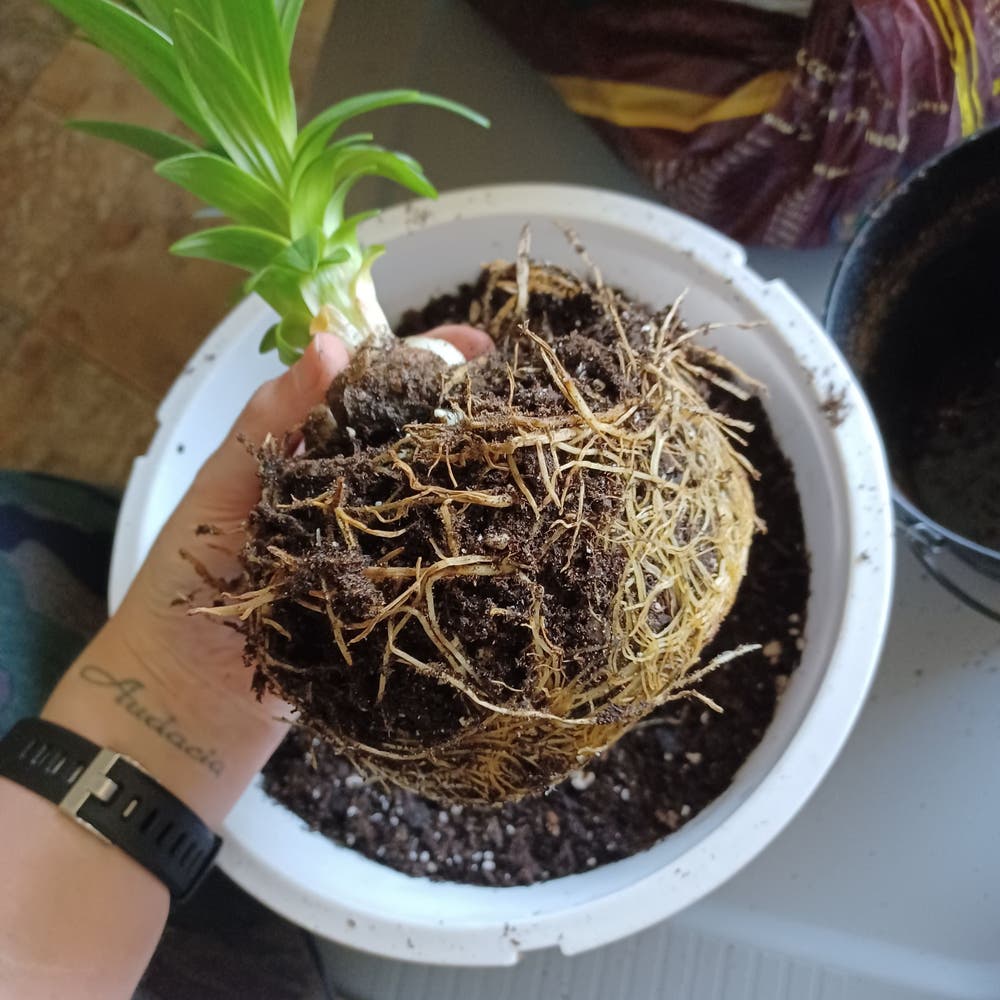
Overwatering is a no-go. Your Tiger Lily isn't trying to take a swim. Ensure proper drainage to avoid root rot, which can cause leaves to curl and wilt. Conversely, underwatering leaves your plant thirstier than a marathon runner without a water station. The leaves will curl, signaling an SOS for hydration.
Recognizing Dehydration
Brittle and lackluster leaves are a cry for help. They need water, but not a flood. Aim for soil that's like a well-squeezed sponge—moist, not drenched.
Avoiding Waterlogged Conditions
Roots need to breathe. If the soil is as soggy as a wet sponge, you've gone too far. Cut back on the H2O and consider adding perlite or sand to improve drainage.

The Impact of Soil Conditions on Leaf Health
🌱 Soil Quality and Drainage
Soil type and structure are like the bedrock of Tiger Lily health. If your lilies are throwing curly tantrums, it might be time to investigate the dirt. Well-drained, rich, and organic soil is the sweet spot for these plants. They'll snub soils that hold onto moisture like a grudge or those that treat water like a hot potato, letting it run right through.
🌿 Soil pH Balance
The pH level of your soil isn't just a number; it's a gateway to nutrient uptake. Tiger Lilies prefer their soil slightly acidic—think pH levels of 5.5-6.5. Too high or too low, and you're locking away the nutrient buffet from your lilies. It's like having a feast behind a glass door—so close, yet so far. Use a pH meter to avoid guesswork; it's like a detective's magnifying glass for your soil's secrets.

Recognizing Pests and Diseases That Cause Curling
🐛 Identifying Specific Pests
Spider mites are stealthy villains, leaving behind a trail of fine webs and yellow speckling. Aphids are the green terrors, sucking the life out of your Tiger Lily leaves and possibly leaving a sticky residue known as honeydew. Thrips are less noticeable but just as destructive, scraping leaves until they exhibit a silvery sheen and curled edges.
🦠 Recognizing Diseases
Powdery mildew is the ghostly specter that coats leaves in a white film, leading to curling and distortion. Viral infections, while less common, can mimic these symptoms. The Lily Symptomless Virus (LSV), transmitted by aphids, can cause leaves to twist and display white stripes.
🕵️♂️ Symptoms to Look For
Upward curls often point to dehydration, while downward spirals may indicate overwatering or pests. Discoloration or spots can signal bacterial or fungal infections. If you're seeing a silvery sheen, think thrips. A white powdery coating? That's powdery mildew's calling card.
🚨 Immediate Actions
Upon spotting pests, reach for insecticidal soap or neem oil. Apply with gusto, especially under leaves. For diseases like powdery mildew, remove affected foliage and consider a fungicide, but always follow the label like it's law. Isolation is key—keep infected plants away from their healthy neighbors.
Remember, your Tiger Lily is a living barometer of its environment. Regular inspections are your best defense. Keep the area clean, reduce excess moisture, and maintain good cultural practices. Healthy plants are your goal; they're the least likely to succumb to the leaf-curling shenanigans of pests and diseases.

Strategies for Correcting Leaf Curling
🌞 Adjusting Light and Temperature
Bright, indirect light is your Tiger Lily's best friend. Like a VIP in an exclusive club, it thrives just outside the spotlight. Keep those rays dappled, not direct, to avoid leaf suntans and curling. When it comes to temperature, think of your plant as a guest at a spring wedding—comfortable, not shivering or sweating. Stable temperatures are key, so dodge those drafts like you would a nosy neighbor.
💦 Humidity Control
Your Tiger Lily doesn't need a tropical rainforest vibe, but it does appreciate a bit of moisture in the air. If your home is drier than a comedian's wit, consider a humidifier or group plants together to create a mini-humidity haven. Just right humidity means leaves stay flat, not curled up like they're hiding something.
💧 Watering Routine
Watering is less about sticking to a strict schedule and more about getting in tune with your plant's needs. If the pot feels like a heavy weightlifter's dumbbell, ease up on the H2O. Conversely, a pot light as a feather signals it's time for a drink. Aim for consistent moisture—the soil should feel like a wrung-out sponge, not a swamp or a desert.
🌱 Soil Quality and Drainage
Soil should be the Tiger Lily's mattress—supportive, not suffocating. Ensure it's well-draining to prevent root rot, which can cause leaves to curl in distress. If your plant's bed is more waterbed than firm mattress, mix in some perlite or sand to improve drainage. Remember, happy roots make for happy shoots.
🌿 pH Balance
The soil's pH can make or break your Tiger Lily's mood. It doesn't want to swim in acid or bake in alkalinity. Aim for a pH between 6.0 and 6.5—a sweet spot that ensures nutrients are readily available. If you're not testing your soil's pH, you're basically trying to bake a cake without measuring the ingredients.
Preventing Future Leaf Curling Issues
In the battle against leaf curling in Tiger Lilies, prevention is your best defense. Let's lock down some strategies to keep those leaves flat and fabulous.
🐛 Pest and Disease Management
Regular inspections are non-negotiable. Catch those critters early, and you'll save your lilies a lot of stress. Keep the area around your plants clean; debris is a party zone for pests. And when it comes to diseases, isolation is your friend. Spot a sickly leaf? Remove it with sterilized shears and treat with a fungicide, but for the love of petals, follow the label to a T.
💧 Ongoing Care Tips
Watering is an art form—get it wrong, and your lilies will throw a fit. Adjust your watering schedule with the seasons; your plants can't check the weather app. Aim for soil moisture consistency, not too wet, not too dry, just right.
Soil pH is like the secret sauce for healthy Tiger Lilies. Keep it slightly acidic to neutral, and you'll avoid a whole host of problems. And don't forget to feed your lilies a balanced diet. Overindulging in nutrients is just as bad as starving them.
Remember, your Tiger Lilies are living their best life when you're paying attention. So, keep your eyes peeled, your shears clean, and your watering can at the ready. Your lilies will thank you with a curl-free existence.
⚠️ Safety First
This content is for general information and may contain errors, omissions, or outdated details. It is not medical, veterinary advice, or an endorsement of therapeutic claims.
Always consult a qualified healthcare professional before using any plant as food, medicine, or supplement.
Never eat any plant (or feed one to pets) without confirming its identity with at least two trusted sources.
If you suspect poisoning, call Poison Control (800) 222-1222, the Pet Poison Helpline (800) 213-6680, or your local emergency service immediately.
Spotted an error? Please report it here.
Keep your Tiger Lily leaves thriving 🌿 with Greg's custom reminders for optimal light, watering, and soil pH, tailored to your home's unique environment.