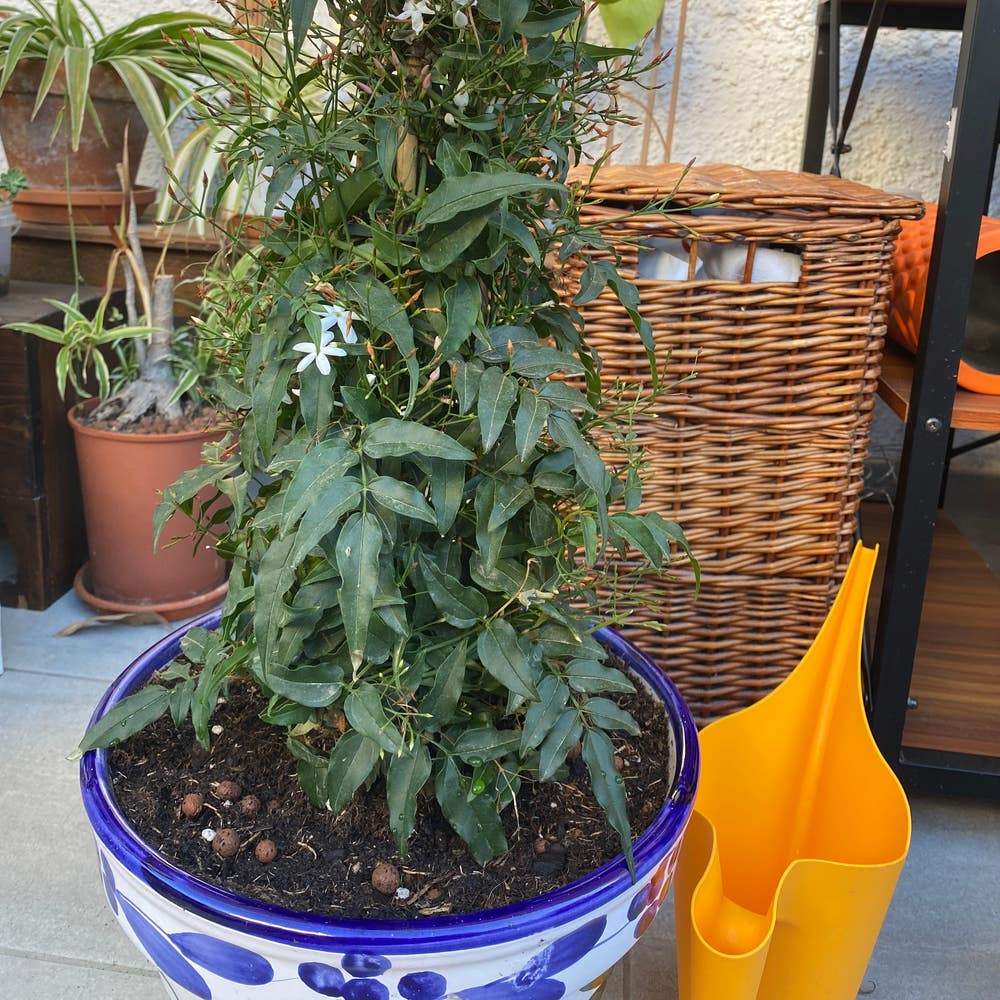
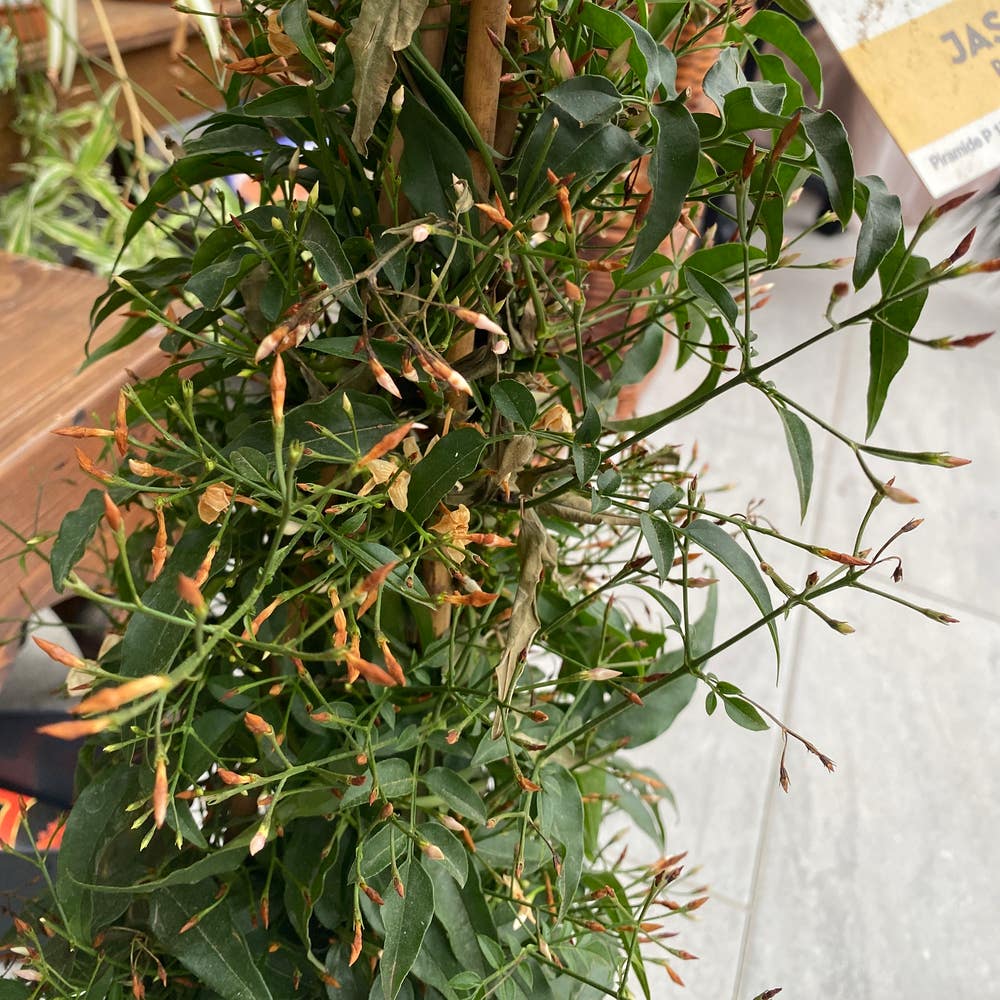
My Pink Jasmine Leaves Are Turning Yellow. What Should I Do?
Jasminum polyanthum
By the Greg Editorial Team
Jun 18, 2024•4 min read
This article was created with the help of AI so we can cover more plants for you. May contain errors. See one? Report it here.
Restore your Pink Jasmine's lush allure 🌿 by conquering yellow leaves with these proven fixes!
- Nutrient deficiencies like nitrogen, iron, and magnesium cause yellow leaves.
- 🚿 Overwatering and poor drainage lead to yellowing; water only when topsoil is dry.
- 🌱 Combat pests and diseases with insecticidal soaps, neem oil, or fungicides.
Pinpointing the Culprits Behind Yellow Leaves
💡 Nutrient Shortfalls
Yellowing leaves can scream "feed me!" in plant language. Nitrogen is often the missing piece of the puzzle, leading to a pale, sickly look. Iron and magnesium are no less important; they're like the sidekicks without which the hero—your Pink Jasmine—can't perform. Iron deficiency shows up as yellowing in new growth, while magnesium deficiency manifests as yellow patches between the leaf veins.
To combat these deficiencies, a quick fix involves applying a foliar spray of chelated nutrients or Epsom salts for magnesium. However, these are temporary band-aids. For a long-term solution, consider a soil test and adjust your fertilization strategy accordingly.
🚰 Too Much Water
Overwatering is the equivalent of drowning your plant in love—too much of a good thing is harmful. Yellow leaves can result from waterlogged roots, which are essentially the plant's lifelines gasping for air. The balance here is critical: aim for moist soil that's not soggy.
Signs of overwatering include soft, yellow leaves and a general droopiness. If the soil feels more like a wet sponge than a moist cradle, it's time to cut back on the H2O and ensure proper drainage.
🐜 Unwanted Guests and Illnesses
Pests and diseases are like uninvited guests at a party, turning leaves yellow as they crash the scene. Spider mites, for instance, leave behind tell-tale webbing and cause leaves to curl underneath. Root rot, on the other hand, is a silent killer, often a consequence of overwatering, making leaves yellow and wilted.
Visual cues for pests include webbing, sticky residue, or the actual critters themselves as small white or brown spots. For diseases like root rot, look for a general wilting and yellowing of leaves, and check the roots for any signs of decay.

Turning Over a New Leaf: Solutions for Yellowing
🌱 Feeding Your Pink Jasmine Right
To revive your Pink Jasmine's leaves, a balanced diet is key. Use a fertilizer with an equal ratio of nitrogen, phosphorus, and potassium, like a 10-10-10 mix. For potted plants, a half-strength liquid fertilizer every two weeks during the growing season should do the trick. Remember: no fertilizing in the cooler months.
💧 Water Wisdom
Overwatering is a common misstep. Your Pink Jasmine isn't a fish; it doesn't need to swim. Ensure the soil is moist but not soggy, and always check that the pot allows for proper drainage. Water only when the top inch of soil is dry to the touch. Consistency is your friend here, so get into a rhythm.
🐛 Combat Strategies for Pests and Diseases
If pests are partying on your plant, it's time to crash it. Insecticidal soaps or neem oil can be your bouncers, keeping those pesky bugs at bay. For fungal foes like root rot, improve drainage and consider a fungicide if things get dire. But let's face it, prevention beats cure, so keep an eye out for early warning signs.

Keeping Yellow at Bay: Prevention Tips
🌸 The Right Environment for Pink Jasmine
Creating the perfect environment for Pink Jasmine is like setting up a backstage for a rockstar’s performance. These plants need bright, indirect light—too much direct sunlight can scorch the leaves, while too little can lead to that dreaded yellowing.
🌡️ Temperature and Humidity
Keep the temperature consistent, ideally between 60-75°F (15-24°C). Sudden temperature swings are a no-go. Humidity-wise, aim for that tropical vibe, around 40-50%. If your air is drier than a stand-up comedian’s wit, consider a humidifier or a pebble tray with water to up the moisture.
🌱 The Foundation of Health: Soil and Pot Essentials
🌿 Soil Selection
The right soil mix for Pink Jasmine is like a gourmet meal for a foodie—it’s got to be rich and well-draining. Organic matter is your friend here, but make sure it doesn’t hold onto water like a grudge. Yellow leaves can signal a soil that’s too wet.
🏺 Potting and Drainage
Now, let’s talk pots. They need to have drainage holes. No holes? That’s like wearing socks with sandals—a bad idea that leads to soggy situations. Elevate your pots with feet or a tray with pebbles to avoid waterlogging.
🌿 Ongoing Care
Keep an eye out for pests; they’re the party crashers of the plant world. Regularly check the undersides of leaves and act fast if you spot freeloaders. And remember, consistency is key—water when the top inch of soil is dry, and feed your plant with a balanced fertilizer, but don’t overdo it. Over-fertilization is like overeating; it does more harm than good.
Rotate your plant occasionally to ensure even growth and prevent it from reaching for the light like a teenager for their phone. By nailing these basics, you’ll keep your Pink Jasmine’s leaves greener than a jealous gardener.

⚠️ Safety First
This content is for general information and may contain errors, omissions, or outdated details. It is not medical, veterinary advice, or an endorsement of therapeutic claims.
Always consult a qualified healthcare professional before using any plant as food, medicine, or supplement.
Never eat any plant (or feed one to pets) without confirming its identity with at least two trusted sources.
If you suspect poisoning, call Poison Control (800) 222-1222, the Pet Poison Helpline (800) 213-6680, or your local emergency service immediately.
Spotted an error? Please report it here.
Turn your pink jasmine's yellow leaves back to a lush green 🌿 with Greg's custom watering schedules and nutrient tracking, ensuring your blooms stay vibrant and healthy.