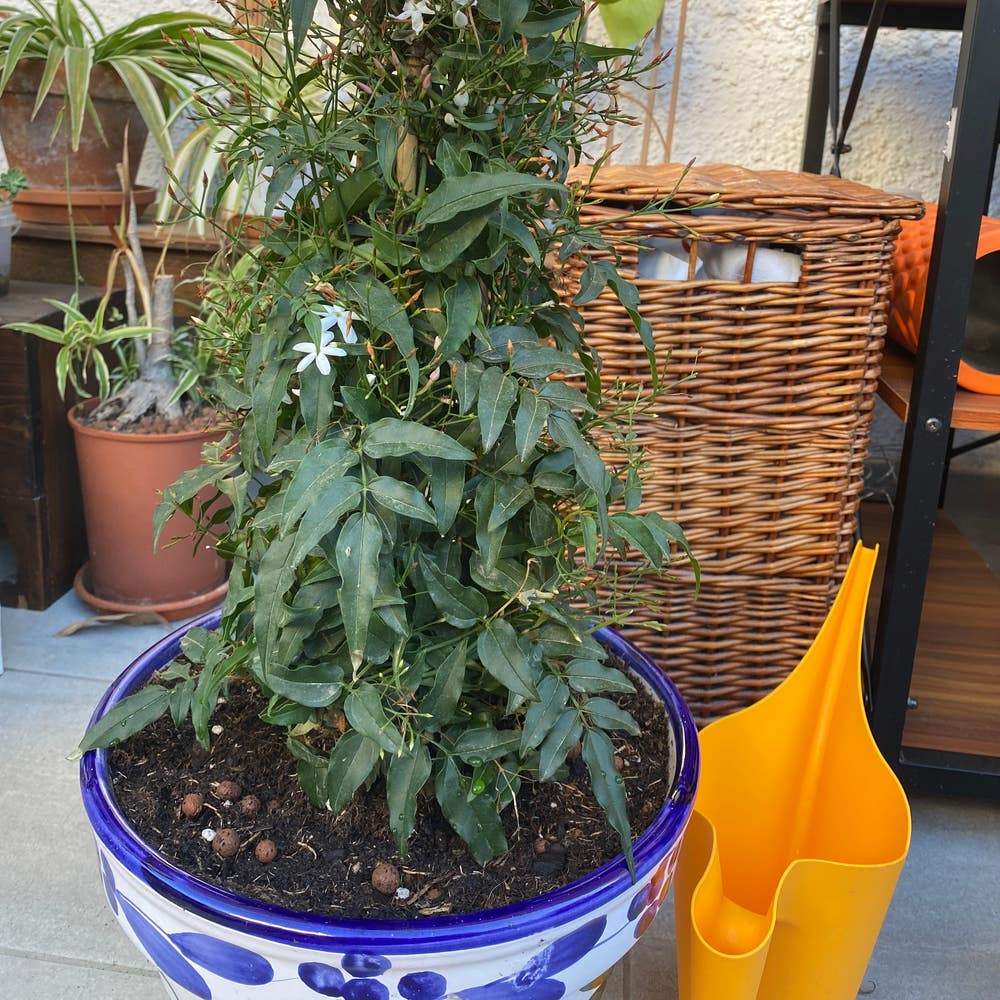
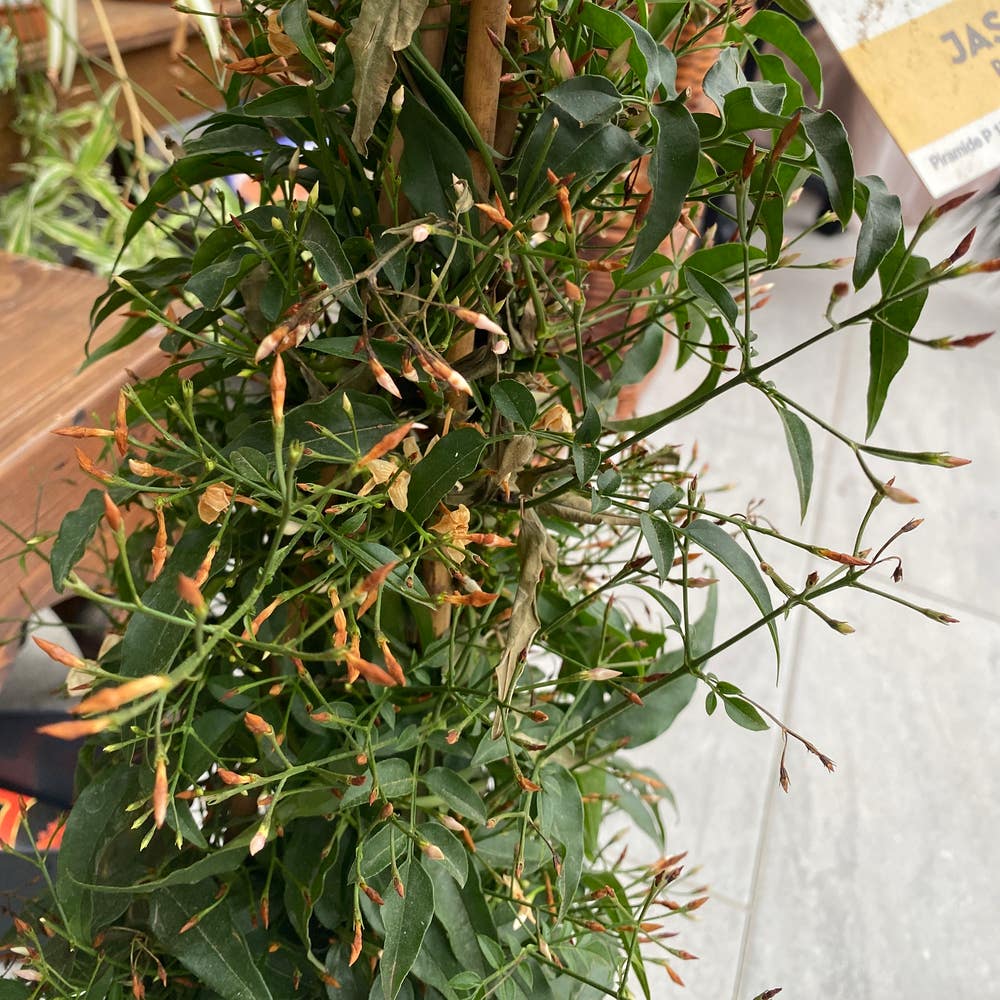
Why Are My Pink Jasmine Leaves Falling Over?
Jasminum polyanthum
By the Greg Editorial Team
Jun 18, 2024•4 min read
This article was created with the help of AI so we can cover more plants for you. May contain errors. See one? Report it here.
Prevent Pink Jasmine despair 🌿 by mastering the art of perfect plant care to stop leaves from falling over!
- 🌧️ Overwatering causes root rot, let soil dry out to rescue.
- 🌡️ Stabilize temperature and humidity to prevent leaf drop.
- 🌿 Consistent care and monitoring keep Pink Jasmine lush and healthy.
Pinpointing the Culprits Behind Droopy Leaves
💧 Overwatering and Root Health
Yellowing leaves and a soil consistency that's more swamp than garden bed? You've likely been overzealous with the watering can. Pink Jasmine isn't a fan of soggy feet. To rescue an overwatered plant, first, stop watering and let the soil dry out. If the roots are darker than your espresso and smell like something died, you'll need to trim the rot and repot in fresh, well-draining soil.
🏜️ Underwatering Woes
Leaves that look more dehydrated than a raisin in the sun are crying out for water. When your Pink Jasmine is underwatered, the leaves droop like they've given up on life. To rehydrate, soak the soil until water runs freely from the drainage holes. Then, establish a more consistent watering routine, allowing the top inch of soil to dry out between waterings.
🌞 Environmental Stress Factors
If your Pink Jasmine is dropping leaves faster than a tree in autumn, check the temperature and humidity. These plants enjoy stability, not the roller coaster of indoor climate changes. Adjust the light exposure to prevent leaf drop; indirect sunlight is the sweet spot. Too much direct sun and your Jasmine will wither like a vampire at a beach party. Too little, and it'll stretch out and flop over like it's reaching for the last rays of a sunset.

Nutrient Deficiency: A Silent Leaf Dropper
💡 Spotting the Signs of Nutritional Lack
Yellowing leaves might be your Pink Jasmine's way of saying it's running on empty, nutrient-wise. Look out for stunted growth and leaf spotting—these are your plant's distress signals. If the lower leaves start to drop or display purple spots, it's a clear SOS for nitrogen. When leaves look like they've seen a ghost—turning pale or white—that's a sign screaming iron deficiency.
Feeding Your Pink Jasmine Right
Choosing the right fertilizer is like picking a multivitamin; it's got to have everything your Pink Jasmine craves. A balanced feed, rich in phosphorus and potassium, should be on your shopping list. Apply it twice a year, or for the green thumbs out there, every two weeks during the growing season. But remember, moderation is key—too much of a good thing, and you'll be dealing with a nutrient hangover, complete with wilted leaves and brown spots. If you're in doubt, don't wing it—consult an expert or stick to a tried-and-tested fertilizer. Keep an eye on your plant after feeding; it'll tell you if you've got the mix just right.

Tactical Turnaround: Remedies and Rescues
💧 Watering Wisdom
Watering your Pink Jasmine isn't rocket science, but it does require some finesse. Check the soil before you water—stick your finger in about an inch deep. If it's dry, it's time to hydrate. Use room temperature water and soak the soil until it's moist, not soggy. Remember, the goal is to mimic a natural rain shower, not a flood.
🏡 Creating a Comfort Zone
Your Pink Jasmine's environment should be as stable as a rock. Avoid drastic temperature swings and make sure the humidity is just right—not too dry, not a tropical rainforest. If your indoor air resembles the Sahara, consider a humidifier or a pebble tray with water to up the humidity game.
🌱 Nutrient Boost
Fertilizing is like a spice—it's all about the right amount. Overdo it, and you'll have a mess. Stick to a balanced, water-soluble fertilizer and apply it at half strength every 4-6 weeks during the growing season. In winter, give it a rest; your plant's not hungry for extra nutrients when it's not in active growth mode.

Keeping Leaves Lush: Prevention Strategies
📅 Consistent Care Schedule
Routine is your Pink Jasmine's best friend. Establish a care schedule that sticks to the basics: watering when the top inch of soil is dry, ensuring bright but indirect light, and keeping the environment draft-free with consistent temperatures. It's like brushing your teeth – do it regularly, and you'll avoid cavities, or in this case, leaf drop.
👀 Vigilant Monitoring
Early detection is your secret weapon against leaf loss. Make like a detective and inspect your Pink Jasmine regularly for any signs of distress. If you notice something off, act quickly. Adjust your care, and you might just prevent a full-blown botanical crime scene. Keep in mind, a clean plant is less likely to attract pests, so don't let dead leaves hang around like bad company.
⚠️ Safety First
This content is for general information and may contain errors, omissions, or outdated details. It is not medical, veterinary advice, or an endorsement of therapeutic claims.
Always consult a qualified healthcare professional before using any plant as food, medicine, or supplement.
Never eat any plant (or feed one to pets) without confirming its identity with at least two trusted sources.
If you suspect poisoning, call Poison Control (800) 222-1222, the Pet Poison Helpline (800) 213-6680, or your local emergency service immediately.
Spotted an error? Please report it here.
Prevent your Pink Jasmine's leaf drop 🍂 by relying on Greg's custom reminders and environmental tracking to ensure just-right watering and care.