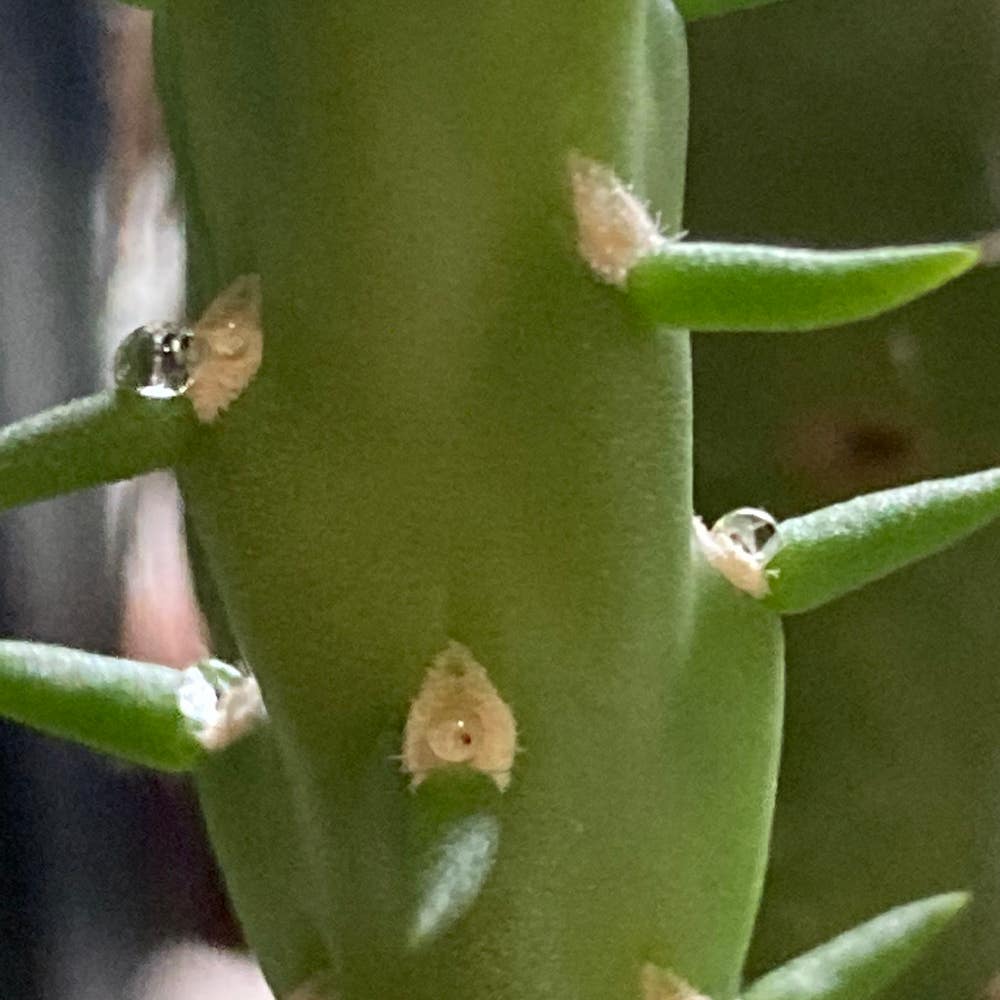
🌵 What to Do When Your Jumping Cholla Leaves Turn Yellow
Cylindropuntia prolifera
By the Greg Editorial Team
Oct 20, 2024•6 min read
This article was created with the help of AI so we can cover more plants for you. May contain errors. See one? Report it here.
Transform your Jumping Cholla's health 🌵 by quickly diagnosing and treating yellowing leaves for vibrant growth!
- 🌵 Yellow leaves indicate issues: overwatering, underwatering, nutrient deficiencies, or pests.
- 💧 Adjust watering practices: let soil dry completely before rewatering for optimal health.
- 🐛 Monitor for pests: mealybugs and spider mites can cause yellowing; use neem oil.
Causes of Yellowing Leaves
💧 Overwatering and Its Effects
Overwatering is a common culprit behind yellowing leaves in Jumping Cholla. Symptoms include yellowing leaves, especially at the base, soft and mushy stems, and the potential development of root rot.
Proper soil drainage is crucial for cacti. A recommended soil mix is 50% cactus soil and 50% perlite or sand to prevent water accumulation.
🚰 Underwatering and Dehydration Signs
On the flip side, underwatering can also lead to yellowing leaves. Look for yellowing at the tips, along with wrinkled or shriveled stems and a dry, brittle texture.
Consistency in watering is key. Water only when the top 1-2 inches of soil are dry, typically every 2-4 weeks, depending on your environment.
🌱 Nutrient Deficiencies
Nitrogen Deficiency
A nitrogen deficiency manifests as general yellowing of leaves and stunted growth. To treat this, use a balanced cactus fertilizer rich in nitrogen during the growing season.
Magnesium Deficiency
Magnesium deficiency shows up as yellowing between leaf veins, known as interveinal chlorosis. Applying Epsom salt (magnesium sulfate) diluted in water can help restore balance.
🐛 Pest Infestations
Common Pests
Mealybugs are a frequent pest for cacti, identifiable by cotton-like masses on stems and leaves. Treat infestations with insecticidal soap or neem oil for effective control.
Spider mites can also wreak havoc, leaving fine webbing and stippled leaves in their wake. Increasing humidity and using miticides can help manage these pests.
Understanding these causes will empower you to take action and restore your Jumping Cholla to its vibrant self. Next, we’ll explore how to diagnose yellow leaves effectively.
Diagnosing Yellow Leaves
👀 Visual Signs to Look For
When your Jumping Cholla starts to show yellow leaves, pay close attention to the color. Bright yellow leaves often indicate a more severe issue, while pale yellow might suggest a less critical problem.
Texture is equally important. Softness can signal overwatering, whereas a dry, brittle feel often points to underwatering.
💧 Differentiating Between Overwatering and Underwatering
Identifying whether your plant is overwatered or underwatered is crucial. Overwatering typically results in soft, mushy stems and yellowing at the base of the leaves.
On the other hand, underwatering manifests as wrinkled, shriveled stems with yellowing at the tips. Knowing these signs can help you act quickly.
🐛 Identifying Pest Damage
Pests can also contribute to yellowing leaves. Look for visible pests, such as mealybugs or spider mites, and check for webbing that might indicate an infestation.
Additionally, sticky residue, known as honeydew, can be a telltale sign of pest activity. If you notice this, it's time to take action.
🌱 Assessing Soil Conditions
Soil conditions play a significant role in your plant's health. Check for waterlogged or compacted soil, as these can lead to root issues.
Using a moisture meter can provide accurate readings of soil moisture levels. This tool can help you determine when it’s time to water or if you need to adjust your care routine.
With these diagnostic tips, you can better understand what’s affecting your Jumping Cholla. Next, let’s explore effective treatment options to restore its health.
Treatment Options
Adjusting Watering Practices 🌊
Assess current watering frequency. Take a moment to evaluate how often you’re watering your Jumping Cholla. This is crucial for determining if you're over or underwatering.
Allow soil to dry out completely before rewatering. Cacti thrive in dry conditions, so ensure the soil is bone dry before giving it another drink.
Use a moisture meter for accurate readings. This handy tool can help you gauge soil moisture levels, making it easier to avoid common watering mistakes.
Fertilization Methods for Nutrient Deficiencies 🌱
Choose a balanced cactus fertilizer. Look for one that provides essential nutrients, particularly nitrogen, to support healthy growth.
Apply during the growing season (spring and summer). Timing is key; fertilizing during these months maximizes nutrient absorption.
Follow package instructions for dilution and frequency. Always adhere to the guidelines to avoid over-fertilization, which can harm your plant.
Pest Control Strategies 🐜
Organic Methods
Neem oil application: Spray neem oil on affected areas to deter pests naturally. It’s effective and safe for your plant.
Insecticidal soap: This is another great option for targeting pests directly. Just apply it to the infested areas for best results.
Chemical Methods
Use systemic insecticides for severe infestations. If pests are overwhelming, systemic options can provide a more aggressive solution.
Follow safety guidelines and application instructions. Always prioritize safety for both you and your plant when using chemicals.
Improving Soil Drainage and Aeration 🌬️
Repot using a well-draining cactus mix. This is essential for preventing water accumulation that can lead to root rot.
Ensure pots have drainage holes. Proper drainage is non-negotiable; it allows excess water to escape.
Consider adding perlite or sand to improve aeration. These materials enhance soil structure, promoting better airflow and drainage.
With these treatment options, you can effectively address yellowing leaves and help your Jumping Cholla thrive. Next, let’s explore some preventative measures to keep your cactus healthy in the long run.
Preventative Measures
Best Practices for Watering 🌊
Watering your Jumping Cholla should be intuitive. Only water when necessary, avoiding a rigid schedule to adapt to your plant's needs.
Regularly monitor environmental conditions, as factors like humidity and temperature can greatly influence how often you should water.
Soil Selection and Potting Tips 🌱
Choosing the right soil is crucial for your cactus's health. Opt for a cactus-specific soil mix that promotes drainage and aeration.
Additionally, select pots with adequate drainage holes to prevent water accumulation, which can lead to root rot.
Seasonal Care Adjustments 🍂
As seasons change, so should your care routine. Reduce watering during the winter months when your cactus is dormant.
Keep an eye on temperature and humidity fluctuations, adjusting your care accordingly to ensure your plant thrives year-round.
Regular Inspection for Pests and Diseases 🔍
Stay proactive by checking your Jumping Cholla bi-weekly for any signs of pests. Early detection can save your plant from severe infestations.
Don't forget to promptly remove any dead or yellowing leaves. This simple act can help maintain the overall health and appearance of your cactus.
By implementing these preventative measures, you can foster a thriving environment for your Jumping Cholla. This foundation will set the stage for the next section, where we’ll explore treatment options for any issues that may arise.
⚠️ Safety First
This content is for general information and may contain errors, omissions, or outdated details. It is not medical, veterinary advice, or an endorsement of therapeutic claims.
Always consult a qualified healthcare professional before using any plant as food, medicine, or supplement.
Never eat any plant (or feed one to pets) without confirming its identity with at least two trusted sources.
If you suspect poisoning, call Poison Control (800) 222-1222, the Pet Poison Helpline (800) 213-6680, or your local emergency service immediately.
Spotted an error? Please report it here.
Keep your Jumping Cholla thriving 🌵 by using Greg's tailored care reminders to tackle yellowing leaves and ensure optimal watering and nutrients!