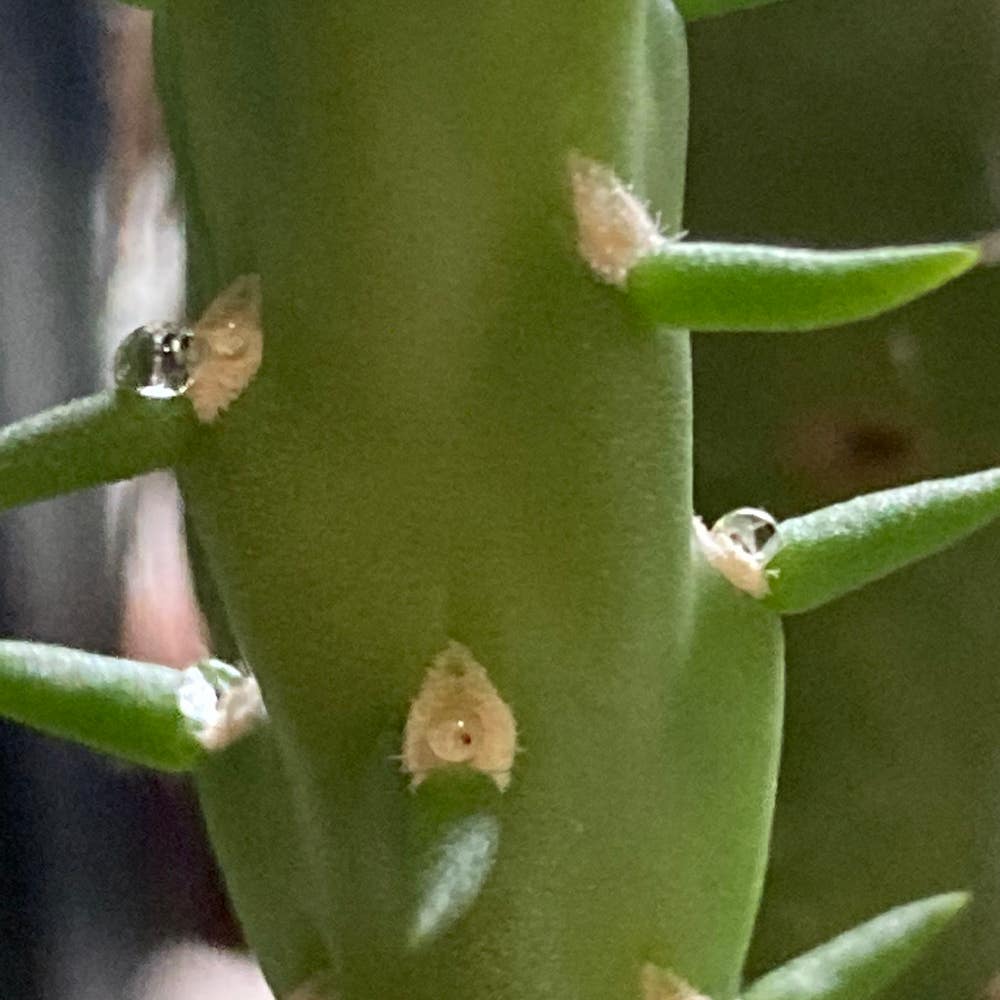
🌵 How to Fix Dropping Leaves on Your Jumping Cholla
Cylindropuntia prolifera
By the Greg Editorial Team
Oct 20, 2024•4 min read
This article was created with the help of AI so we can cover more plants for you. May contain errors. See one? Report it here.
Transform your Jumping Cholla's health 🌵 by learning to diagnose and prevent leaf drop effectively!
- 💧 Overwatering and underwatering both cause leaf drop; monitor soil moisture carefully.
- 🌞 Jumping Cholla needs 6-8 hours of sunlight daily for optimal health.
- 🐛 Inspect for pests regularly; use neem oil for effective organic control.
Diagnosing the Problem
🚰 Signs of Overwatering
Overwatering can be a sneaky culprit behind your Jumping Cholla's leaf drop. Look for darkened pads that have a glossy sheen; this is a clear sign that your plant is drowning.
Another telltale sign is a foul smell emanating from the soil. If you catch a whiff of something off, it’s time to investigate further.
To confirm your suspicions, use a moisture meter to check the soil moisture levels. This handy tool will help you determine if the soil is too wet.
💧 Signs of Underwatering
On the flip side, underwatering can also lead to leaf drop. Keep an eye out for shriveling pads and visible stress; these are signs your plant is thirsty.
If leaves are dropping prematurely, it’s another red flag. To assess soil dryness, stick your finger 1-2 inches deep into the soil; if it feels dry, your plant needs water.
🐛 Identifying Pest Damage
Pests can wreak havoc on your Jumping Cholla, so a thorough inspection is essential. Look for sticky residue or webbing on the pads, which can indicate pest activity.
Examine the pads for discoloration and lesions. If you want to get a closer look, grab a magnifying glass to spot any tiny pests that might be hiding.
By diagnosing these issues early, you can take action to restore your plant's health and vitality. Next, let’s explore effective solutions for leaf drop.
Solutions for Leaf Drop
🌊 Adjusting Watering Practices
Establishing a consistent watering schedule is crucial for your Jumping Cholla. Aim to water every 2-3 weeks during the growing season, ensuring you deeply saturate the soil until excess water drains out.
To confirm you're watering correctly, check the soil moisture. It should feel dry 1-2 inches down before you water again.
🏺 Improving Soil Drainage
Choosing the right soil type can make a significant difference. Opt for a well-draining cactus mix or sandy loam to promote healthy root growth.
You can enhance drainage further by adding perlite or coarse sand to your soil mix. Also, make sure your pots have drainage holes to prevent water from pooling at the bottom.
🐞 Pest Control Methods
When it comes to pests, organic options can be effective and safer for your plant. Neem oil is a great choice; just dilute it according to the instructions and apply it to affected areas.
Insecticidal soap is another option. Follow the usage instructions carefully to ensure you’re applying it effectively.
If pests persist, you might need to consider chemical treatments. Use these as a last resort and always follow safety precautions during application to protect both your plant and yourself.
With these solutions in place, your Jumping Cholla will be on the path to recovery. Next, let’s explore preventative measures to keep your plant thriving in the long run.
Preventative Measures
Optimal Sunlight Exposure 🌞
Jumping Cholla thrives in full sun, requiring 6-8 hours of direct sunlight daily. If the weather turns extreme, consider moving your plant indoors to protect it from harsh conditions.
Ideal Temperature Ranges 🌡️
Maintaining the right temperature is crucial for your plant's health. The optimal range is 70°F to 100°F (21°C to 38°C), so be sure to shield it from frost by bringing it indoors or using coverings when necessary.
Seasonal Care Tips 🍂
As the seasons change, so should your care routine. In winter, reduce watering frequency, and during the growing season, adjust your fertilization schedule to support robust growth.
By implementing these preventative measures, you can ensure your Jumping Cholla remains healthy and vibrant throughout the year. Next, let’s explore how to monitor your plant's health effectively.
Monitoring Plant Health
🕵️♂️ Regular Inspection Techniques
Regular inspections are crucial for maintaining the health of your Jumping Cholla. Aim for weekly checks during the growing season to catch any issues early, and switch to monthly inspections during dormant periods.
When inspecting, look for signs of new growth and overall vigor. Healthy plants will show fresh pads and vibrant colors, indicating they are thriving.
🔄 Signs of Recovery After Treatment
After addressing any issues, it's important to monitor for signs of recovery. New pad growth and restored color are strong indicators that your plant is bouncing back.
Additionally, check for the stabilization of existing pads. This means your Jumping Cholla is regaining strength and resilience.
📅 Long-Term Care Strategies
Establishing a long-term care routine is essential for ongoing health. Consistent watering and fertilization practices will support growth, while regular pest monitoring and soil checks help prevent future problems.
Be mindful of environmental changes. Adjust your care based on seasonal shifts and whether your plant is indoors or outdoors to ensure it continues to thrive.
By staying vigilant and adapting your care, you can keep your Jumping Cholla healthy and vibrant for years to come. Next, let’s explore some preventative measures to further enhance your plant's well-being.
⚠️ Safety First
This content is for general information and may contain errors, omissions, or outdated details. It is not medical, veterinary advice, or an endorsement of therapeutic claims.
Always consult a qualified healthcare professional before using any plant as food, medicine, or supplement.
Never eat any plant (or feed one to pets) without confirming its identity with at least two trusted sources.
If you suspect poisoning, call Poison Control (800) 222-1222, the Pet Poison Helpline (800) 213-6680, or your local emergency service immediately.
Spotted an error? Please report it here.
Keep your Jumping Cholla thriving 🌵 by using Greg's personalized watering reminders and moisture checks to prevent leaf drop and ensure vibrant growth!