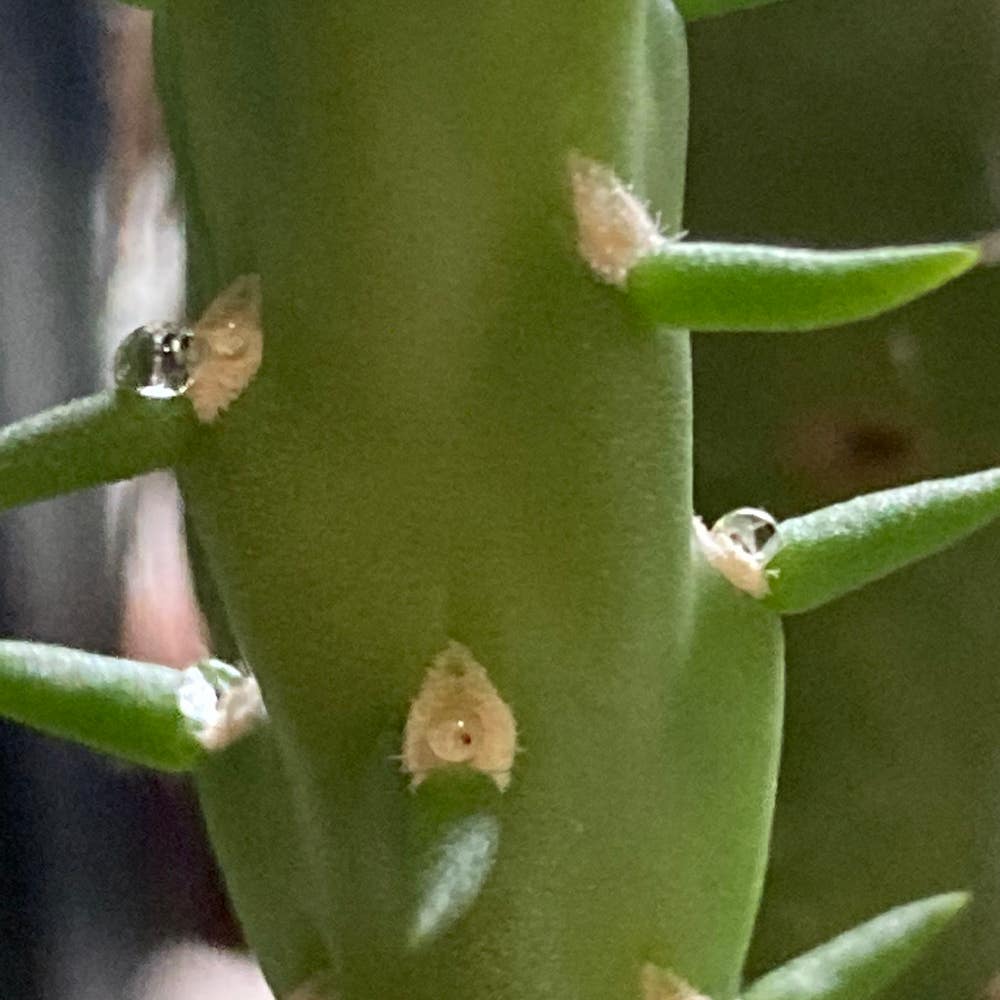
🌵 How to Cure Droopy Leaves on Your Jumping Cholla
Cylindropuntia prolifera
By the Greg Editorial Team
Oct 20, 2024•6 min read
This article was created with the help of AI so we can cover more plants for you. May contain errors. See one? Report it here.
Transform your droopy Jumping Cholla 🌵 into a thriving beauty with these essential care tips and tricks!
- 🌵 Droopy leaves indicate overwatering, underwatering, pests, or nutrient deficiencies.
- 💧 Proper watering is key: let soil dry completely between waterings for health.
- 🌞 Jumping Cholla thrives in full sun; ensure 6-8 hours of direct sunlight daily.
Causes of Droopy Leaves
Droopy leaves on your Jumping Cholla can signal a variety of issues. Understanding these causes is crucial for restoring your plant's health.
💧 Overwatering
Overwatering is a common culprit. Excess moisture can lead to root rot, which manifests as yellowing pads and a mushy texture.
🚰 Underwatering
On the flip side, underwatering can also cause droopiness. Insufficient water leads to dehydration, resulting in wrinkled or shriveled pads.
🍽️ Nutrient Deficiencies
Nutrient deficiencies can significantly affect growth. A lack of essential nutrients, like nitrogen or magnesium, can cause yellowing pads and stunted growth.
🐛 Pest Infestations
Pests can weaken your Jumping Cholla, making it more susceptible to droopy leaves. Common offenders include mealybugs and spider mites, which can be identified by their cotton-like masses and fine webbing.
🌪️ Environmental Stress
Lastly, environmental stress plays a role. Temperature fluctuations and humidity levels can impact your plant's overall health, leading to droopiness.
By identifying these causes, you can take the necessary steps to revive your Jumping Cholla. Next, we’ll explore how to diagnose the specific problem affecting your plant.
Diagnosing the Problem
💧 Overwatering: Signs and Solutions
Overwatering is a common issue that can lead to droopy leaves on your Jumping Cholla. Look for yellowing pads and a mushy texture; these are clear indicators of excess moisture.
If you notice a foul smell from the soil, it’s likely a sign of root rot. To remedy this, allow the soil to dry out completely before watering again. Consider repotting your cactus in a well-draining cactus mix to improve drainage.
🌵 Underwatering: Signs and Solutions
Underwatering can also cause droopy leaves, presenting as wrinkled or shriveled pads. If your cactus is drooping despite dry soil, it’s time to take action.
Water your Jumping Cholla thoroughly, ensuring excess water can drain away. Establishing a consistent watering schedule, especially during the growing season, will help keep your plant healthy.
🥦 Nutrient Deficiencies: Identifying and Correcting
Nutrient deficiencies can significantly impact your Jumping Cholla's health. Common issues include nitrogen deficiency, which leads to yellowing pads and stunted growth, and magnesium deficiency, characterized by interveinal chlorosis.
To address these deficiencies, use a balanced cactus fertilizer during the growing season. Conducting soil tests can also help you determine the nutrient levels and make necessary adjustments.
🐛 Pest Infestations: Common Pests and Treatments
Pests can weaken your Jumping Cholla, leading to droopy leaves. Mealybugs, identifiable by their cotton-like masses on pads, and spider mites, which leave fine webbing and stippled leaves, are common culprits.
Treat infestations with neem oil or insecticidal soap. Regular inspections are crucial to catch these pests early and prevent further damage.
Understanding these issues will help you diagnose and treat your Jumping Cholla effectively. Next, let’s explore how to prevent droopy leaves from occurring in the first place.
Preventing Droopy Leaves
💧 Proper Watering Techniques
To keep your Jumping Cholla thriving, it's crucial to master your watering routine. Allow the soil to dry out completely between waterings to prevent overwatering, which is a common culprit for droopy leaves.
Water deeply but infrequently, especially during the summer months. This approach encourages deep root growth and helps your plant withstand dry spells.
🌱 Ideal Soil Composition and Drainage
The right soil mix is essential for your cactus's health. A recommended blend is 50% cactus soil and 50% perlite or sand, ensuring excellent drainage.
Don’t forget about drainage holes in your pots! They prevent water accumulation, which can lead to root rot and droopy leaves.
☀️ Optimal Sunlight Exposure
Jumping Cholla loves the sun! Aim for full sun exposure, providing 6-8 hours of direct sunlight daily.
If you notice your cactus stretching or leaning towards light sources, it’s a sign it’s not getting enough sunlight. Adjust its position to ensure it gets the light it craves.
🍂 Seasonal Care Adjustments
Your cactus's needs change with the seasons. In spring and summer, increase watering and fertilization to support growth.
As fall and winter approach, reduce watering and skip fertilization. This seasonal adjustment helps your Jumping Cholla prepare for dormancy, keeping it healthy year-round.
By implementing these preventive measures, you can maintain a vibrant and resilient Jumping Cholla. Next, let’s explore how to treat droopy leaves effectively when they do occur.
Treating Droopy Leaves
Step-by-Step Guide to Recovery 🌱
To revive your droopy Jumping Cholla, start by assessing your watering schedule. Adjust it as necessary to ensure the plant isn't over or underwatered.
Next, check for pests lurking on your cactus. If you spot any, treat them promptly to prevent further damage.
If the soil seems compacted or retains too much moisture, consider repotting your cactus. This will improve drainage and promote healthier growth.
Finally, fertilize your Jumping Cholla with a balanced cactus fertilizer. This will provide the essential nutrients needed for recovery.
When to Repot or Change Soil 🪴
Repotting may be necessary if you notice roots growing out of the drainage holes. This is a clear sign that your cactus needs more space.
Another indicator is if the soil has broken down and lost its drainage properties. In such cases, early spring is the best time to repot, just before the growing season begins.
Fertilization Tips for Healthy Growth 🌼
During the growing season, fertilize your Jumping Cholla every 4-6 weeks. This regular feeding will help it thrive.
Opt for a low-nitrogen, high-phosphorus cactus fertilizer. This type of fertilizer supports robust growth and vibrant pads.
By following these steps, you can help your Jumping Cholla bounce back from droopy leaves and flourish once again. Next, let’s explore how to monitor and maintain your cactus for long-term health.
Monitoring and Maintenance
Regular Checks for Pests and Diseases 🐛
Routine inspections are essential for keeping your Jumping Cholla healthy. Look for signs of disease, such as dark spots, mold, or unusual growths, which can indicate underlying issues.
Seasonal Care Routines 🌦️
Adjusting your care routine with the seasons can significantly impact your plant's health.
- Spring: Increase watering and fertilization to support growth.
- Summer: Keep an eye out for pests and adjust watering based on heat.
- Fall: Prepare your plant for dormancy by reducing watering.
- Winter: Provide minimal care, ensuring protection from frost.
Signs of Healthy vs. Unhealthy Jumping Cholla 🌱
Recognizing the signs of a healthy Jumping Cholla can help you maintain its vitality.
- Healthy signs: Look for firm, plump pads with vibrant color and no signs of pests or disease.
- Unhealthy signs: Be wary of droopy, yellowing pads and the presence of pests or mold.
By staying vigilant and adjusting your care routine, you can ensure your Jumping Cholla thrives throughout the year. Next, we’ll explore how to treat droopy leaves effectively.
⚠️ Safety First
This content is for general information and may contain errors, omissions, or outdated details. It is not medical, veterinary advice, or an endorsement of therapeutic claims.
Always consult a qualified healthcare professional before using any plant as food, medicine, or supplement.
Never eat any plant (or feed one to pets) without confirming its identity with at least two trusted sources.
If you suspect poisoning, call Poison Control (800) 222-1222, the Pet Poison Helpline (800) 213-6680, or your local emergency service immediately.
Spotted an error? Please report it here.
Revive your Jumping Cholla's vibrancy 🌵 by using Greg's tailored watering reminders and nutrient tips to keep those droopy leaves at bay!