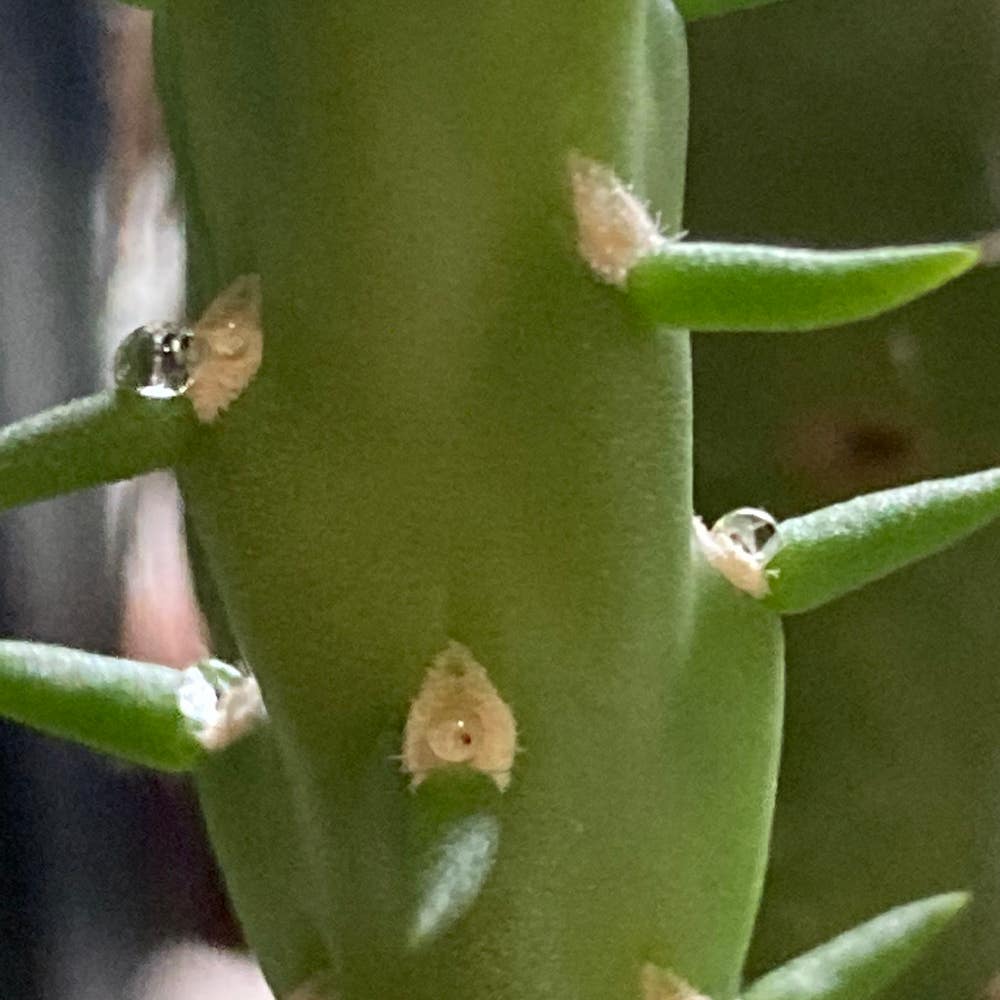
🌵 Understanding Black Spots on Your Jumping Cholla Leaves
Cylindropuntia prolifera
By the Greg Editorial Team
Oct 20, 2024•6 min read
This article was created with the help of AI so we can cover more plants for you. May contain errors. See one? Report it here.
Revive your Jumping Cholla from black spots with essential diagnosis and treatment tips! 🌵✨
- 🌱 Black spots on Jumping Cholla arise from fungi, pests, or environmental stress.
- 💧 Overwatering and sunburn are common causes; ensure proper drainage and gradual sunlight exposure.
- 🔍 Regular inspections help catch issues early, ensuring your cactus stays healthy.
Causes of Black Spots
🦠 Fungal Infections
Fungal infections are a common culprit behind black spots on your Jumping Cholla leaves. These diseases often manifest as black, sunken spots, signaling that your cactus is under stress.
High humidity and poor air circulation create the perfect breeding ground for fungi. If your environment lacks airflow or is overly damp, be on the lookout for these telltale signs.
🐛 Pest Infestations
Pests can also lead to unsightly black spots on your cactus. Scale insects, which appear as small, hard bumps, and mealybugs, recognizable by their cotton-like masses, are two primary offenders.
These pests cause significant damage by sucking sap from the plant, leading to leaf discoloration and overall decline. Regular inspections can help catch these pests early.
🌧️ Environmental Stress
Overwatering
Overwatering is a common issue that can result in black spots. Symptoms include wilting, yellowing leaves, and, of course, those pesky black spots.
Proper soil drainage is crucial for cacti. Ensure your pot has adequate drainage holes to prevent water from pooling.
☀️ Sunburn
Sunburn can also lead to black spots, manifesting as bleached or scorched areas on the leaves. This often occurs when your cactus experiences sudden exposure to intense sunlight.
To prevent sunburn, gradually acclimate your Jumping Cholla to brighter conditions. A little patience goes a long way in protecting your plant from damage.
Understanding these causes will help you diagnose and treat your Jumping Cholla effectively. Next, we’ll explore how to diagnose the problem accurately.
Diagnosing the Problem
🕵️ Identifying the Type of Black Spots
When you notice black spots on your Jumping Cholla, the first step is to identify their origin. Fungal spots are typically larger and have irregular shapes, while pest-related spots often come with additional signs, like webbing or sticky residue.
Recognizing these differences can help you determine the right course of action. A quick inspection can save your plant from further damage.
🌡️ Assessing Environmental Factors
Next, evaluate the environmental conditions surrounding your cactus. Checking humidity and temperature levels is crucial, as both can significantly impact your plant's health.
Additionally, take a moment to assess light exposure and your watering practices. These factors play a vital role in preventing issues like black spots.
🛠️ Tools for Diagnosis
🔍 Visual Inspection Techniques
A thorough visual inspection is essential for diagnosing the problem. Examine the leaves closely for any signs of pests or fungal growth.
Don't forget to check the undersides of the leaves, as pests often hide there. This step is key to catching issues early.
💧 Soil Moisture Testing
Testing soil moisture is another important diagnostic tool. You can use simple methods like the finger test, where you insert your finger into the soil to check for moisture.
For more accurate readings, consider using a soil moisture meter. This tool can help you avoid overwatering, a common issue for cacti.
By following these diagnostic steps, you can effectively identify the cause of black spots on your Jumping Cholla. This understanding will guide you toward the appropriate treatment options, ensuring your cactus remains healthy and vibrant.
Treatment Options
🌱 Fungal Treatment Methods
Fungicides Suitable for Cacti
When dealing with fungal infections on your Jumping Cholla, choosing the right fungicide is crucial. Look for products containing active ingredients like copper sulfate or sulfur, as they are effective against common fungal diseases.
Applying fungicides requires care. Always follow the manufacturer's instructions for dosage and frequency to ensure optimal results without harming your plant.
Natural Remedies
If you prefer a more organic approach, neem oil is a fantastic option. It not only combats fungal issues but also deters pests, making it a dual-purpose solution. Mix neem oil with water and spray it on affected areas, ensuring even coverage.
Baking soda solutions can also be effective against fungal growth. Combine one tablespoon of baking soda with a gallon of water and spray it on the leaves, but be cautious not to overapply.
🐞 Pest Control Strategies
Insecticidal Soap
Insecticidal soap is a go-to for managing pest infestations. To use it effectively, spray directly onto the pests, ensuring thorough coverage. This method suffocates the insects and is safe for your Jumping Cholla.
Always take safety precautions when applying insecticidal soap. Wear gloves and a mask to avoid skin irritation and inhalation of fumes.
Manual Removal of Pests
Sometimes, the best approach is a hands-on one. Gently wipe pests off the leaves with a damp cloth or use a soft brush for stubborn infestations. Regular inspections are key; catching pests early can save your plant from severe damage.
🌞 Environmental Adjustments
Improving Drainage
Proper drainage is essential for healthy cacti. Use a well-draining potting mix that includes components like perlite or coarse sand. Ensure your pots have drainage holes to prevent water from pooling at the bottom.
This simple adjustment can make a world of difference in preventing root rot and promoting overall plant health.
Adjusting Sunlight Exposure
Jumping Cholla needs the right amount of sunlight to thrive. Gradually acclimate your plant to direct sunlight by increasing exposure time each day.
Position your cactus in a spot that offers bright light without the risk of sunburn, like a south-facing window with filtered light. This will help maintain vibrant, healthy leaves.
With these treatment options and adjustments, you can effectively tackle black spots on your Jumping Cholla and ensure its long-term health. Next, let’s explore preventive measures to keep your cactus thriving.
Preventive Measures
Best Practices for Watering 🌊
Frequency and Amount of Water
Watering your Jumping Cholla requires a delicate balance. Generally, cacti thrive on infrequent watering, so wait until the soil is completely dry before giving it a drink.
Signs of proper watering include dry soil between waterings. This ensures your plant gets the moisture it needs without the risk of overwatering.
Signs of Overwatering
Overwatering can be detrimental to your cactus. Key indicators include yellowing leaves and mushy stems, which signal that your plant is struggling.
If you notice these symptoms, reduce watering immediately. Allow the soil to dry out thoroughly before resuming your watering schedule.
Soil and Potting Recommendations 🌱
Ideal Soil Mix for Cacti
A well-draining soil mix is crucial for the health of your Jumping Cholla. Look for components like perlite, sand, and pumice to create a mix that allows excess water to escape.
Using coarse materials helps prevent root rot, which is a common issue for cacti. This ensures your plant has the right environment to thrive.
Importance of Pot Size and Drainage
Choosing the right pot size is essential for your cactus's growth. A pot that's too small can restrict root development, while one that's too large may retain excess moisture.
Ensure your pot has adequate drainage holes. This prevents water from pooling at the bottom, reducing the risk of root rot.
Seasonal Care Tips 🌦️
Adjusting your care routine with the seasons is vital. In warmer months, your Jumping Cholla may need more frequent watering and light exposure.
Prepare your cactus for temperature fluctuations by gradually acclimating it to changes in light and moisture. This proactive approach keeps your plant healthy year-round.
With these preventive measures in place, your Jumping Cholla will be well-equipped to thrive, minimizing the risk of black spots and other issues. Next, let’s explore effective treatment options if problems do arise.
⚠️ Safety First
This content is for general information and may contain errors, omissions, or outdated details. It is not medical, veterinary advice, or an endorsement of therapeutic claims.
Always consult a qualified healthcare professional before using any plant as food, medicine, or supplement.
Never eat any plant (or feed one to pets) without confirming its identity with at least two trusted sources.
If you suspect poisoning, call Poison Control (800) 222-1222, the Pet Poison Helpline (800) 213-6680, or your local emergency service immediately.
Spotted an error? Please report it here.
Combat black spots on your Jumping Cholla and keep it thriving 🌵 with Greg's tailored care reminders and expert tips for a healthy cactus!