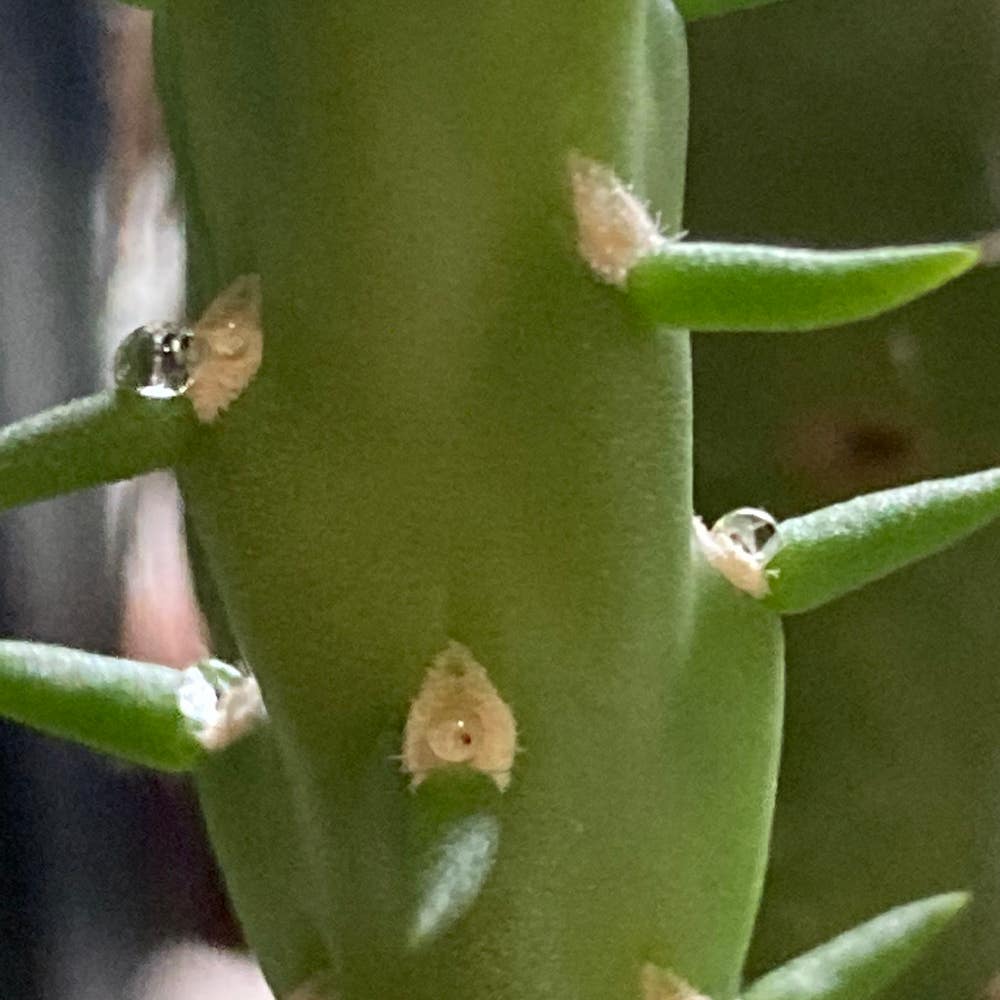
🌵 Understanding Brown Spots on Your Jumping Cholla Leaves
Cylindropuntia prolifera
By the Greg Editorial Team
Oct 20, 2024•5 min read
This article was created with the help of AI so we can cover more plants for you. May contain errors. See one? Report it here.
Revive your Jumping Cholla 🌵 by quickly diagnosing and treating those pesky brown spots for vibrant health!
- 🌱 Brown spots indicate issues like pests, sunburn, or fungal infections on Jumping Cholla.
- 💧 Overwatering causes mushy spots; ensure well-draining soil to prevent root rot.
- 🌞 Gradual light acclimatization prevents sunburn; protect your cactus from intense sunlight.
Causes of Brown Spots
🦠 Fungal Infections
Fungal infections are a common issue for cacti, including Jumping Cholla. Look out for dark brown or black spots that often have a fuzzy appearance, signaling a potential fungal problem.
High humidity and poor air circulation create ideal conditions for these infections to thrive. Keeping your plant in a well-ventilated area can help reduce the risk.
🐛 Pest Infestations
Pests can wreak havoc on your Jumping Cholla. Scale insects are small, brown, and often hard to detect, while mealybugs have a distinctive white, cotton-like appearance.
Signs of infestation include yellowing leaves, sticky residue, and visible pests. Regular inspections are key to catching these issues early.
☀️ Sunburn and Environmental Stress
Sunburn can manifest as brown, crispy spots on your cactus leaves. This often occurs due to sudden exposure to direct sunlight or high temperatures.
To prevent sunburn, gradually acclimatize your plant to brighter light conditions. This will help it adjust without suffering damage.
💧 Overwatering and Root Rot
Overwatering can lead to soft, mushy spots on leaves and yellowing. It's crucial to monitor your watering habits to avoid root rot.
Well-draining soil is essential for preventing this issue. Ensure your potting mix allows excess water to escape easily.
🥦 Nutrient Deficiencies
Nutrient deficiencies can also cause brown spots on your Jumping Cholla. Common deficiencies include nitrogen, potassium, and magnesium.
Symptoms often include general yellowing, browning at the leaf tips, and stunted growth. Regularly checking your plant’s nutrient levels can help you address these issues before they escalate.
Understanding these causes is vital for maintaining the health of your Jumping Cholla. With the right care, you can keep your cactus thriving and vibrant. Next, let’s explore how to diagnose these problems effectively.
Diagnosing the Problem
Step-by-Step Diagnosis Process 🌱
Inspecting the Plant
Start by closely examining your Jumping Cholla. Look for visible pests or signs of fungal growth, such as dark spots or fuzzy patches.Also, check for signs of sunburn or environmental stress, like crispy brown areas on the leaves.
Checking Soil Moisture Levels
Next, assess the soil moisture. You can use a simple finger test or a soil moisture meter to gauge how wet or dry the soil is.This will help you determine if overwatering or underwatering is the issue.
Evaluating Light Exposure
Finally, evaluate the plant's light exposure. Consider its location and the amount of light it receives throughout the day.Too much direct sunlight can lead to sunburn, while too little light can stunt growth.
Tools and Methods for Diagnosis 🔧
Magnifying Glass for Pest Inspection
A magnifying glass can be your best friend when inspecting for pests. Use it to spot small invaders that might be hiding among the spines.Look closely at the undersides of leaves and around the base of the plant.
Soil Moisture Meter
A soil moisture meter is essential for accurate readings. It helps you avoid the guesswork involved in watering.Knowing the moisture level can prevent issues like root rot, ensuring your Jumping Cholla thrives.
By following these steps and utilizing the right tools, you can effectively diagnose any problems affecting your Jumping Cholla. This proactive approach will set the stage for successful treatment and care.
Next, let’s explore the various treatment options available to address these issues.
Treatment Options
Treatment for Fungal Infections 🌱
Fungal infections can wreak havoc on your Jumping Cholla. Recommended fungicides include both organic options like neem oil and chemical fungicides specifically designed for cacti.
When applying fungicides, ensure you follow the instructions carefully. Spray the affected areas thoroughly, but avoid over-saturating the soil to prevent further issues.
Pest Control Methods 🐜
Pests can be a real nuisance for your cacti. Natural options such as neem oil and insecticidal soap are effective and environmentally friendly.
For more severe infestations, consider systemic insecticides. Regular inspections and maintaining overall plant health are crucial preventive measures to keep pests at bay.
Addressing Sunburn and Environmental Stress ☀️
Sunburn can damage your Jumping Cholla, but it’s often preventable. Gradually acclimatize your plant to brighter light to avoid shock.
If your cactus is already suffering, use shade cloth or relocate it to a less intense light area. These protective measures can help your plant recover and thrive.
With these treatment options, you can effectively manage the health of your Jumping Cholla. Next, let’s explore preventive care to keep your cactus in top shape year-round.
Preventive Care
🌊 Best Practices for Watering
Watering your Jumping Cholla requires a careful balance. Generally, water when the top inch of soil feels dry, allowing the soil to dry out completely between waterings.
Soil type is crucial for drainage. Use a well-draining cactus mix or add perlite to standard potting soil to ensure excess moisture escapes.
🌱 Nutritional Needs
Fertilizing your cactus can boost its health. Aim to fertilize during the growing season, typically spring and summer, using a balanced cactus fertilizer.
Watch for signs of nutrient deficiencies. Yellowing leaves or stunted growth can indicate a lack of nitrogen, potassium, or magnesium, so address these issues promptly.
🍂 Seasonal Care Tips
Adjust your care routine with the changing seasons. In winter, reduce watering frequency as the plant enters dormancy, while summer may require more frequent hydration.
Light exposure also needs attention. Ensure your Jumping Cholla receives adequate sunlight, adjusting its position based on seasonal changes to prevent stress.
By following these preventive care tips, you can keep your Jumping Cholla thriving and vibrant. Next, let’s explore how to diagnose any issues that may arise.
⚠️ Safety First
This content is for general information and may contain errors, omissions, or outdated details. It is not medical, veterinary advice, or an endorsement of therapeutic claims.
Always consult a qualified healthcare professional before using any plant as food, medicine, or supplement.
Never eat any plant (or feed one to pets) without confirming its identity with at least two trusted sources.
If you suspect poisoning, call Poison Control (800) 222-1222, the Pet Poison Helpline (800) 213-6680, or your local emergency service immediately.
Spotted an error? Please report it here.
Diagnosing brown spots on your Jumping Cholla is crucial for its health 🌵, and with Greg's tailored care reminders and diagnostic tools, you can keep your cactus thriving and vibrant!