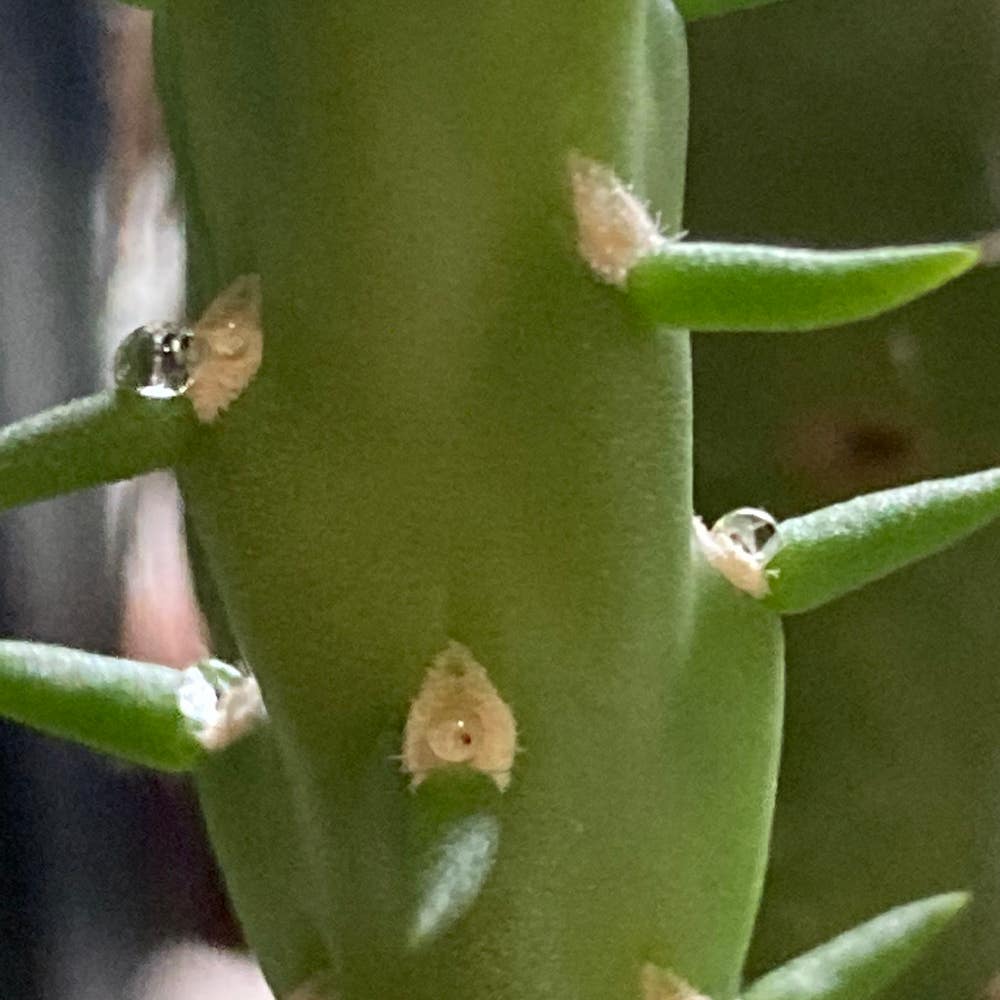
Humidity Needs for Your Jumping Cholla 🌵
Cylindropuntia prolifera
By the Greg Editorial Team
Nov 23, 2024•5 min read
This article was created with the help of AI so we can cover more plants for you. May contain errors. See one? Report it here.
Unlock the secret to a thriving Jumping Cholla 🌵 by mastering humidity with these essential tips and tricks! 💧
- 🌬️ Jumping Cholla thrives at 20%-40% relative humidity for optimal growth.
- 💧 Monitor humidity levels with a hygrometer to prevent dehydration or fungal diseases.
- 🌿 Use humidity strategies like grouping plants or trays to enhance moisture retention.
Absolute vs. Relative Humidity
Absolute Humidity 🌊
Absolute humidity refers to the total amount of water vapor in a specific volume of air, measured in grams per cubic meter. This measurement is crucial because it directly impacts the health of your Jumping Cholla.
Relative Humidity 🌬️
Relative humidity, on the other hand, is the percentage of moisture in the air compared to the maximum amount the air can hold at a given temperature.
Ideal Range 🌱
For optimal growth, Jumping Cholla thrives in relative humidity levels between 20% to 40%.
Impact on Health ⚠️
Maintaining this range is vital; high humidity can lead to fungal diseases, while low humidity can cause dehydration in your plant.
Understanding both absolute and relative humidity helps you create the best environment for your Jumping Cholla, ensuring it stays healthy and vibrant.
As we delve deeper into local humidity considerations, you'll learn how to assess and adapt to your specific climate conditions.
Local Humidity Considerations
🌧️ Assessing Local Humidity Levels
To ensure your Jumping Cholla thrives, it's crucial to measure local humidity levels accurately. A hygrometer is your best friend here; it provides real-time data on moisture content in the air.
Understanding your local climate is equally important. Fluctuating seasonal humidity can significantly impact how you care for your plant, so be aware of these changes.
🍂 Seasonal Changes
Humidity levels can vary dramatically with the seasons, which directly affects your Jumping Cholla's moisture needs. For instance, winter might bring drier air, while summer could introduce higher humidity.
Adaptation strategies are essential for maintaining optimal conditions. Adjust your care routines based on these seasonal fluctuations to keep your plant healthy and happy.
By staying attuned to local humidity and seasonal changes, you'll set your Jumping Cholla up for success. This proactive approach will help you navigate the challenges of plant care with confidence.
Strategies for Boosting Humidity
🌬️ Using Humidifiers
To effectively boost humidity for your Jumping Cholla, consider using ultrasonic or evaporative humidifiers. These types distribute moisture evenly, creating a more favorable environment for your plant.
Position the humidifier close to your Jumping Cholla to ensure it receives the necessary humidity. This strategic placement can significantly enhance the moisture levels in the immediate vicinity of the plant.
🌱 Grouping Plants
Clustering your plants together is another simple yet effective strategy to increase humidity. When plants are grouped, they create a microenvironment that retains moisture better than isolated plants.
Make sure the plants you group have similar humidity needs. This prevents stress and ensures that all your plants thrive together in their shared space.
💧 Water Trays and Pebble Methods
A straightforward method to boost humidity is to set up a shallow tray filled with water and pebbles beneath your Jumping Cholla pot. As the water evaporates, it increases the humidity around the plant.
Regular maintenance is key; make sure to refill the tray as needed to maintain consistent moisture levels. This simple setup can make a noticeable difference in your plant's health.
By implementing these strategies, you can create a more humid environment that supports the growth and vitality of your Jumping Cholla. Next, let’s explore how to reduce humidity when it becomes excessive.
Strategies for Reducing Humidity
🌬️ Air Circulation
Good air circulation is crucial for preventing excessive humidity buildup around your Jumping Cholla.
To enhance airflow, consider using fans or simply opening windows in the growing area. This not only helps maintain optimal humidity levels but also promotes overall plant health.
🪴 Choosing Potting Mix
Selecting the right potting mix is essential for managing humidity.
Opt for a well-draining potting mix specifically designed for cacti to prevent moisture retention. A mix that includes sand, perlite, and organic matter will enhance drainage and keep your plant thriving.
🚿 Avoiding Overwatering
Watering practices play a significant role in humidity control.
Only water your Jumping Cholla when the soil is completely dry to avoid root rot. Watch for signs like yellowing stems and a mushy texture, which indicate excessive moisture and stress on your plant.
By implementing these strategies, you can effectively manage humidity levels and ensure your Jumping Cholla remains healthy and vibrant. Next, let’s explore common humidity-related problems and how to identify them.
Common Humidity-Related Problems
🌵 Signs of Low Humidity Stress
Low humidity can be detrimental to your Jumping Cholla. Watch for symptoms like wrinkled or shriveled stems, slow growth, and browning spines.
To prevent these issues, regularly monitor humidity levels. Adjust your care routine as needed to keep your plant thriving.
💧 Effects of High Humidity
Conversely, high humidity poses its own set of challenges. Look out for fungal infections, mushy stems, and an overall decline in plant health.
To manage excessive humidity, implement strategies to reduce moisture levels. This proactive approach will help maintain the vitality of your Jumping Cholla.
Understanding these common humidity-related problems is crucial for your plant's health. By staying vigilant and adjusting your care, you can ensure your Jumping Cholla remains vibrant and strong.
Summary of Humidity Needs
Maintaining the right humidity levels is crucial for the health of your Jumping Cholla. Aim for a relative humidity between 20% to 40% to ensure optimal growth and vitality.
📊 Regular Monitoring
Keep an eye on humidity levels regularly. This proactive approach helps you catch any fluctuations that could impact your plant's health.
🌦️ Seasonal Adjustments
Be prepared to adjust your care routine based on seasonal changes. Different times of the year can bring varying humidity levels, so stay adaptable.
💧 Humidity Control Strategies
Employ various strategies to manage humidity effectively. Whether it's using humidifiers, grouping plants, or setting up water trays, these methods can help create a suitable environment for your Jumping Cholla.
By following these guidelines, you can foster a thriving habitat for your plant. Remember, a little attention to humidity can go a long way in keeping your Jumping Cholla healthy and vibrant.
⚠️ Safety First
This content is for general information and may contain errors, omissions, or outdated details. It is not medical, veterinary advice, or an endorsement of therapeutic claims.
Always consult a qualified healthcare professional before using any plant as food, medicine, or supplement.
Never eat any plant (or feed one to pets) without confirming its identity with at least two trusted sources.
If you suspect poisoning, call Poison Control (800) 222-1222, the Pet Poison Helpline (800) 213-6680, or your local emergency service immediately.
Spotted an error? Please report it here.
Keep your Jumping Cholla thriving 🌵 by mastering its humidity needs with Greg's tailored tips and reminders for optimal care!