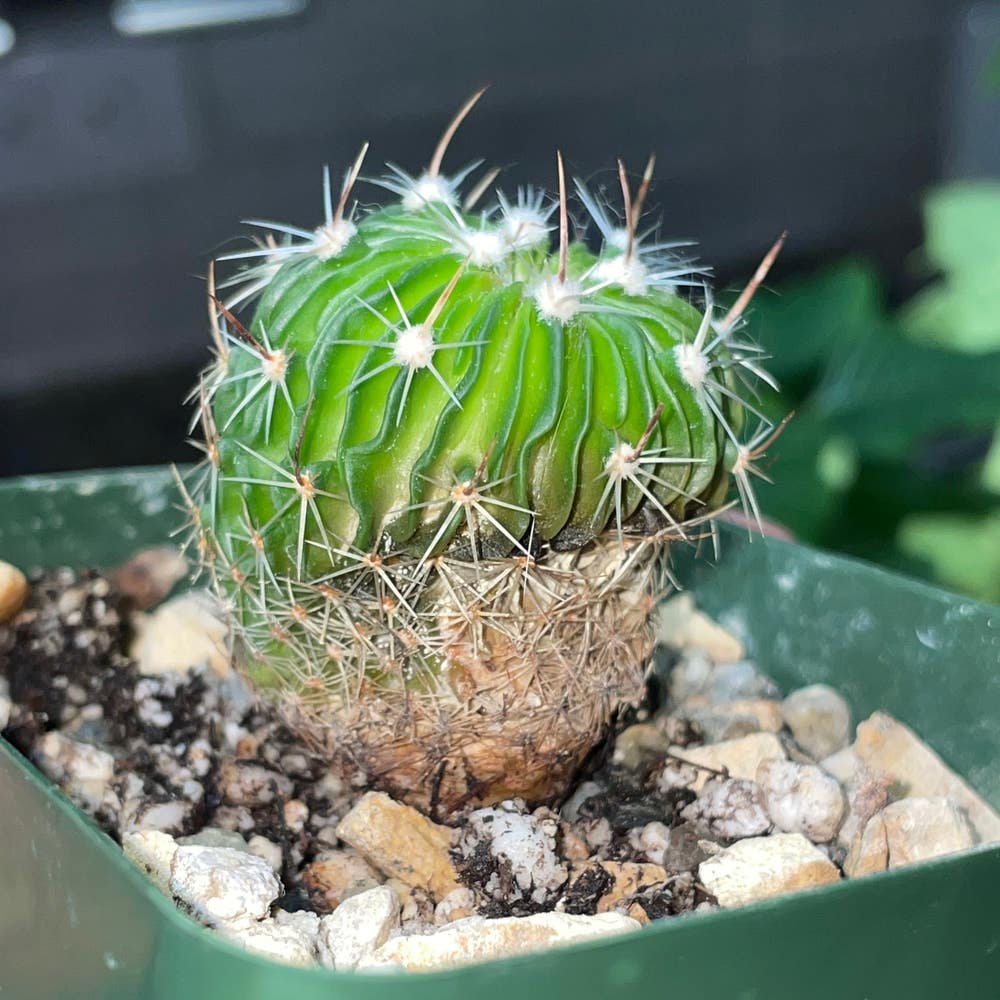
🌵 Should I Repot My Hooked Cactus And If So, How?
Thelocactus conothelos
By the Greg Editorial Team
Jun 18, 2024•4 min read
This article was created with the help of AI so we can cover more plants for you. May contain errors. See one? Report it here.
Discover the secret to a flourishing Hooked Cactus 🌵—master the timely art of repotting with this guide!
- 🌵 Roots peeking out? Time to repot your Hooked Cactus.
- Terracotta or clay pots are best; avoid plastic to prevent root rot.
- Repot in spring/summer, and let cactus settle before watering.
Spotting the Telltale Signs It's Time for a New Home
🌱 Roots on the Run
When your Hooked Cactus starts sending roots out of the drainage holes, it's not trying to explore the world beyond its pot—it's cramped. Like a hermit crab outgrowing its shell, this is a clear signal for more space.
🪴 Cramped Quarters
A cactus that's too big for its britches, or pot in this case, is a sad sight. If the plant's body seems to be playing a game of Tetris with the pot's edges, it's time to upgrade its living situation. Outgrown its current home? Repot, stat.
💧 Water Woes
Water that runs through the pot faster than a kid at a water park is a red flag. It means the soil is more root than dirt, unable to retain moisture. If your cactus is thirstier than a tourist in the desert, despite regular watering, it's begging for a repot.

Choosing the Right Pot: Material Matters
💨 Breathability is Key
Terracotta and clay pots are the MVPs for your Hooked Cactus. Think of them as the plant's personal gym—allowing roots to breathe and preventing water from overstaying its welcome. This is crucial because cacti roots despise soggy conditions as much as cats hate water.
🚫 The Perils of Plastic
Now, plastic pots might be the lightweight champion in the potting world, but they're also notorious for holding onto moisture like a clingy ex. Avoid plastic unless you're a watering ninja who knows precisely when to hold back. Otherwise, you're risking root rot, and nobody wants that drama.
🌟 The Middle Ground
Ceramic pots, especially the glazed kind, can be a good compromise. They offer some breathability and come in a variety of designs that can make your cactus the centerpiece of any room. Just remember, they can be heavier and pricier, so make sure your wallet and shelf are ready for the commitment.
🕳️ Drainage is Non-negotiable
Regardless of material, ensure your pot has drainage holes. It's like having an emergency exit for excess water—non-negotiable for the well-being of your Hooked Cactus.
⚖️ Weight and Stability
Consider where your cactus will live. Terracotta's weight gives it stability against the elements, but it's a beast to move. Plastic is easy to shuffle around but could take flight in a strong wind. Choose based on your cactus's location and your back's tolerance for lifting.
Remember, the pot is more than a home; it's a life support system for your Hooked Cactus. Choose wisely, and your spiky friend will thank you with growth and vigor.

The Repotting Rundown: A Step-by-Step Guide
⏰ Timing is Everything
Spring or early summer is your cactus's moving day—nature's growth spurt season.
🛠 Prep Work
Grab a terracotta pot—your cactus's new breathable abode. Mix cactus soil with perlite for that just-right drainage.
🎉 The Main Event
Gloves on—protect those digits from spiky encounters. Gently coax the cactus out, whispering sweet nothings to ease its stress.
🌱 Root TLC
Inspect the roots like a hawk. Snip the suspicious ones—no freeloaders allowed.
🏡 Settling In
Nestle the cactus in its new home. Tuck it in with soil, but don't water it yet—let it acclimate to avoid root rot.

Aftercare: Helping Your Hooked Cactus Thrive Post-Repot
🌵 The First Few Days
Monitor your cactus like a hawk post-repot. It's not being a diva; it just had a major life event. Watering should be on the back burner for the first week to let any root boo-boos heal. Overwatering is the fast lane to root rot city, so keep the soil drier than a comedian's humor.
🌞 Acclimation
Your cactus craves stability like a cat craves a sunbeam. Find a spot with bright, indirect sunlight where it won't get sunburned. Keep the temperature steady; your cactus has no time for chills or drafts. Gradually increase sunlight exposure over a week or two to avoid shocking your spiky friend.
👀 Monitoring and Adjusting
Keep an eagle eye out for drama—wilting or discoloration means it's time to tweak your care routine. Resist the urge to pamper with water or fertilizer. Think of it as a cactus vacation from the excesses of life. If the soil feels like a desert, then it's time to water, but only just enough to quench its thirst.
Remember, aftercare is not about coddling; it's about giving your Hooked Cactus the peace it needs to settle into its new digs.
⚠️ Safety First
This content is for general information and may contain errors, omissions, or outdated details. It is not medical, veterinary advice, or an endorsement of therapeutic claims.
Always consult a qualified healthcare professional before using any plant as food, medicine, or supplement.
Never eat any plant (or feed one to pets) without confirming its identity with at least two trusted sources.
If you suspect poisoning, call Poison Control (800) 222-1222, the Pet Poison Helpline (800) 213-6680, or your local emergency service immediately.
Spotted an error? Please report it here.
Repot your hooked cactus with confidence and let Greg 🌵 be your sidekick for personalized aftercare reminders, ensuring a flourishing transition.