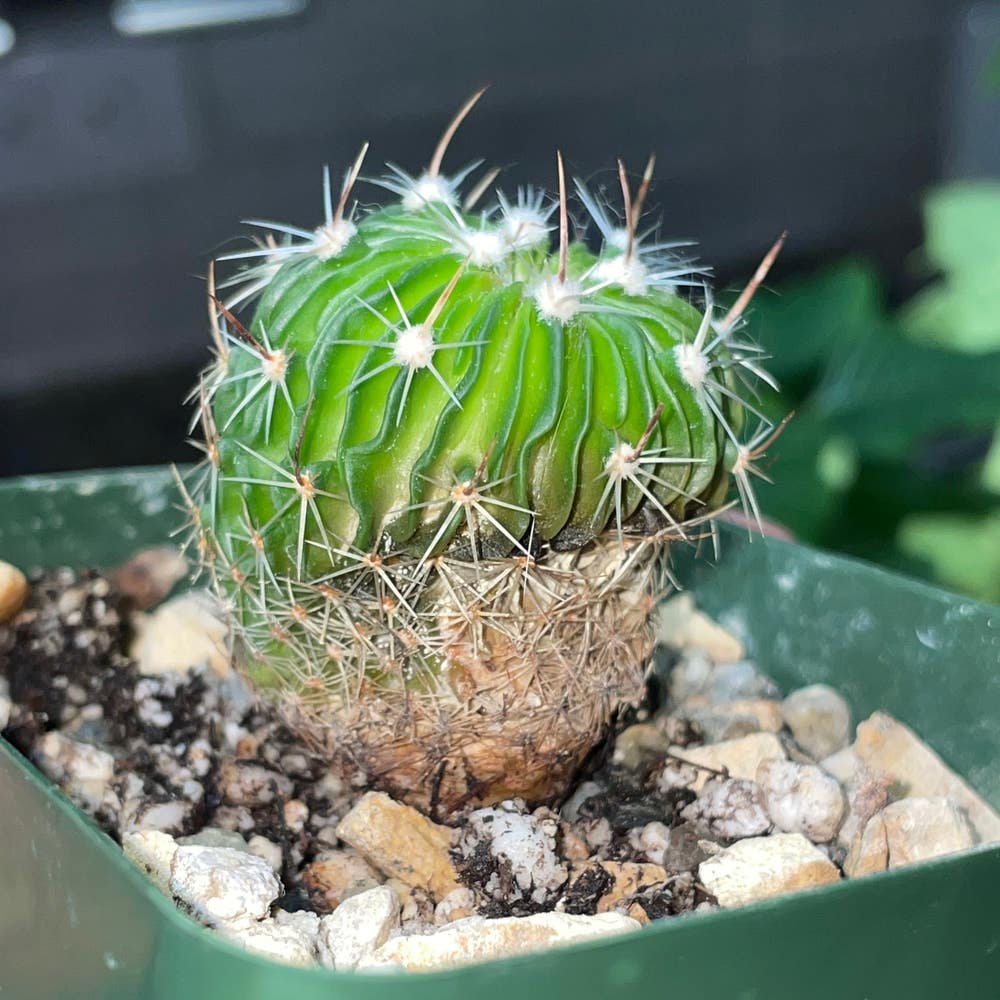
What Are The Bugs on My Hooked Cactus? 🐛
Thelocactus conothelos
By the Greg Editorial Team
Jun 18, 2024•4 min read
This article was created with the help of AI so we can cover more plants for you. May contain errors. See one? Report it here.
Defend your Hooked Cactus 🌵 from tiny invaders with this guide to spotting and stopping pests early!
- Identify pests by webbing, bumps, swarms, or white masses on your cactus.
- Combat bugs with alcohol, predator mites, or organic products like neem oil.
- Prevent infestations with careful watering, monitoring, and natural predators.
Spot the Invaders: Identifying Common Pests on Hooked Cactus
🕷️ Spider Mites: The Web Weavers
Tiny webbing on your Hooked Cactus? That's the calling card of spider mites. These minuscule pests inflict yellow or white spots on the foliage, a sign they're sucking the life out of your plant. For Hooked Cactus, check especially under the spines; these critters love a good hideout.
🛡️ Scale Insects: The Stealthy Parasites
Spotting scale insects requires a keen eye for unusual bumps on your cactus. These bumps, ranging from light tan to brown, are the scale's armor, and they're feasting on your plant's sap. Look out for sticky honeydew as well; it's not just a mess, it's an open invitation for sooty mold.
🦟 Fungus Gnats and Fruit Flies: The Soil Lurkers
If you're seeing a swarm of tiny flies, you've got fungus gnats or fruit flies. These pests are drawn to overly moist soil, a sign you might be over-loving your Hooked Cactus with water. They're more than annoying; they're a threat to your plant's health.
🦠 Mealybugs: The Fluffy Fiends
White, cottony masses on your cactus? Say hello to mealybugs. These pests are like mini vampires, draining the sap and weakening your Hooked Cactus. They love to hide, so inspect those hard-to-see places thoroughly. Sticky honeydew is another giveaway of their presence.

Bug Off: Effective Treatments for Hooked Cactus Pests
🕷️ Crafting a Spider Mite Counterattack
Spider mites are tiny terrors that can wreak havoc on your Hooked Cactus. Amblyseius californicus, a predator mite, is your secret weapon against these pests. Alternatively, a concoction of garlic extract or hydrogen peroxide can serve as a general pest deterrent. For persistent problems, Phytoseiulus persimilis, another predatory mite, can be introduced to target spider mites directly. Be relentless; repeat applications are necessary to ensure victory.
🛡️ Scale Insect Removal Tactics
Scale insects can be stubborn, but you're stubborner. Start with a 70% isopropyl alcohol rubdown, using a Q-tip to dislodge these clingy critters. For a more systemic approach, pesticides like imidacloprid or spinosad can infiltrate the scales' defenses. Remember, after treatment, keep your cactus out of direct sunlight to prevent leaf burn.
🪰 Ground Control for Fungus Gnats and Fruit Flies
Fungus gnats and fruit flies are more annoying than a pop-up ad. Sticky traps are your first line of defense, capturing these pests before they can breed. For larvae lurking in the soil, products like Tanlin or Lava-Lite No-Gnats can be game-changers, creating a no-fly zone around your cactus. Keep the soil on the drier side to discourage any future invasions.
🐜 Mealybug Eradication Plan
Mealybugs are like bad houseguests; they overstay and multiply. Swabbing with 70% isopropyl alcohol or 3% hydrogen peroxide can help you evict them one by one. If you're up for a more holistic approach, neem oil and introducing mealybug predators can help maintain the balance. For severe infestations, systemic pesticides like Resolva Bug Killer might be necessary. Space out treatments to disrupt their life cycle and reclaim your cactus.

Prevention: Keeping Your Hooked Cactus Pest-Free
🌵 Cultivating a Hostile Environment for Pests
Adjust your care routine to make life tough for pests. Overwatering is a no-no; it's like throwing a pool party for bugs. Keep the soil drier and they'll RSVP 'no thanks' to the moisture fiesta. Fertilize with restraint—a cactus on steroids is a bug magnet.
👀 Regular Monitoring and Early Detection
Make plant check-ups as routine as brushing your teeth. Inspect every nook and cranny—under leaves, near the soil. Catching a bug bash early means you can shut it down before the neighbors complain. Remember, a healthy cactus is less of a target, so keep yours in tip-top shape.
🐞 Embracing Natural Predators and Organic Solutions
Introduce some predators to your garden ecosystem. Flowers that attract ladybugs and lacewings are like setting up a buffet for these pest-munching heroes. And if you're into organic, neem oil and insecticidal soaps can be your go-to weapons. Just remember, it's about balance—don't go all scorched earth on your cactus.

⚠️ Safety First
This content is for general information and may contain errors, omissions, or outdated details. It is not medical, veterinary advice, or an endorsement of therapeutic claims.
Always consult a qualified healthcare professional before using any plant as food, medicine, or supplement.
Never eat any plant (or feed one to pets) without confirming its identity with at least two trusted sources.
If you suspect poisoning, call Poison Control (800) 222-1222, the Pet Poison Helpline (800) 213-6680, or your local emergency service immediately.
Spotted an error? Please report it here.
Banish bugs from your Hooked Cactus and ensure pest-free perfection 🛡️ with Greg's tailored care reminders and expert community tips.