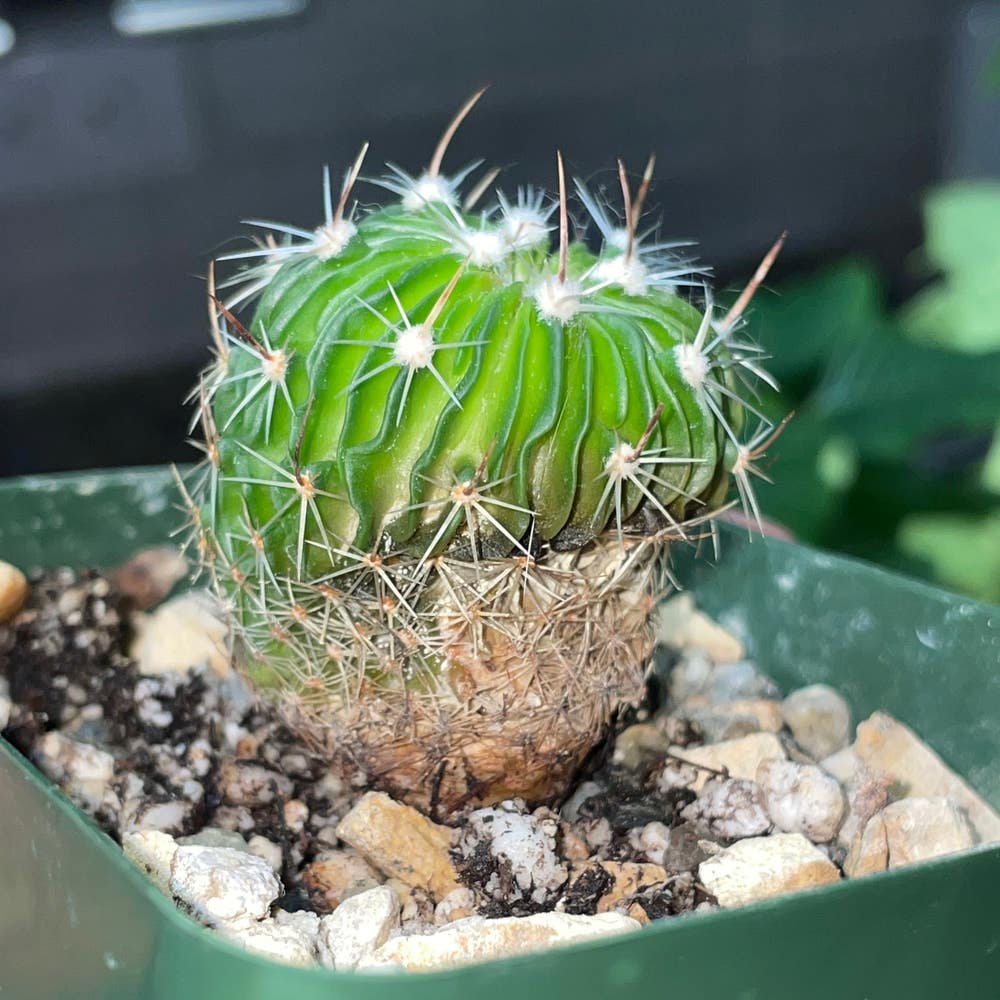
🌵 Choosing Fertilizer For My Hooked Cactus
Thelocactus conothelos
By the Greg Editorial Team
Jun 18, 2024•4 min read
This article was created with the help of AI so we can cover more plants for you. May contain errors. See one? Report it here.
Avoid the prickly pitfalls of cactus care—discover the ideal fertilizer formula for a thriving Hooked Cactus! 🌵✨
- Balanced N-P-K ratio (5-10-5) ideal for Hooked Cactus health.
- Liquid for quick boost, granular/slow-release for sustained nutrition.
- Dilute and apply carefully to avoid over-fertilization and root burn.
Picking the Right Fertilizer for Your Hooked Cactus
🌱 N-P-K Ratio: What's Ideal for Hooked Cactus?
Nitrogen, phosphorus, and potassium are the trifecta of plant health, each playing a pivotal role in the well-being of your Hooked Cactus. Nitrogen is the growth booster, but too much can make your cactus more leafy than sturdy. Phosphorus supports robust blooms, and potassium fortifies against stress and disease. A balanced N-P-K ratio such as 5-10-5 is akin to a gourmet meal for your cactus—nutritious and satisfying.
💧 Liquid, Granular, or Slow-Release: Which to Choose?
The type of fertilizer you choose can make a significant difference. Liquid fertilizers are fast-acting, providing a quick nutrient boost. Granular types are a sprinkle-and-go solution, releasing nutrients over time. Slow-release fertilizers, on the other hand, are the set-it-and-forget-it option, gradually feeding your cactus over months. For the Hooked Cactus, a low-nitrogen, water-soluble option is often best, offering control over the dosage and timing of nutrients. Whether you opt for the immediacy of liquid or the longevity of slow-release, ensure the formulation is cactus-friendly—low in nitrogen and high in potassium.

Timing is Everything: When to Fertilize Your Hooked Cactus
🌱 Syncing with Growth Cycles
Spring and summer are your Hooked Cactus's hustle months. This is when you should bring out the fertilizer. Once a month is your golden rule here, akin to a monthly subscription to plant vitality. Use a balanced, water-soluble fertilizer designed for cacti to give them that growth spurt.
🌡️ Weather and Fertilization
Temperature isn't just for weather forecasts; it dictates your cactus's appetite for nutrients. Warmth signals it's time to fertilize, but when the chill of fall and winter creeps in, it's time to put the fertilizer away. Over-fertilizing during dormancy is as helpful as sunglasses at night—pointless. Keep an eye on the mercury and adjust your fertilization schedule accordingly.

How to Fertilize Without Harming Your Hooked Cactus
💧 Dilution and Application Techniques
Dilution is your cactus's best friend. Mix your fertilizer to half-strength to avoid shocking your plant's roots. Here's how to do it right:
- Check the manufacturer's recommendations on the fertilizer package.
- Cut the suggested amount in half.
- Apply the diluted fertilizer to moist soil—never dry—to prevent root burn.
- Use a watering can or a drip system with a cleaner like HYCLEAN to prevent buildup.
- After fertilizing, water your cactus thoroughly to help distribute the nutrients evenly.
📅 Frequency Matters
Your Hooked Cactus doesn't need to feast like a king. Moderation is key:
- Spring and summer: Fertilize monthly during these active growth periods.
- Fall: Begin to reduce the frequency as growth slows.
- Winter: Give your cactus a break. It's time for it to rest and prepare for spring blooming.
Remember, overdoing it can be worse than not doing it at all. Keep an eye on your cactus for any signs of distress and adjust your routine accordingly.

Recognizing and Fixing Fertilization Faux Pas
🚨 Spotting the Signs of Over-Fertilization
Yellowing leaves waving their distress flags, or a crust of fertilizer residue on the soil—these are the SOS signals from your Hooked Cactus. If the roots look more like they've been through a goth phase, dark and limp, or if the plant wilts despite the soil's moisture, it's time to act. Over-fertilization symptoms are the plant's equivalent of a food coma after a Thanksgiving feast, and they show up almost as quickly as the regret of that extra slice of pie.
🛠 Damage Control: Remedies for Over-Fertilized Cactus
Caught in the act of overzealous plant parenting? Don't panic. First, remove any visible fertilizer like you're defusing a bomb. Then, flush the soil with water as if you're trying to cleanse away your sins—repeat every few days, keeping a watchful eye on recovery. Prune the damaged parts; think of it as giving your cactus a haircut to focus on regrowth. For potted plants, consider a fresh start with new soil, like moving to a new city after a breakup. Remember, with cacti, less is more—they're the introverts of the plant world, thriving on minimalism.
⚠️ Safety First
This content is for general information and may contain errors, omissions, or outdated details. It is not medical, veterinary advice, or an endorsement of therapeutic claims.
Always consult a qualified healthcare professional before using any plant as food, medicine, or supplement.
Never eat any plant (or feed one to pets) without confirming its identity with at least two trusted sources.
If you suspect poisoning, call Poison Control (800) 222-1222, the Pet Poison Helpline (800) 213-6680, or your local emergency service immediately.
Spotted an error? Please report it here.
Cultivate a thriving Hooked Cactus 🌵 by finding the perfect fertilizer balance, and let Greg gently nudge you with custom reminders tailored to your plant's needs.