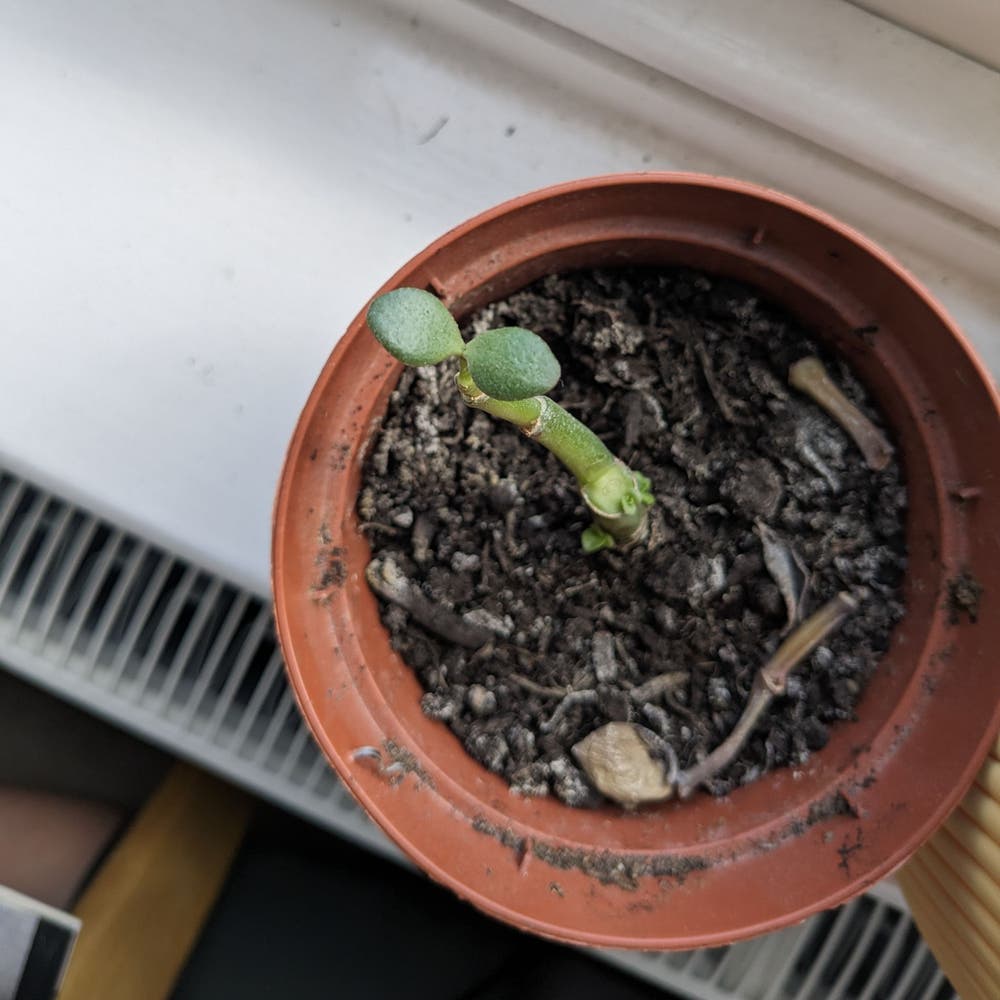
Why Are My Crassula ovata 'Obliqua' Leaves Turning Yellow?
Crassula ovata 'Obliqua'
By the Greg Editorial Team
Jun 18, 2024•5 min read
This article was created with the help of AI so we can cover more plants for you. May contain errors. See one? Report it here.
Revive your yellowing Crassula ovata 'Obliqua' 🌿 and keep it thriving with these essential care tips! 🛠️
- 🌊 Overwatering causes mushy stems and yellow leaves; let soil dry out.
- ☀️🌱 Balance sunlight exposure; too much or too little can yellow leaves.
- 🐛 Pests and nutrient deficiencies also lead to yellowing; treat accordingly.
When Yellow Leaves Signal Trouble
🌊 Spotting the Signs of Overwatering
Yellowing leaves and a mushy stem are the plant's way of saying you've gone overboard with H2O. If you're seeing a yellow halo on leaf edges or brown spots, it's time to rethink your watering strategy. A surface of fungus or mold on the soil is the equivalent of a plant waving a white flag.
To rescue your overwatered Crassula ovata 'Obliqua', first, stop watering and let the soil dry out. If the plant is severely affected, repot it in fresh, well-draining soil. Make sure to trim any rotted roots before replanting. Going forward, only water when the topsoil feels like a dry martini—roughly 50% dry.
💧 The Thirsty Plant: Underwatering Woes
An underwatered Crassula ovata 'Obliqua' will sport shriveled leaves that feel like a stiff upper lip rather than a soft handshake. If the soil is pulling away from the pot like a bad breakup, it's a clear sign your plant is parched.
To properly quench your succulent's thirst, water it thoroughly, ensuring the soil is fully saturated but not flooded. Allow the soil to dry out before the next watering session. Remember, it's a succulent, not a fish—don't let it swim in water. Keep an eye out for new growth that's as yellow as a school bus; it might need more than just a drink.

Sunlight and Shade: Finding the Balance
⛱️ The Sunburn Connection
Crassula ovata 'Obliqua' can get too much sun. Look for bleached leaves, crispy edges, or spots.
Adjust your plant's tan time by moving it to a spot with morning sun and afternoon shade, or use sheer curtains to diffuse harsh rays.
🌑 The Shady Side of Things
Insufficient light can also cause leaves to turn yellow.
Find the perfect spot for your Crassula ovata 'Obliqua' where it gets bright, indirect light without being in the dark.

Feeding Your Plant: Nutrients and Fertilizers
💊 Diagnosing Nutrient Deficiency
Yellow leaves can be a distress signal from your Crassula ovata 'Obliqua', hinting at a possible nutrient deficiency. Let's decode the message.
Stunted growth and leaves that look more like they've been on a diet than part of a lush succulent might point to a lack of nitrogen. If your plant's leaves are turning into a pale imitation of their former glory, it's time to consider a nutrient boost.
Choosing the right fertilizer is like picking the perfect seasoning for a meal; it's all about the NPK ratio. Look for a balanced mix of nitrogen, phosphorus, and potassium. Think of it as a three-course meal for your plant.
Iron deficiency shows up as a plant that seems to be trying to join a yellowing contest. To green things up, consider a fertilizer with chelated iron. It's like giving your plant a fast-acting iron supplement.
If the leaves are starting to look like they belong in a Halloween decoration, you might be dealing with a sulfur deficiency. A little Epsom salt can be the trick to treat this tricky problem.
Remember, more is not always better. Overfeeding can lead to the plant equivalent of a food coma. Stick to the instructions on your fertilizer package like it's the sacred text of plant care.
Lastly, consider a soil test before you start your fertilization spree. It's like getting a sneak peek into your plant's pantry to see what's missing. No point in adding salt if you're short on pepper, right?

Battling the Bugs and Fungus Among Us
🐛 Pests: The Tiny Terrors
In the world of Crassula ovata 'Obliqua', yellowing leaves can often be attributed to the tiniest of foes. Mealybugs, spider mites, and fungus gnats don't just mar the aesthetics; they're a full-on health hazard for your succulent.
🕵️ Identifying Common Critters
Check for sticky residue or webbing, a surefire sign of an insect rave happening on your plant. Mealybugs look like tiny cotton swabs gone rogue, while spider mites are more into web design, draping your plant in fine silk. Fungus gnats, the less glamorous of the bunch, prefer to hang out in the soil, causing root damage that manifests as yellow leaves.
🚪 Eviction Notices: Natural and Chemical
To show these pests the door, start with a 70% isopropyl alcohol rubdown for spot treatment. For a more holistic approach, introduce predatory insects like ladybugs to your indoor ecosystem—they're the bouncers of the bug world. If all else fails, insecticidal soap or neem oil can be your chemical bouncers, ensuring these party crashers get the message.
🍄 Fungal and Disease Troubles
Fungal infections are the silent but deadly types, often creeping in unnoticed until the damage is done.
👀 Spotting the Signs of Disease
Look for discolored or spotted leaves, the plant world's version of a distress signal. These symptoms are the plant's SOS, indicating that it's time to take action.
🌬️ Keeping Your Plant Healthy and Disease-Free
Prevention is key: ensure good air circulation and avoid wet leaves like they're the last slice of pizza at a party—untouched and suspicious. If you do spot signs of fungal invasion, prune the affected areas with the precision of a ninja. In severe cases, a fungicide might be your last line of defense. Remember, keeping your Crassula ovata 'Obliqua' healthy is a bit like social media—regular check-ups and timely interventions keep the profile, I mean, plant, looking good.
⚠️ Safety First
This content is for general information and may contain errors, omissions, or outdated details. It is not medical, veterinary advice, or an endorsement of therapeutic claims.
Always consult a qualified healthcare professional before using any plant as food, medicine, or supplement.
Never eat any plant (or feed one to pets) without confirming its identity with at least two trusted sources.
If you suspect poisoning, call Poison Control (800) 222-1222, the Pet Poison Helpline (800) 213-6680, or your local emergency service immediately.
Spotted an error? Please report it here.
Revive your Crassula's leaves to vibrant health 🍃 with Greg's custom care plan, guiding you to perfect watering and light conditions without the guesswork!