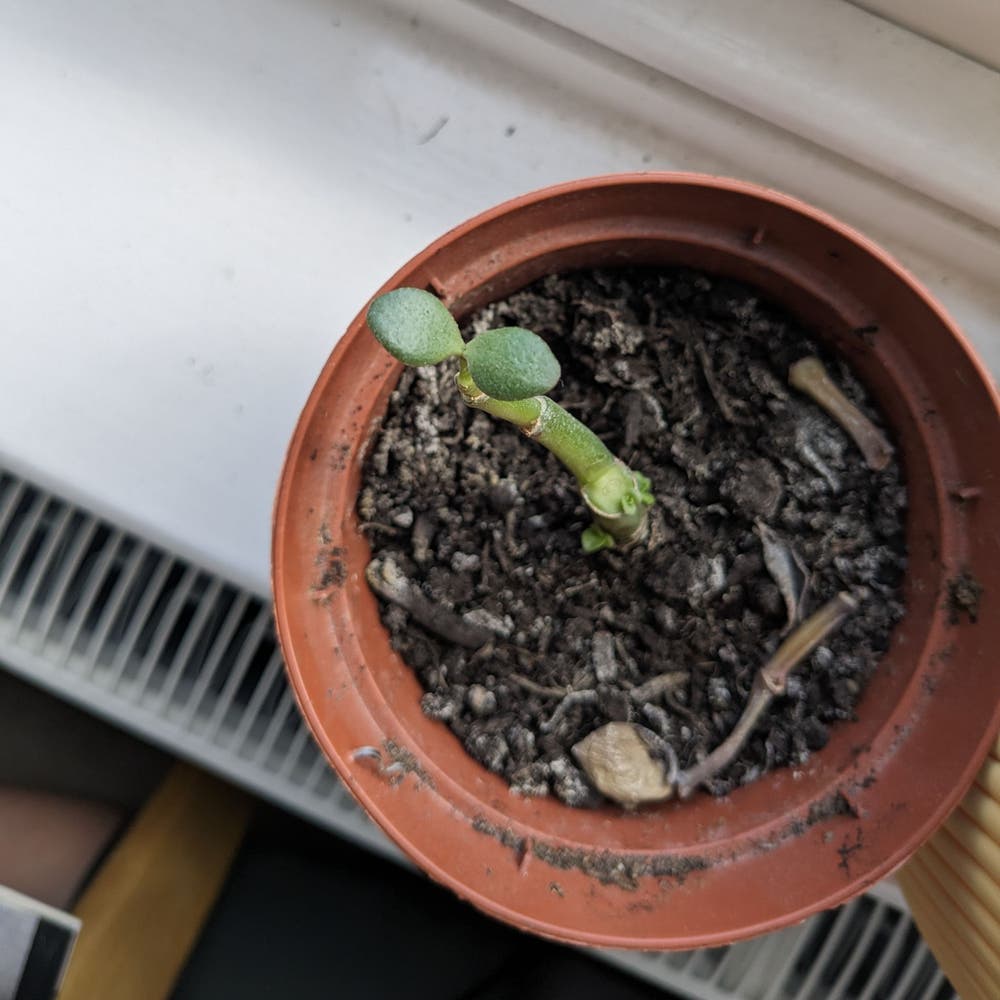
💰 How to Cure Root Rot in Your Jade Plant
Crassula ovata 'Obliqua'
By the Greg Editorial Team
Sep 29, 2024•5 min read
This article was created with the help of AI so we can cover more plants for you. May contain errors. See one? Report it here.
Save your jade plant from root rot 🌱 and ensure its vibrant recovery with these essential care tips!
- 🌱 Identify symptoms early: Look for wilting leaves and mushy stems to catch root rot.
- 🛠️ Inspect and trim roots: Remove dark, mushy roots and repot in fresh soil.
- 💧 Water sparingly post-treatment: Allow soil to dry completely to prevent recurrence.
Identifying Root Rot
Symptoms 🌱
Root rot can sneak up on you, often showing signs that might be mistaken for other issues. Look out for wilting leaves, even when you're watering adequately, yellowing or dropping leaves, and soft, mushy stems at the base.
How to Check 🔍
To confirm root rot, start by removing the plant from its pot carefully. Inspect the root system for any discoloration and texture changes, and be alert for foul odors that indicate decay.
Visual Signs of Healthy vs. Rotting Roots 🧐
Understanding root health is crucial. Healthy roots are firm and exhibit a white or light tan color, while rotting roots appear dark brown or black and have a mushy texture.
Recognizing these signs early can save your jade plant from further decline. Next, let’s dive into how to treat root rot effectively.
Treating Root Rot
🛠️ Step-by-Step Treatment Process
Remove the Jade Plant from its pot: Gently take your jade plant out of its container. Be careful not to damage the roots further during this process.
Trim away affected roots using sterilized scissors: Identify and cut away any dark, mushy roots. This step is crucial to prevent the spread of rot.
Allow the plant to dry for a few hours to a day: Letting the plant dry helps to reduce moisture and allows any remaining damaged roots to heal.
Repot in fresh, well-draining soil: Choose a potting mix specifically designed for succulents or cacti. This ensures proper drainage and aeration.
Water sparingly for the first few weeks: After repotting, give your jade plant minimal water. This helps it adjust without overwhelming the roots.
🧰 Recommended Tools and Materials
Sterilized pruning shears or scissors: Essential for making clean cuts and preventing infection.
Fresh, well-draining potting mix: Opt for a cactus or succulent mix to promote healthy growth.
New pot with drainage holes: Ensure your new pot has adequate drainage to avoid future issues.
✂️ Proper Pruning Techniques
Identify the rotting sections: Look for dark, mushy areas on the roots. These are signs of decay that need to be removed.
Cut back to healthy tissue: Make clean cuts to healthy roots. This minimizes the risk of further infection.
Dispose of affected roots properly: Throw away any rotting roots to prevent spreading pathogens to other plants.
By following these steps, you can effectively treat root rot and give your jade plant a fighting chance for recovery. Next, let’s explore how to prevent root rot from occurring in the first place.
Preventing Root Rot
🌱 Best Soil Types
To keep your jade plant thriving, start with a well-draining potting mix. Cactus or succulent soil is highly recommended for optimal moisture control.
Adding amendments like perlite or sand can significantly enhance drainage. This ensures that excess water flows away, preventing root rot.
🚰 Importance of Drainage
Using pots with drainage holes is crucial. These holes prevent water accumulation, which is a primary cause of root rot.
Consider the pot material as well. Terracotta pots are a great choice because they absorb moisture, helping the soil dry out more effectively.
💧 Ideal Watering Practices
Allow the soil to dry out completely between waterings. This practice is essential for maintaining a healthy jade plant.
During winter months, when growth slows, water even less. Your plant will appreciate the extra care, helping to prevent root rot in the long run.
By following these preventative measures, you can keep your jade plant healthy and vibrant. Next, let’s explore how to monitor your plant’s recovery after treatment.
Post-Treatment Care
Monitoring Recovery 🌱
After treating root rot, keep a close eye on your jade plant. Checking for new growth is crucial; it’s a strong indicator that your plant is on the mend.
Observing Soil Moisture 💧
Make sure to observe the soil moisture levels as well. The soil should dry out adequately between waterings to prevent any recurrence of root rot.
Signs of Improvement 🌟
As your jade plant recovers, you’ll notice some positive changes. The firmness in the leaves will start to return, signaling that the plant is regaining its strength.
New Leaf Growth 🍃
Look out for new leaf growth emerging from the stems. This is a clear sign that your plant is thriving again.
Color Restoration 🎨
You may also see color returning to previously yellowing leaves. This transformation is a reassuring sign that your jade plant is bouncing back.
Long-Term Care Strategies 🛠️
To ensure your jade plant remains healthy, regularly check soil moisture levels. A moisture meter can be a handy tool to help you gauge when it’s time to water.
Adjusting Watering Schedule 📅
Adjust your watering schedule based on seasonal changes. Jade plants typically need less water during the winter months when their growth slows down.
Periodic Repotting 🌍
Lastly, consider periodic repotting every 2-3 years. This refreshes the soil and allows you to check the root health, ensuring your jade plant continues to thrive.
With these post-treatment care tips, your jade plant will be well on its way to a healthy recovery. Next, let’s explore how to prevent root rot from occurring in the first place.
⚠️ Safety First
This content is for general information and may contain errors, omissions, or outdated details. It is not medical, veterinary advice, or an endorsement of therapeutic claims.
Always consult a qualified healthcare professional before using any plant as food, medicine, or supplement.
Never eat any plant (or feed one to pets) without confirming its identity with at least two trusted sources.
If you suspect poisoning, call Poison Control (800) 222-1222, the Pet Poison Helpline (800) 213-6680, or your local emergency service immediately.
Spotted an error? Please report it here.
Revive your jade plant from root rot with early detection and Greg's tailored watering reminders 🌱, ensuring it thrives with healthy roots and vibrant leaves!