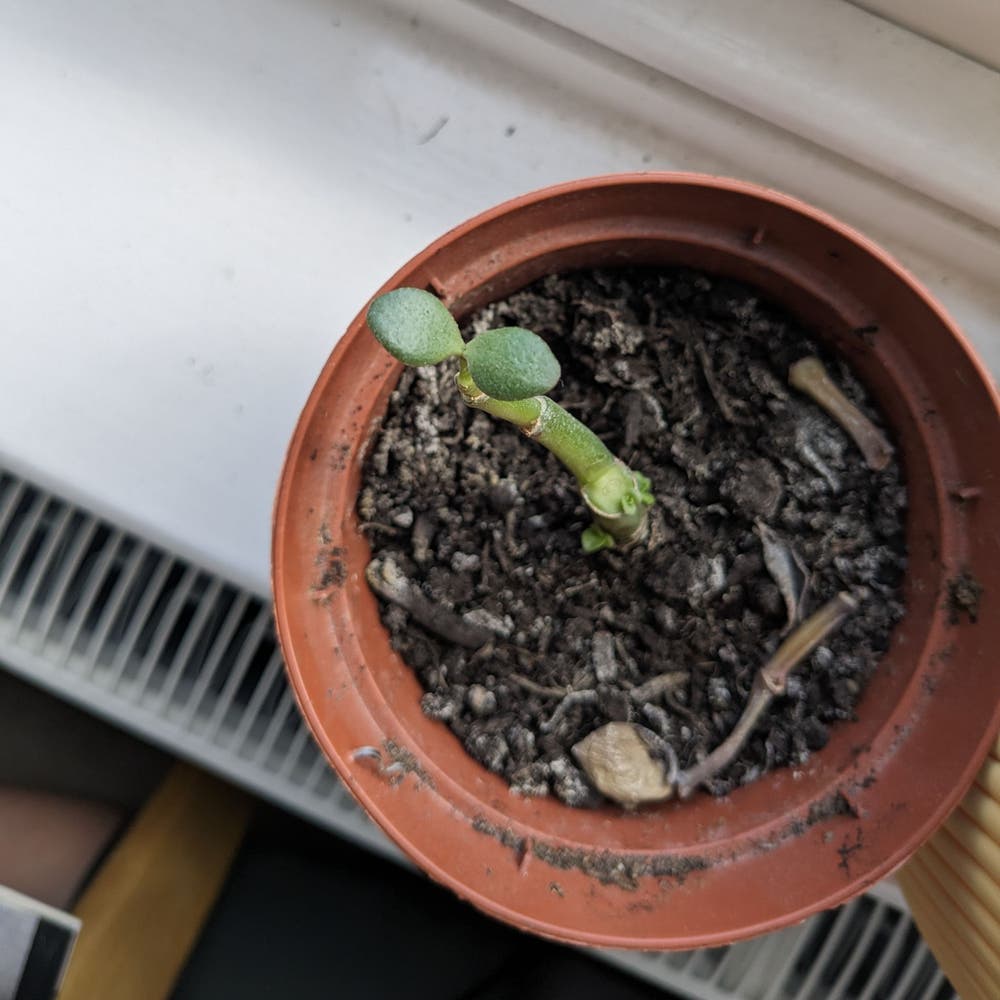
💧 Why Are My Crassula ovata 'Obliqua' Leaves Mushy?
Crassula ovata 'Obliqua'
By the Greg Editorial Team
Jun 18, 2024•4 min read
This article was created with the help of AI so we can cover more plants for you. May contain errors. See one? Report it here.
Rescue your succulent from soggy despair 🌵 by learning the secrets to perfect watering and drainage.
- Overwatering leads to mushy leaves, signaling time to adjust watering habits.
- Root rot requires inspection and trimming; look for firm, white roots.
- Proper drainage and environment prevent waterlogging and promote health.
Spotting the Trouble: Signs Your Succulent is Too Soggy
💦 Overwatering Overload
Too much love in the form of water can turn your Crassula ovata 'Obliqua' leaves into a mushy mess. When leaves start to look more like overripe fruit than sturdy succulent pads, it's time to reassess your watering habits.
Visual cues like yellowing or leaves turning translucent are the plant's way of waving a white flag. It's a clear indication that your watering can is working overtime and your succulent is drowning in affection.
🌱 Root Rot: The Hidden Culprit
Overwatering doesn't just make leaves mushy; it's an open invitation to the silent party crasher known as root rot. This sneaky issue lurks beneath the soil, out of sight, where it can do the most damage.
Symptoms of root rot include a base that feels mushy to the touch and a distinct rotting smell emanating from the soil. If your plant's roots are more brown than a well-done steak, it's time for some serious intervention.

First Aid for Your Waterlogged Plant
🚱 Cutting Back on H2O
Right-sizing your watering routine is crucial. Overzealous watering turns your succulent's home into a swamp. Feel the soil before you water; if it's damp, hold off. Only water when the top inch is as dry as a desert.
🌊 The Great Escape: Ensuring Proper Drainage
Choosing the right soil mix is like picking a life jacket for your plant—it's a lifesaver. Aim for a blend of peat, perlite, and sand. Your pot should have drainage holes to shame a colander. When repotting, remove the mushy leaves with care, and treat the roots like a delicate surgery, giving them fresh, dry soil to thrive in.

Root Recovery: Getting to the Bottom of It
🌱 Inspecting and Trimming
Roots are the lifeline of your Crassula ovata 'Obliqua', and root rot is like a blocked artery. To inspect, gently remove your plant from its pot and brush away the soil for a clear view. Healthy roots are firm and white, while rotten ones are mushy and dark.
Trimming is your plant's ticket to recovery. Use sterilized scissors or pruning shears to cut away the rotten roots. It's a plant version of surgery, so keep it clean to avoid infection. After the bad roots are gone, your plant is ready for a fresh start.
Pruning isn't just about the roots; consider trimming back the foliage too. This reduces the demand on the recovering root system, allowing it to regenerate more effectively. It's like easing the workload to help an employee recover from burnout.
🌿 Pruning for Prosperity
After the root rot removal, it's time for the roots to regrow. Think of it as a reboot for your plant's system. Ensure the remaining roots have contact with fresh, well-draining soil to encourage new growth.
Regular inspections post-trim are like check-ups for your plant's health. Keep an eye out for signs of rot returning, and act swiftly if they do. With careful monitoring and a bit of TLC, your succulent's roots will bounce back, setting the stage for those firm, jade-green leaves to thrive once more.

Keeping It Firm: Preventative Measures for Healthy Leaves
💧 Water Wisdom: Crafting the Perfect Watering Schedule
Tailoring your watering habits to the needs of your Crassula ovata 'Obliqua' is crucial. It's about striking a balance; too much water leads to mushy leaves, while too little can cause wilt.
Monitor the soil moisture like a hawk. Water only when the top inch feels dry. Remember, your plant's thirst varies with the seasons. In winter, it's more of a camel, in summer, a bit of a fish.
🌞 Cultivating the Ideal Environment
Lighting is key. Your succulent craves bright, indirect sunlight. Too much direct sun can scorch, too little can weaken. Find that sweet spot where your plant basks without baking.
Airflow and temperature control are the unsung heroes in preventing mushy leaves. Ensure good circulation; it's like a breath of fresh air for your plant's pores. Keep temperatures consistent, avoiding the shock of sudden chills or heat waves.
Keep these tips in mind, and your Crassula ovata 'Obliqua' will stand firm, with leaves as sturdy as a seasoned yogi.
⚠️ Safety First
This content is for general information and may contain errors, omissions, or outdated details. It is not medical, veterinary advice, or an endorsement of therapeutic claims.
Always consult a qualified healthcare professional before using any plant as food, medicine, or supplement.
Never eat any plant (or feed one to pets) without confirming its identity with at least two trusted sources.
If you suspect poisoning, call Poison Control (800) 222-1222, the Pet Poison Helpline (800) 213-6680, or your local emergency service immediately.
Spotted an error? Please report it here.
Keep your Crassula ovata 'Obliqua' leaves mush-free 🌱 by letting Greg tailor your watering schedule to avoid overwatering and root rot.