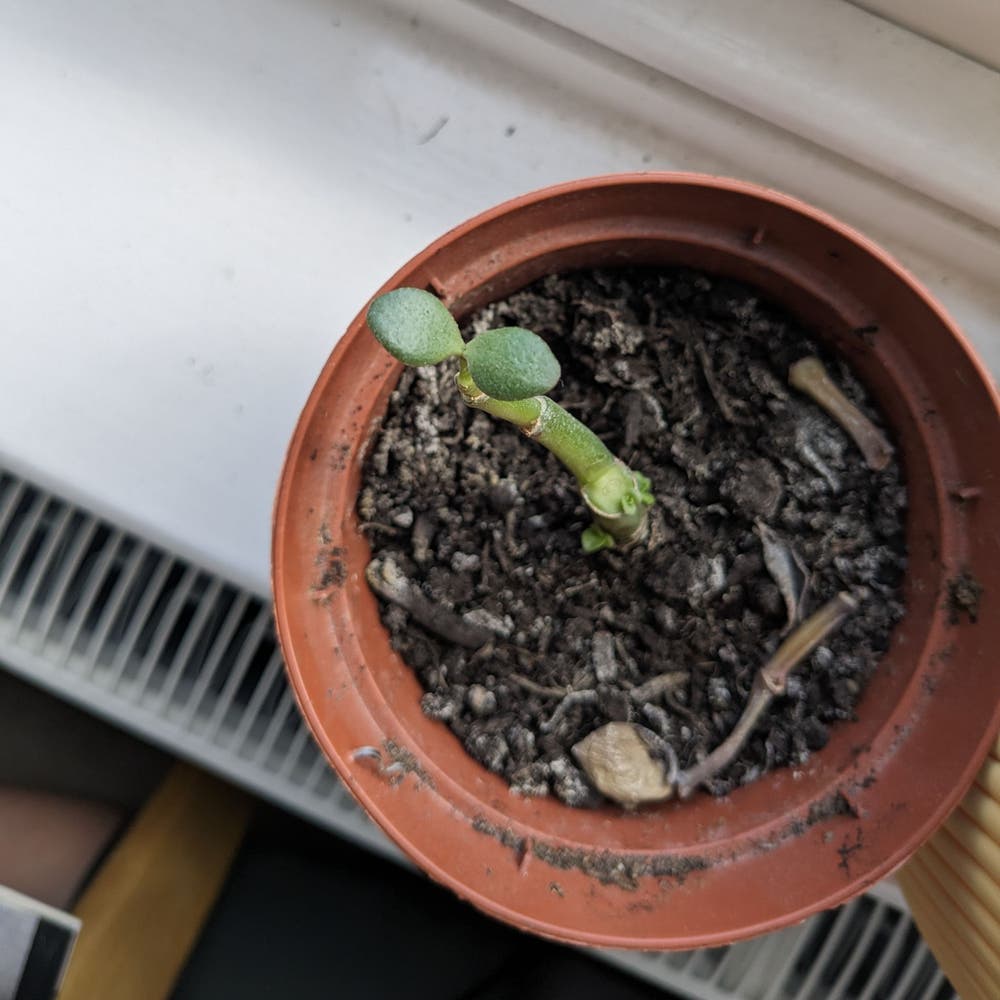
Choosing Fertilizer For My Crassula ovata 'Obliqua'
Crassula ovata 'Obliqua'
By the Greg Editorial Team
Jun 18, 2024•4 min read
This article was created with the help of AI so we can cover more plants for you. May contain errors. See one? Report it here.
Nourish your Crassula to full bloom 🌸 with the perfect fertilizer choice—know the essentials!
- N-P-K values are key for Crassula ovata 'Obliqua' fertilization.
- 🌱 Organic vs. synthetic: Choose based on plant needs and environmental impact.
- Fertilize cautiously: Over-fertilization can harm, less is often more.
Picking the Perfect Fertilizer: What to Look For
💡 Nutrient Ratios for Blooming Success
N-P-K values are the ABCs of fertilizer. For your Crassula ovata 'Obliqua', they're the difference between a lackluster plant and a blooming marvel. Nitrogen (N) is for foliage, Phosphorus (P) for roots and flowers, and Potassium (K) for overall health. Aim for a mix with higher phosphorus to encourage those coveted blooms.
🍽️ Reading Fertilizer Labels Like a Pro
Labels can be a minefield of information. Avoid harmful additives by scrutinizing the fine print. Organic fertilizers release nutrients slowly, making them kinder to your Crassula and the environment. Synthetic options pack a quicker punch but can be harsh if overused. Look for a good range of micronutrients like calcium, which bolsters cell walls and fends off diseases.

Timing is Everything: When to Fertilize
💡 Growth vs. Dormancy: Adjusting Your Approach
Active growth is your green light for fertilizing Crassula ovata 'Obliqua'. During spring and summer, it's all systems go for this succulent. Boost your plant's performance with a balanced fertilizer every two to four weeks, aligning with its growth spurt. But when the air chills and growth slows, it's time to back off. Less is more during dormancy—overdoing it is like a comedian bombing on stage; nobody wants that.
🌱 Seasonal Smarts: Fertilizing Through the Year
Spring into action as your Crassula wakes from its winter snooze. This is prime time for growth, so a monthly fertilization from April to September aligns perfectly with its natural cycle. As the plant matures, keep an eye on its development like it's the latest binge-worthy series. Younger plants may need a more frequent boost to support their growth spurt, while established ferns can do with less. Adjust your approach like a DJ tweaks the bass—too much and you'll drown the vibe, too little and you won't hit the groove. When winter whispers, it's time for a nutrient break—overfeeding is as harmful as overwatering or overexposing to light. Balance is everything.

Application Mastery: How to Fertilize Without the Fuss
💡 The Dos and Don'ts of Fertilizer Application
Best practices for fertilizer application are simple: follow the instructions. It's tempting to freestyle, but the guidelines on the packaging are there for a reason. Over-fertilization is the equivalent of a nutrient overdose for your Crassula ovata 'Obliqua'—it can do more harm than good.
Avoid common pitfalls like applying fertilizer to dry soil; this can cause root burn. Always water your plant before and after applying granular fertilizer to ensure the nutrients are well-absorbed and not concentrated in one spot.
💧 Dilution Solutions: Getting the Concentration Right
Mixing the perfect fertilizer solution is more art than science. Start with a half-strength dilution to avoid shocking your plant with too many nutrients at once. Consistency is key—ensure even distribution by applying the solution close to the soil to promote optimal uptake.
Remember, less is often more. If you're unsure, err on the side of caution and use a weaker solution. It's easier to add more nutrients later than to deal with the fallout of over-fertilization.

Over-Fertilization: Spotting Trouble and Taking Action
🚨 Recognizing the Red Flags
Leaf browning at the tips and margins is your Crassula crying out for help. A white, dusty layer on the soil or pot's edge is a billboard for salt buildup from too much fertilizer. If your plant's growth has hit a wall, it's time to reassess your fertilizing strategy—less is often more.
🛣️ The Recovery Roadmap
- Remove any visible fertilizer crust from the soil surface carefully.
- Flush the soil with water to wash away excess salts—think of it as a root detox.
- Trim any foliage that's taken a hit, looking for brown spots or unusual shapes.
- Replace the top layer of soil with fresh, nutrient-free soil to give your plant a clean slate.
- Pause on the fertilizer; give your Crassula a break to bounce back, typically a three to four-week hiatus.
- Monitor your plant's recovery, resuming fertilization only when it shows signs of happiness.
⚠️ Safety First
This content is for general information and may contain errors, omissions, or outdated details. It is not medical, veterinary advice, or an endorsement of therapeutic claims.
Always consult a qualified healthcare professional before using any plant as food, medicine, or supplement.
Never eat any plant (or feed one to pets) without confirming its identity with at least two trusted sources.
If you suspect poisoning, call Poison Control (800) 222-1222, the Pet Poison Helpline (800) 213-6680, or your local emergency service immediately.
Spotted an error? Please report it here.
Avoid the pitfalls of over-fertilization and nurture your Crassula ovata 'Obliqua' with confidence 🌿 using Greg's custom reminders for when and how much to feed.