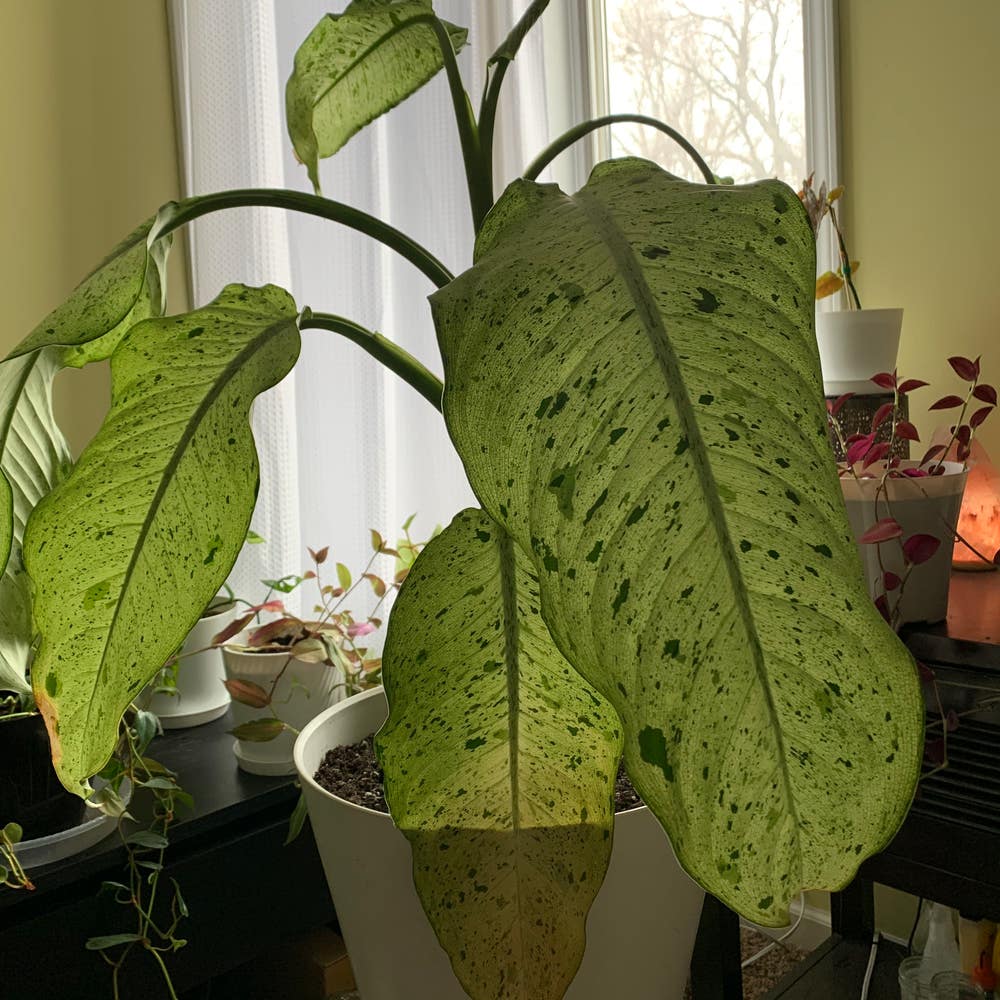
Best Spots to Plant Your Dieffenbachia 'Camouflage'
Dieffenbachia 'Camouflage'
By the Greg Editorial Team
Sep 29, 2024•4 min read
This article was created with the help of AI so we can cover more plants for you. May contain errors. See one? Report it here.
- 🌞 Dieffenbachia 'Camouflage' thrives in bright, indirect sunlight to prevent leaf scorch.
- 🌱 Use well-draining, organic-rich soil with a pH of 6.0 to 7.0 for optimal growth.
- 🌿 Group with tropical plants for humidity and aesthetic appeal in your garden.
Sunlight Exposure Requirements
Optimal Light Conditions 🌞
Dieffenbachia 'Camouflage' thrives in bright, indirect sunlight. Too much direct sunlight can lead to leaf scorch, damaging those beautiful leaves.
If your space lacks natural light, consider using grow lights to keep your plant happy and healthy.
Shade Tolerance 🌳
This plant has a moderate shade tolerance and can flourish in low-light conditions. However, partial shade is ideal, especially during the peak afternoon sun.
Watch for signs of inadequate light, such as stunted growth or a loss of that stunning variegation. Ensuring the right light conditions will help your Dieffenbachia reach its full potential.
Soil and Drainage Conditions
Ideal Soil Types 🌱
For your Dieffenbachia 'Camouflage', a well-draining potting mix enriched with organic matter is essential. Aim for a pH level between 6.0 and 7.0, which is slightly acidic to neutral.
Incorporating peat moss or perlite can significantly enhance aeration, promoting healthy root development. This combination helps create the perfect environment for your plant to thrive.
Importance of Drainage 🚰
Proper drainage is crucial to prevent root rot, a common issue for houseplants. Always ensure your pots have drainage holes to allow excess water to escape.
Consider using moisture-retaining soil amendments to balance hydration. If you notice yellowing leaves or wilting despite regular watering, these are clear signs of poor drainage that need immediate attention.
With the right soil and drainage conditions, your Dieffenbachia will flourish, setting the stage for its vibrant growth. Next, let’s explore how to position your plant effectively in relation to other plants and structures.
Proximity to Other Plants and Structures
🌱 Companion Planting Considerations
When planting your Dieffenbachia 'Camouflage', consider companions like ferns and peace lilies. These plants not only boost humidity but also help with pest control, creating a thriving environment.
Make sure to leave enough space between plants to avoid competition for resources. This will ensure that each plant can flourish without hindrance.
📏 Spacing and Layout
For optimal growth, space your Dieffenbachia 18-24 inches apart. This distance allows for proper air circulation and light penetration.
Grouping your Dieffenbachia with other tropical plants can create a stunning, cohesive look in your garden. It also enhances the overall aesthetic and health of your plant collection.
By carefully considering the proximity to other plants and structures, you can create a vibrant and healthy environment for your Dieffenbachia. Next, let’s explore how to assess and choose the best spot for your plant.
Assessing and Choosing the Best Spot
🕵️♂️ Steps to Evaluate Potential Sites
Choosing the right spot for your Dieffenbachia 'Camouflage' is crucial for its health. Start by observing sunlight patterns throughout the day; this helps you identify areas that receive bright, indirect light.
Next, check the soil drainage by digging a small hole. This simple step reveals whether the area retains too much water, which can lead to root rot.
Monitor wind exposure and temperature fluctuations. A sheltered spot can protect your plant from harsh conditions.
Finally, evaluate the proximity to other plants and structures. This ensures your Dieffenbachia has enough space to thrive without competition.
🛠️ Tools and Methods for Site Assessment
For a more thorough assessment, consider using soil testing kits. These tools help determine pH and nutrient levels, ensuring your plant has the right conditions to flourish.
Light meters are also handy for measuring sunlight intensity. They provide precise data on how much light your plant will receive throughout the day.
Observe existing structures or plants for potential windbreaks. This can significantly impact your plant's growth and overall health.
Keeping a journal of potential sites and their conditions is a smart move. Documenting your observations helps you make informed decisions about the best location for your Dieffenbachia.
With these steps and tools, you'll be well-equipped to find the perfect spot for your plant. This careful consideration sets the stage for a thriving, vibrant Dieffenbachia 'Camouflage'.
⚠️ Safety First
This content is for general information and may contain errors, omissions, or outdated details. It is not medical, veterinary advice, or an endorsement of therapeutic claims.
Always consult a qualified healthcare professional before using any plant as food, medicine, or supplement.
Never eat any plant (or feed one to pets) without confirming its identity with at least two trusted sources.
If you suspect poisoning, call Poison Control (800) 222-1222, the Pet Poison Helpline (800) 213-6680, or your local emergency service immediately.
Spotted an error? Please report it here.
Ensure your Dieffenbachia 'Camouflage' thrives by mastering its light and soil needs, and let Greg guide you with tailored tips 🌞 that turn your space into a lush paradise!