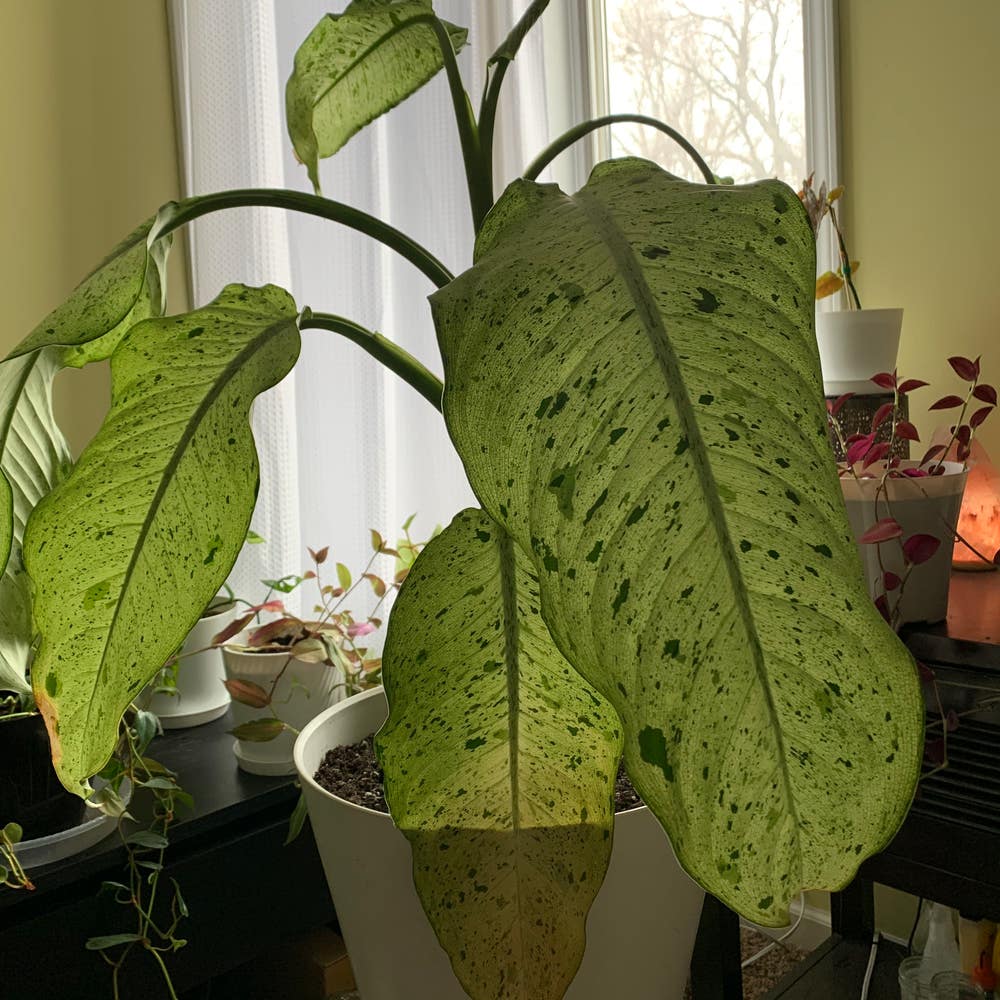
💧 Why Are My Dieffenbachia 'Camouflage' Leaves Mushy?
Dieffenbachia 'Camouflage'
By the Greg Editorial Team
Jun 18, 2024•5 min read
This article was created with the help of AI so we can cover more plants for you. May contain errors. See one? Report it here.
- Mushy leaves and foul odors signal overwatering and decay.
- Root rot requires immediate attention and possibly repotting.
- Prevent issues with balanced watering, proper drainage, and air circulation.
Spotting the Trouble: Signs Your Dieffenbachia 'Camouflage' Has Mushy Leaves
👀 Visual Cues: Discoloration and Texture Changes
Yellow or brown leaves are your Dieffenbachia 'Camouflage' crying out for help. If they're resembling last week's neglected salad, that's your cue to take action.
✋ Tactile Signs: Softness and Lack of Firmness
Leaves should snap back, not cave under pressure. If they feel like a wet sponge, you've got a mushy situation on your hands.
👃 Smell Test: Detecting Foul Odors Indicating Decay
Trust your nose. A foul odor is the silent alarm for decay, and it's not just bad cologne—it's a serious cry for help from your plant.

The Water Woes: Balancing Moisture for Healthy Leaves
🚰 Recognizing and Correcting Overwatering
Overwatering is the helicopter parent of plant care. If your Dieffenbachia 'Camouflage' is sitting in soggy soil, it's time for an intervention. Check the soil's moisture by sticking your finger an inch deep. If it feels like a wet sponge, it's too much. Adjust your watering habits by letting the soil dry out a bit between waterings. Remember, your plant's thirst changes with the seasons.
🚰 How to Check for Waterlogged Soil
To test for waterlogged soil, give the pot a lift; a heavier than usual pot signals excess water. Another sign is if water sits on the surface without draining. If you suspect waterlogging, it might be time to rethink your watering schedule or the soil's composition.
🚰 Adjusting Your Watering Schedule
Your Dieffenbachia 'Camouflage' isn't a cactus, nor is it a water lily. Aim for the Goldilocks zone of soil moisture—consistently moist but not drenched. Water less frequently in winter and more in summer, and always during daylight hours to let moisture evaporate.
🚰 Ensuring Proper Drainage: Pot and Soil Considerations
🚰 Choosing the Right Pot Size and Material
The right pot size and material are crucial for drainage. A pot too large for your plant can hold excess moisture, leading to root rot. Opt for a pot that's just right for your plant's size. Materials like terracotta and unglazed ceramic are porous, allowing soil to breathe and water to evaporate.
🚰 Soil Mixtures That Promote Drainage
A well-draining soil mix is your Dieffenbachia's best friend. Ingredients like perlite, sand, and bark improve drainage and prevent water from throwing a pool party at your plant's roots. If overwatering is a chronic issue, consider switching to a mix that's less likely to retain water.

Root of the Problem: Dealing with Root Rot
🚑 Identifying Root Rot
Black, mushy roots scream root rot. When inspecting your Dieffenbachia 'Camouflage', look for roots that are soft and brown rather than firm and white. A foul smell is another dead giveaway. If you're catching a whiff of decay, it's time to play plant surgeon.
🏥 Salvaging the Situation
Steps for Treating Affected Roots
- Remove the plant from its pot and shake off excess soil.
- Inspect the roots closely; healthy ones are firm and white.
- Prune the rotted roots with sterilized shears—think of it as a necessary amputation for the greater good.
- Repot in fresh, well-draining soil and a clean pot with drainage holes.
🕰️ When to Consider Repotting
If your Dieffenbachia's roots are more rot than not, it's repotting time. Don't dilly-dally; root rot waits for no one.
🌱 Selecting the Right Soil After Treatment
Choose a well-draining potting mix with perlite or sand. It's not just about the soil, though; the pot size matters too. Too big, and you're inviting moisture mayhem. Too small, and your plant's roots will be cramped. Aim for the Goldilocks zone—just right.

Fungus Among Us: Tackling Fungal Infections
🍄 Spotting Symptoms of Fungal Issues
Discoloration and unusual spotting on leaves can signal a fungal invasion. Look for mushy spots or a powdery residue; these are telltale signs that fungi have made your Dieffenbachia 'Camouflage' their home.
🌿 Implementing Fungal Infection Management
🌱 Choosing and Applying Fungicides
Select a fungicide that's compatible with Dieffenbachia. Read labels carefully; precision in application is crucial. Spot-treat affected areas and ensure you're wearing protective gear during application.
🛡️ Home Remedies and Preventative Measures
For a less aggressive approach, consider neem oil or a biological fungicide. These can bolster plant defenses. Remove fallen leaves and debris regularly to prevent spore spread. Remember, prevention is the best cure.
Keeping It Dry and High: Prevention Tactics
💧 Mastering Balanced Watering Practices
Overwatering is the arch-nemesis of Dieffenbachia 'Camouflage'. To defeat it, use the touch test: the top inch of soil should feel like a wrung-out sponge before you water again. Get a moisture meter if you're not into the whole finger-soil relationship—it's a techy way to keep tabs on thirst levels.
Tools and Techniques for Monitoring Soil Moisture
- Stick your finger in the soil. No moisture in the top inch? Green light for watering.
- Moisture meters can be your plant's best friend. They give you the dirt on, well, your dirt.
- Calendar alerts for watering are like a personal assistant for your plant. Just don't forget to actually check the soil first.
🌬 Promoting Air Circulation and Optimal Humidity
Airflow is key. It's like giving your plant room to breathe. Keep the air moving with fans or open windows to ward off that stale, swampy vibe.
Placement Tips and Humidity Control Methods
- A pebble tray is old-school cool. It ups humidity without waterlogging your plant.
- Group plants to create a shared humidity zone, but space them out to avoid a pest rave.
- Hygrometers are your humidity watchdogs. Keep an eye on them and adjust your game plan accordingly.
- In the dry season, consider a humidifier to combat the indoor desert. Conversely, a dehumidifier can keep things in check when the air feels like a rainforest.
⚠️ Safety First
This content is for general information and may contain errors, omissions, or outdated details. It is not medical, veterinary advice, or an endorsement of therapeutic claims.
Always consult a qualified healthcare professional before using any plant as food, medicine, or supplement.
Never eat any plant (or feed one to pets) without confirming its identity with at least two trusted sources.
If you suspect poisoning, call Poison Control (800) 222-1222, the Pet Poison Helpline (800) 213-6680, or your local emergency service immediately.
Spotted an error? Please report it here.
Avoid the dreaded mushy leaves 🍂 on your Dieffenbachia 'Camouflage' with Greg's personalized watering reminders, ensuring just the right amount of hydration for a thriving plant.