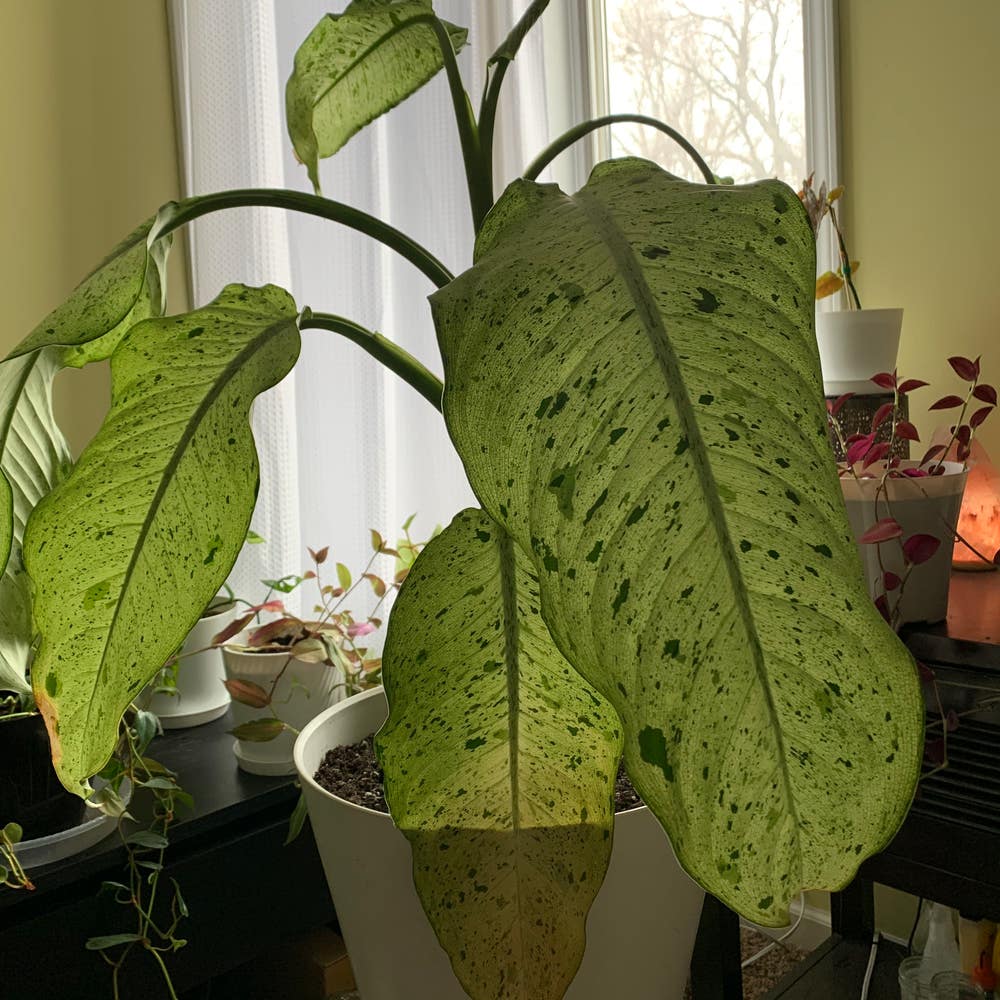
Why Are My Dieffenbachia 'Camouflage' Leaves Dropping?
Dieffenbachia 'Camouflage'
By the Greg Editorial Team
Jun 18, 2024•4 min read
This article was created with the help of AI so we can cover more plants for you. May contain errors. See one? Report it here.
- Early detection prevents Dieffenbachia 'Camouflage' leaf drop.
- Balance watering; avoid over/underwatering to maintain leaf health.
- Consistent climate and pest control are crucial for preventing leaf drop.
Spotting the Signs: When Your Dieffenbachia 'Camouflage' Is Unhappy
🍂 Recognizing Leaf Drop Symptoms
Leaf drop in Dieffenbachia 'Camouflage' can be subtle or sudden, but early detection is key. Look for leaves that detach too easily or display a general lack of vigor. While older leaves naturally yellow and fall off, a healthy plant maintains a robust, green canopy.
🚨 Common Stress Signals
Yellowing leaves often wave the first red flag of distress, especially when it's not just the old guard bowing out. If your plant's leaves are more limp than a forgotten salad, it's likely thirsty. Conversely, leaves that feel mushy or look too glossy might be victims of overwatering. Watch out for brown tips and edges, which scream for higher humidity, while black spots could indicate a more serious disease or fungal issue.

The Usual Suspects: Common Causes of Leaf Dropping
💧 Overwatering Woes
Overwatering is like a helicopter parent for plants—it's overbearing and can smother. Your Dieffenbachia 'Camouflage' might be showing you love in the form of yellow, mushy leaves. That's a classic cry for help. Root rot could be setting in, a silent assassin that thrives in soggy soil.
🏜️ The Thirsty Plant
Conversely, a Dieffenbachia begging for water will sport wilted, dry leaves. It's a clear sign that your plant is more parched than a desert traveler. Underwatering stresses the plant, leading to leaf drop as a survival tactic.
🌡️ Climate Shock
Your Dieffenbachia is as sensitive to climate change as a polar bear on a melting iceberg. Temperature swings and humidity dips can cause your plant to drop leaves faster than trees in autumn. Keep the environment stable unless you want your plant to think it's living through its own personal ice age.
🐜 Uninvited Guests
Pests are like that one friend who never knows when to leave. Spider mites, mealybugs, and scale insects can turn your Dieffenbachia into an all-you-can-eat buffet. Speckled leaves and sticky residue are red flags that it's time to show these party crashers the door.
🍽️ Starving for Nutrients
A Dieffenbachia without nutrients is like a car running on fumes—it won't get far. Nutrient deficiencies show up in leaf health, with discoloration and dropping leaves signaling that your plant's diet is lacking. It's time to feed your foliage right, or watch it wither away in hunger.

Turning Over a New Leaf: Solutions to Stop the Drop
💧 Fine-Tuning Watering Habits
Watering your Dieffenbachia 'Camouflage' is less about sticking to a strict schedule and more about understanding its needs. Ensure the top inch of soil is dry before watering again. Overzealous watering leads to soggy roots, a fast track to leaf drop.
- Check the soil moisture with your finger or a moisture meter.
- Allow the topsoil to dry out before the next watering session.
🌡️ Creating a Cozy Environment
Dieffenbachia 'Camouflage' thrives in temperatures between 65°F and 75°F. Avoid placing your plant near drafty windows or heating vents where temperature fluctuations are common.
- Maintain consistent humidity by using a pebble tray or humidifier.
- Gradually adjust your plant to seasonal temperature changes.
🐜 Keeping Pests at Bay
Regularly inspect your Dieffenbachia for pests like spider mites or scale insects. Wipe leaves with a damp cloth to deter mites and treat any infestations with an appropriate pesticide.
- Keep your plant clean to minimize pest attraction.
- Use a gentle pesticide to deal with any uninvited guests.
🌿 Feeding Your Foliage Right
Nutrient deficiencies can be subtle but detrimental. Use a balanced fertilizer, but remember, it's a supplement, not a meal replacement. Over-fertilizing can be just as harmful as not fertilizing at all.
- Fertilize during the growing season following product guidelines.
- Observe your plant's response and adjust fertilization as needed.

⚠️ Safety First
This content is for general information and may contain errors, omissions, or outdated details. It is not medical, veterinary advice, or an endorsement of therapeutic claims.
Always consult a qualified healthcare professional before using any plant as food, medicine, or supplement.
Never eat any plant (or feed one to pets) without confirming its identity with at least two trusted sources.
If you suspect poisoning, call Poison Control (800) 222-1222, the Pet Poison Helpline (800) 213-6680, or your local emergency service immediately.
Spotted an error? Please report it here.
Prevent your Dieffenbachia 'Camouflage' from losing its lush leaves by letting Greg customize 🌿 your plant care, ensuring perfect watering, temperature, and pest control.