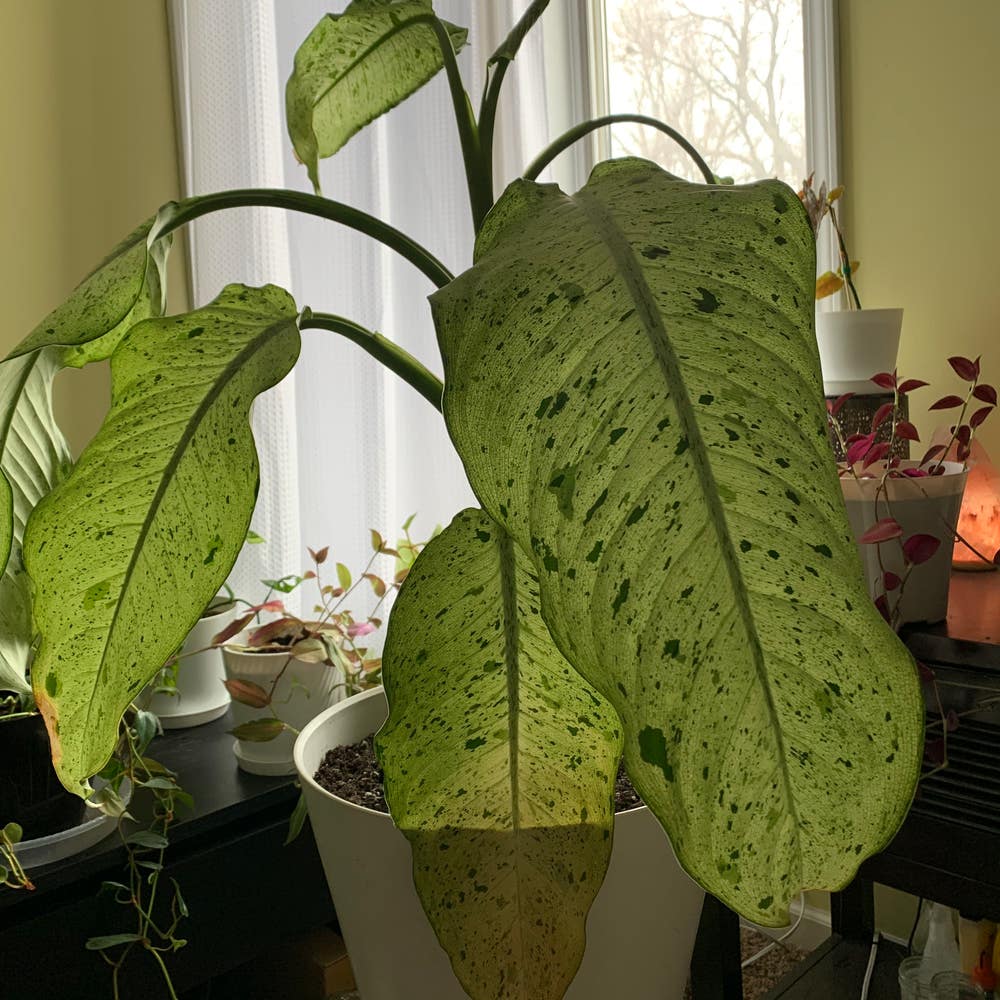
Ultimate Guide to Winter Care for Dieffenbachia 'Camouflage' ❄️
Dieffenbachia 'Camouflage'
By the Greg Editorial Team
Sep 29, 2024•5 min read
This article was created with the help of AI so we can cover more plants for you. May contain errors. See one? Report it here.
- 🌡️ Dieffenbachia 'Camouflage' thrives in 60°F to 75°F (15°C to 24°C) during winter.
- ❄️ Protect from frost by bringing indoors before warnings and using frost cloths.
- 💧 Water less frequently in winter; check soil moisture every 1-2 weeks.
Winter Care Requirements
❄️ Frost protection strategies
To keep your Dieffenbachia 'Camouflage' thriving during winter, maintaining an ideal temperature range of 60°F to 75°F (15°C to 24°C) is crucial. Here are some effective frost protection methods:
- Bring plants indoors before frost warnings to shield them from harsh temperatures.
- Use frost cloths or blankets for outdoor plants to provide an extra layer of insulation.
- Create microclimates with barriers or windbreaks to protect your plants from cold winds.
💧 Adjusting watering schedules for winter
As your Dieffenbachia enters dormancy, it's essential to reduce watering frequency. A good rule of thumb is to check soil moisture every 1-2 weeks.
- Water only when the top 1-2 inches of soil are dry to prevent root rot.
- Be vigilant for signs of overwatering, like yellowing leaves and mushy stems, or underwatering, indicated by drooping leaves and dry soil.
🌱 Fertilizing needs during the winter months
During winter, it's best to avoid fertilizing your Dieffenbachia as it rests. This helps prevent stress and allows the plant to conserve energy.
- Resume fertilizing in spring when new growth appears.
- Opt for balanced fertilizers suitable for Dieffenbachia to support its recovery post-dormancy.
By following these winter care requirements, you'll set your Dieffenbachia up for a successful transition into spring. Next, let's explore how to provide optimal indoor care during the colder months.
Indoor Winter Care
Optimal indoor temperature and humidity levels 🌡️
Maintaining the right indoor temperature is crucial for your Dieffenbachia 'Camouflage' during winter. Aim for a cozy range of 65°F to 75°F (18°C to 24°C) to keep your plant thriving.
Humidity is equally important. The ideal humidity level for Dieffenbachia is between 50% and 70%. Here are some effective methods to boost humidity:
- Using a humidifier: This is the most efficient way to maintain moisture in the air.
- Placing water trays near the plant: As the water evaporates, it increases humidity around your plant.
- Grouping plants together: This creates a microenvironment with higher humidity.
Light requirements for indoor Dieffenbachia 💡
Adequate light is essential for your Dieffenbachia during the winter months. It thrives in bright, indirect sunlight, which mimics its natural habitat.
Avoid direct sunlight, as it can lead to leaf burn. If you notice yellowing leaves or leggy growth, it’s a sign your plant isn’t getting enough light. Adjust its position to ensure it receives the right amount of brightness.
By keeping an eye on temperature, humidity, and light, you can help your Dieffenbachia flourish even in the colder months. This sets the stage for a smooth transition into spring care, ensuring your plant is ready for new growth.
Spring Preparation
🌱 Signs of recovery from winter damage
As winter fades, your Dieffenbachia 'Camouflage' will show signs of life. Look for new leaf growth and a noticeable improvement in the color and turgidity of existing leaves.
Keep an eye out for any signs of stress or damage. Early detection can make a big difference in your plant's recovery.
🌼 Preparing for spring growth
With rising temperatures, it's time to adjust your care routine. Start by gradually increasing the watering frequency to match the plant's growing needs.
Resuming fertilization is also essential as spring progresses. Choose a balanced fertilizer to give your Dieffenbachia the nutrients it craves.
If your plant has become root-bound, consider repotting. This will provide fresh soil and more space for growth, setting the stage for a vibrant spring.
As you prepare for the season, remember that attentive care will lead to a flourishing Dieffenbachia. Next, let’s explore common winter problems and their solutions to keep your plant thriving.
Common Winter Problems and Solutions
🌿 Identifying and Addressing Leaf Drop
Leaf drop can be a common concern for Dieffenbachia during winter. The primary culprits are often low humidity levels and inadequate light.
To combat leaf drop, consider increasing humidity around your plant. Simple methods include using a humidifier or placing water trays nearby. Additionally, adjusting light exposure can make a significant difference. Ensure your plant receives bright, indirect sunlight to keep it thriving.
🐜 Managing Pests During Winter Months
Winter can bring its own set of pest challenges for your Dieffenbachia. Spider mites and aphids are two common pests that may invade during this season.
Regular inspections are crucial for early detection. If you spot any pests, using insecticidal soap or neem oil can effectively control the situation. Keeping your plant clean and well-maintained will also help prevent infestations.
💧 Dealing with Overwatering or Underwatering Issues
Watering issues can lead to significant stress for your Dieffenbachia. Symptoms of overwatering include yellowing leaves and mushy stems, while underwatering typically results in drooping leaves and dry soil.
To correct these issues, adjust your watering frequency based on environmental conditions. Always ensure proper drainage in pots to prevent waterlogging. Monitoring your plant closely will help you strike the right balance.
As you navigate these winter challenges, remember that attentive care can lead to a healthy, vibrant Dieffenbachia. Next, let’s explore how to prepare your plant for the upcoming spring growth.
⚠️ Safety First
This content is for general information and may contain errors, omissions, or outdated details. It is not medical, veterinary advice, or an endorsement of therapeutic claims.
Always consult a qualified healthcare professional before using any plant as food, medicine, or supplement.
Never eat any plant (or feed one to pets) without confirming its identity with at least two trusted sources.
If you suspect poisoning, call Poison Control (800) 222-1222, the Pet Poison Helpline (800) 213-6680, or your local emergency service immediately.
Spotted an error? Please report it here.
Keep your Dieffenbachia 'Camouflage' thriving this winter ❄️ by using Greg for tailored watering reminders and humidity tips that ensure your plant stays vibrant all season long!