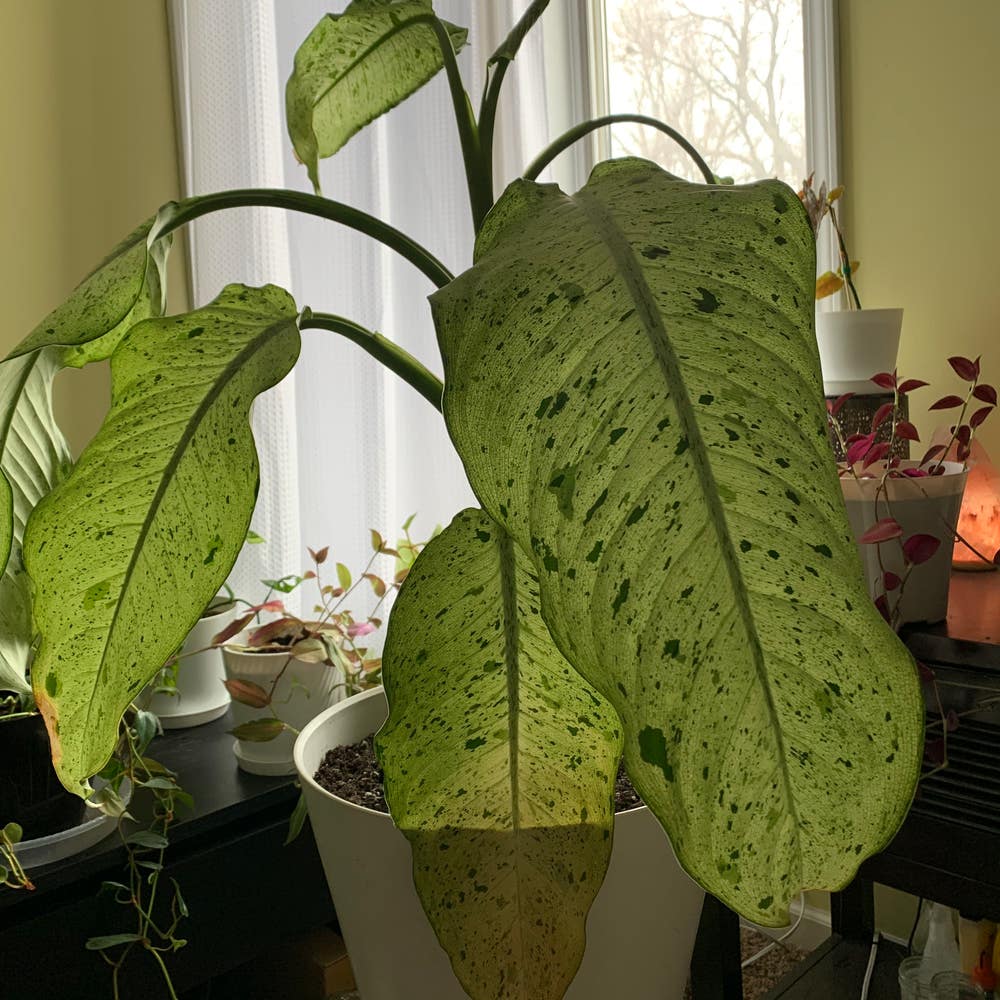
Why Is My Dieffenbachia 'Camouflage' Not Doing Well?
Dieffenbachia 'Camouflage'
By the Greg Editorial Team
Jun 18, 2024•6 min read
This article was created with the help of AI so we can cover more plants for you. May contain errors. See one? Report it here.
- Yellow or crispy leaves? Over-watering and under-watering are common culprits.
- Sunburned or small leaves? Adjust light levels for a happier Dieffenbachia.
- Prevent root rot with well-draining soil and terracotta pots.
Water Woes: Striking the Right Balance
💧 Over-watering Hazards
Yellowing leaves and wilting are your Dieffenbachia 'Camouflage' crying out for less water. Mushy stems? That's the plant equivalent of waterlogged bread.
Spot the Soggy Signs
Dry Out and Bounce Back
- Cut back on watering immediately.
- Allow the top inch of soil to dry out before the next watering.
- Consider repotting with fresh, well-draining soil if the situation is dire.
🏜️ Under-watering Mishaps
Leaves crisper than autumn leaves underfoot signal your Dieffenbachia is parched. The pot feeling lighter than your conscience on a good day? Time to water.
Crispy Leaf Alert
- Look for crispy leaves and soil pulling away from the pot's edge.
Quenching Thirst
- Water slowly and thoroughly, letting the soil absorb moisture without drowning the roots.
- Check the soil daily; water when the top two inches feel dry.
- In extreme cases, a repot into a moisture-retentive mix might be the ticket.

Light and Shade: Finding the Sweet Spot
🌞 Too Much Sun
Burn Notice
Scorched leaves are the tell-tale signs of a Dieffenbachia 'Camouflage' getting more sun than it can handle. If your plant's leaves look like they've been in a tanning bed too long, it's time to intervene. Move it to a spot with bright, indirect light, where the sun's rays are less intense. A sheer curtain can work wonders to soften harsh sunlight without plunging your plant into darkness.
Fixing Leaf Scorch
Once you've relocated your Dieffenbachia, the scorched leaves won't recover, but new growth will be healthy if the lighting is right. Keep an eye out for fresh, unblemished leaves as a sign that your plant is back on track. If you're a fan of gadgets, a light meter can help you find the perfect spot without the guesswork.
🌥️ Not Enough Light
Fading Fast
A Dieffenbachia 'Camouflage' that's more shadow than plant likely needs more light. Small, spaced-out leaves are a cry for help. Shift it closer to a light source, but remember, direct sunlight is still a no-no. If your only option is a dimly lit room, consider a full-spectrum artificial light to mimic the sun's embrace.
Perking Up a Light-starved Dieffenbachia
Watch for new leaves that are larger and closer together on the stem. This is your Dieffenbachia's way of saying "thanks" for the better lighting. Seasonal changes might require you to shuffle your plant's position to maintain that sweet spot of light. It's a bit like musical chairs, but with sunlight and a lot less running around.

Temperature Tantrums: Keeping It Comfy
🌡️ Chilly Leaves, Droopy Mood: Addressing Temperature Stress in Dieffenbachia
Dieffenbachia 'Camouflage' prefers a steady climate. It thrives in temperatures between 65°F and 75°F.
🥶 Cold Stress
When the mercury dips, Dieffenbachia shows its discontent. Yellowing leaves and water-soaked spots are telltale signs of a plant caught in a cold snap. Young leaves are especially sensitive, often bearing the brunt of the damage. If the stems start to show a reddish-brown discoloration at the base, it's a red flag for chilling injury.
🔥 Heat Stress
On the flip side, too much heat can send your Dieffenbachia into survival mode. Look out for wilting leaves or a sudden spurt in flowering. High temperatures, especially when paired with low humidity, may cause leaves to curl inward as a moisture-saving measure.
🌡️ Stabilizing Temperatures
To avoid these temperature-induced mood swings, keep your Dieffenbachia away from drafty windows and direct heat sources. Drafts and radiators are not your plant's friends. They can cause temperature fluctuations that lead to a stressed and unhappy plant.
Real Talk: It's Not Just About Comfort
It's about providing a consistent environment that doesn't swing from one extreme to another. Think of yourself as your plant's personal thermostat. Keeping temperatures stable is key to avoiding the visual tantrums your Dieffenbachia might throw.
Remember, Dieffenbachia can't escape the cold by putting on a sweater or beat the heat with a fan. It's on you to maintain a comfy climate.

Attack of the Invaders: Pests and Pathogens
🐜 Pests on Patrol
Regular check-ups are your first defense against pests. Spotting them early can prevent a full-scale invasion. Look out for telltale signs like holes in leaves or a sticky residue, which could indicate aphids, spider mites, or mealybugs.
To combat these critters, introduce beneficial insects like predatory mites or parasitic nematodes. They're your garden's unpaid interns, tirelessly keeping pest populations in check. If chemical warfare is necessary, opt for insecticidal soaps or neem oil. These are the bouncers at the door, showing pests the exit without harsh toxins.
🍄 Fungus Among Us
Mold and fungus can throw a wrench in your Dieffenbachia's health. White or black spots on leaves are a dead giveaway. Increase airflow and consider a fungicide to crash their party. Products like potassium bicarbonate or tebuconazole with trifloxystrobin can be effective, but always follow the label to the letter.
Cleanliness is key; remove fallen leaves and debris to prevent spore spread. And if you're dealing with a persistent fungal rave, an all-purpose fungicide might be your plant's lifeline. Remember, overuse can lead to resistance, so use these products as a last resort and always adhere to the guidelines.
Root of the Problem: Preventing Root Rot
🕵️ Soggy Soil Sleuthing: Early Detection
Sniff tests aren't just for milk. If your Dieffenbachia 'Camouflage' soil smells like a swamp, you've got trouble brewing. Black, mushy roots are the plant equivalent of a white flag. Catch these signs early, and you're halfway to saving your leafy friend.
🚑 Immediate Intervention
When root rot rears its ugly head, it's surgery time. Trim the rot, repot with fresh, well-draining soil, and adjust your watering habits. Think of it as a plant ICU where overwatering is not on the menu.
🌱 Soil and Pot Selection
Choosing the right soil is like picking the perfect mattress—it matters. Go for a mix that's more aerated than your average sponge cake. And those pots? Make sure they have drainage holes that could make a colander jealous.
💧 Watering Wisdom
Adopt the "soak and dry" method. Water deeply, then let the soil flirt with dryness before going back for another round. This isn't a pool party for your plant's roots; it's a carefully choreographed hydration dance.
🛡️ Prevention is Key
Preventative measures beat a cure any day. Keep the soil fluffy and light, and never let your plant sit in water like it's taking a bath. Terracotta pots are your allies, breathing out excess moisture like they're doing yoga for plants.
⚠️ Safety First
This content is for general information and may contain errors, omissions, or outdated details. It is not medical, veterinary advice, or an endorsement of therapeutic claims.
Always consult a qualified healthcare professional before using any plant as food, medicine, or supplement.
Never eat any plant (or feed one to pets) without confirming its identity with at least two trusted sources.
If you suspect poisoning, call Poison Control (800) 222-1222, the Pet Poison Helpline (800) 213-6680, or your local emergency service immediately.
Spotted an error? Please report it here.
Avoid the guesswork in Dieffenbachia 'Camouflage' care and dodge over-watering or lighting mishaps with Greg's custom care plans and reminders 🌱.