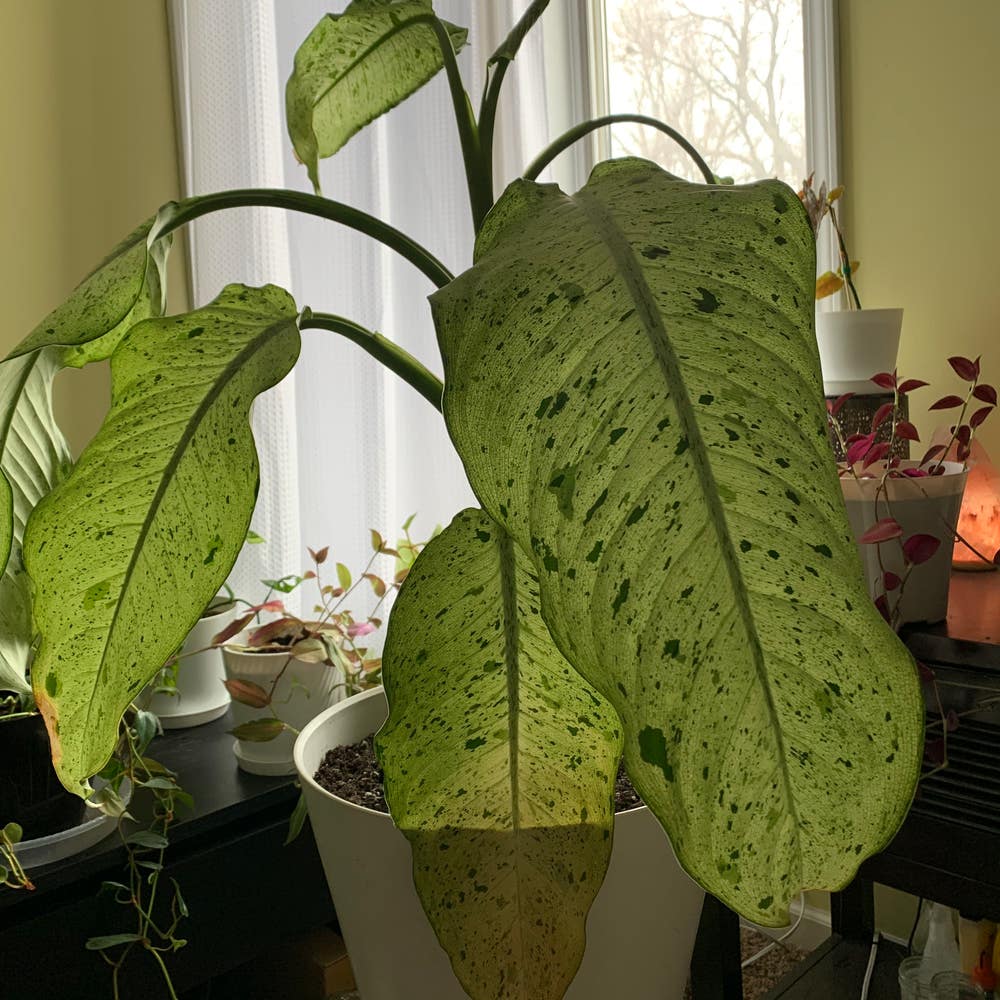
5 Ideal Companions for Your Dieffenbachia 'Camouflage' 🐾
Dieffenbachia 'Camouflage'
By the Greg Editorial Team
Sep 29, 2024•5 min read
This article was created with the help of AI so we can cover more plants for you. May contain errors. See one? Report it here.
- 🌱 Peace Lily and Pothos enhance Dieffenbachia's health while purifying indoor air.
- 🌿 Snake Plant and ZZ Plant thrive together, balancing humidity and maintenance needs.
- 🌼 Avoid cacti and Fiddle Leaf Fig; they conflict with Dieffenbachia's moisture requirements.
Ideal Companion Plants
Peace Lily 🌺
The Peace Lily is an excellent companion for your Dieffenbachia 'Camouflage.' It thrives in low to medium light, just like Dieffenbachia, and enjoys high humidity, making it a perfect match.
Additionally, Peace Lilies have natural pest-repellent properties. This means they can help keep your indoor garden healthier by deterring certain pests.
Pothos 🌿
Pothos brings visual appeal and growth compatibility to the table. Its variegated leaves beautifully complement the Dieffenbachia, while its fast-growing, trailing nature adds dimension to your indoor spaces.
Moreover, Pothos is known for its air-purifying qualities. It effectively removes indoor pollutants, enhancing the overall air quality in your home.
Snake Plant 🐍
The Snake Plant is another fantastic option, thriving in similar low-light conditions. Its adaptability makes it a compatible companion for Dieffenbachia.
Both plants share a preference for high humidity. This reduces the risk of stress, ensuring they both flourish together.
ZZ Plant 🌱
If you're looking for low maintenance, the ZZ Plant is your go-to. Its drought tolerance complements Dieffenbachia's sensitivity to overwatering, making care easier.
Additionally, ZZ Plants prefer similar soil types and watering schedules. This compatibility helps maintain a harmonious indoor garden.
Spider Plant 🕷️
The Spider Plant is renowned for its air purification benefits. It's effective at filtering toxins from the air, contributing to a healthier environment.
It also shares similar watering needs with Dieffenbachia. Both plants require consistent moisture, aligning their care requirements perfectly.
These companion plants not only enhance the health of your Dieffenbachia but also create a vibrant indoor ecosystem. Next, let’s explore which plants you should avoid to keep your Dieffenbachia thriving.
Plants to Avoid
🌵 Cacti and Succulents
Cacti and succulents thrive in dry conditions, which can create a conflict with Dieffenbachia's need for consistent moisture. This difference in watering preferences can lead to competition for water, ultimately stressing your Dieffenbachia.
Moreover, these drought-tolerant plants may hinder Dieffenbachia's growth due to their differing nutrient requirements. When planted together, they can compete for essential resources, leaving your Dieffenbachia struggling to flourish.
🍃 Fiddle Leaf Fig
Fiddle Leaf Figs prefer bright, indirect light, which can be too intense for Dieffenbachia. This mismatch in light requirements can lead to poor growth and overall health for your Dieffenbachia.
Additionally, Fiddle Leaf Figs can attract pests that may also target your Dieffenbachia. This risk can create a challenging environment, making it wise to keep these two plants apart for optimal health.
By avoiding these incompatible companions, you can ensure your Dieffenbachia 'Camouflage' thrives alongside its ideal partners. Next, let’s explore how companion plants can play a crucial role in pest management.
Pest Management
Companion Plants as Natural Pest Deterrents 🌱
Companion plants play a crucial role in pest management by naturally repelling unwanted insects. By strategically placing certain plants near your Dieffenbachia 'Camouflage', you can reduce the need for chemical pesticides.
Specific Pest Management Benefits 🐞
Here are some companion plants and the pests they help deter:
- Peace Lily: This plant can repel aphids and spider mites, which are common nuisances for many houseplants.
- Pothos: Known for its air-purifying qualities, it also helps keep pests like mealybugs at bay.
- Snake Plant: Its tough leaves can deter pests such as scale insects, promoting a healthier environment for your Dieffenbachia.
- ZZ Plant: This resilient companion can help fend off thrips, ensuring your Dieffenbachia thrives.
- Spider Plant: Renowned for its air-cleaning abilities, it also helps repel harmful insects like fruit flies.
By incorporating these companions, you not only enhance the aesthetic appeal of your indoor garden but also create a natural defense system against pests.
Enhancing Plant Health 🌿
The synergy between these plants can significantly enhance the overall health of your Dieffenbachia. With fewer pests to contend with, your plant can focus on growth and vitality.
Incorporating companion plants is a smart strategy for maintaining a thriving indoor garden. Next, let’s explore the visual appeal and diversity that these companions can bring to your space.
Visual Appeal and Garden Diversity
Importance of Aesthetics in Companion Planting 🎨
Companion planting isn't just about care compatibility; it's also about aesthetics. The right combination of colors and textures can transform your indoor space into a vibrant oasis.
Enhancing Garden Diversity 🌱
Diverse plant pairings promote a healthier ecosystem. By incorporating various species, you can improve resilience against pests and diseases, creating a thriving indoor garden.
Creating a Cohesive Indoor Garden Environment 🏡
To maximize visual impact, consider arranging plants by height and leaf shape. Grouping taller plants like the Snake Plant behind shorter ones like the Peace Lily creates depth and interest.
- Layering: Use taller plants at the back and shorter ones in front for a balanced look.
- Color Coordination: Choose plants with complementary colors to enhance visual appeal.
- Texture Variation: Mix smooth-leaved plants with those that have a more rugged texture for added dimension.
By thoughtfully selecting and arranging your plants, you can create a cohesive and inviting indoor garden that not only looks good but also supports the health of your Dieffenbachia 'Camouflage'. This approach not only elevates your space but also fosters a sense of connection with nature.
⚠️ Safety First
This content is for general information and may contain errors, omissions, or outdated details. It is not medical, veterinary advice, or an endorsement of therapeutic claims.
Always consult a qualified healthcare professional before using any plant as food, medicine, or supplement.
Never eat any plant (or feed one to pets) without confirming its identity with at least two trusted sources.
If you suspect poisoning, call Poison Control (800) 222-1222, the Pet Poison Helpline (800) 213-6680, or your local emergency service immediately.
Spotted an error? Please report it here.
Enhance your Dieffenbachia 'Camouflage' with perfect companions like Peace Lilies and Pothos for a thriving indoor oasis, and let Greg's custom care reminders 🌱 keep your plant family flourishing together!