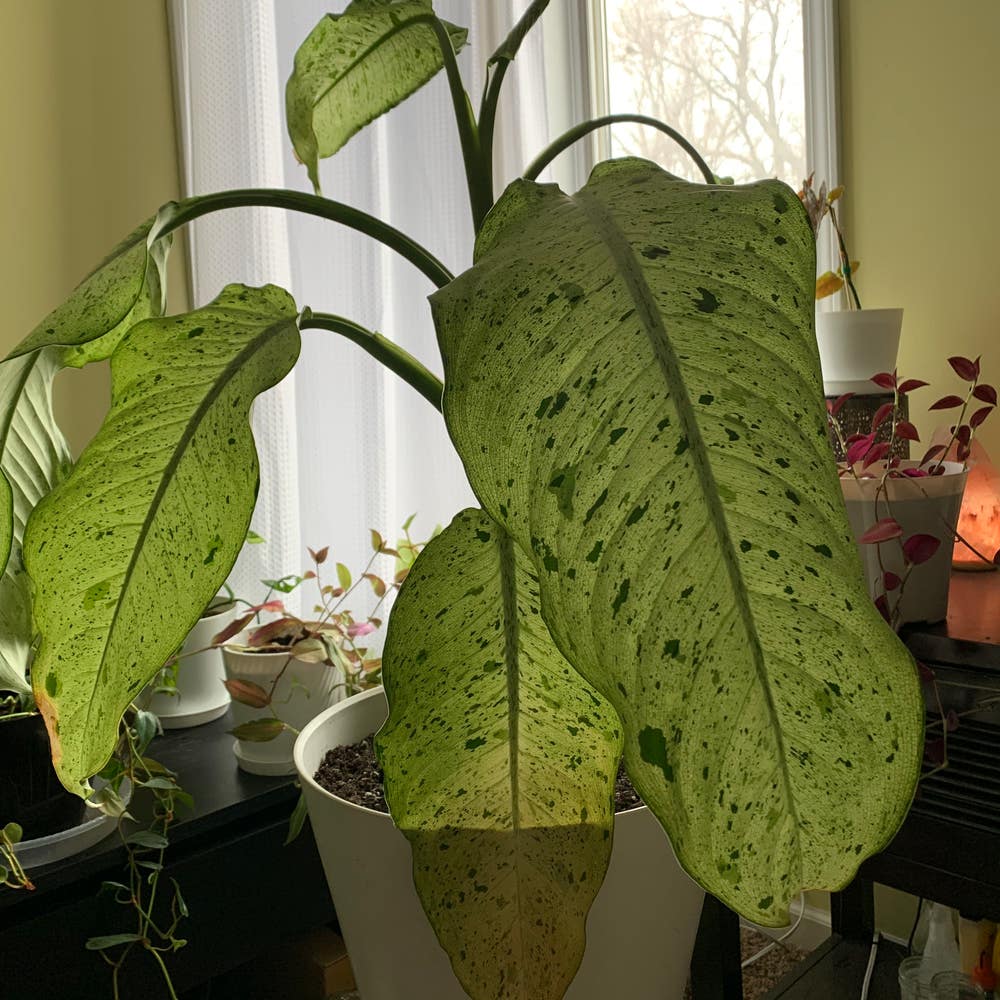
When and Where Should I Trim My Dieffenbachia 'Camouflage'?
Dieffenbachia 'Camouflage'
By the Greg Editorial Team
Jun 18, 2024•3 min read
This article was created with the help of AI so we can cover more plants for you. May contain errors. See one? Report it here.
- Early spring pruning aligns with Dieffenbachia's growth cycle.
- 🌿 Use sharp, sterilized tools for clean cuts and disease prevention.
- Post-trim care includes light, temperature control, and monitoring.
Best Time to Get Snippy
🌱 Seasonal Timing
Early spring is the Dieffenbachia 'Camouflage's' sweet spot for pruning. It's like hitting the reset button just as the plant shakes off its winter slumber. This timing aligns with the plant's natural cycle, allowing for health-focused pruning without disrupting the bloom cycle.
Plant Life Cycle Considerations
Pruning should sync with the Dieffenbachia's rhythm. Active growth usually kicks in with longer days and warmer temperatures. That's your green light to prune, encouraging the plant to heal and regrow. Avoid the rookie mistake of pruning during dormancy or peak blooming—your plant won't thank you for it.

Gear Up for a Trim
🛠️ Choosing Your Tools
Pruning your Dieffenbachia 'Camouflage' starts with sharp shears. Precision is your plant's best friend, so ditch any tool that resembles a machete. Hand pruners or scissors? That's your call, as long as they're sharp enough to make a clean cut without a struggle.
🧼 Sterilization and Safety
Think of tool sterilization as handwashing for surgeons—it's essential. Wipe down those blades with rubbing alcohol or a bleach solution to keep pathogens at bay. And don't forget the gloves; they're your first defense against sap and the accidental slip of a shear. Safety isn't just a suggestion; it's a necessity.

Pruning Like a Pro
🌿 Where to Make the Cut
Pruning your Dieffenbachia 'Camouflage' isn't a hack job; it's a strategic art. Snip above a leaf node, that junction where leaves and potential buds emerge. This is the sweet spot for encouraging new growth without risking the plant's health. Remember, no stubs—leaving them is like inviting disease to a plant party.
🌱 Encouraging Bushy Growth
Want a Dieffenbachia that's more bush than beanpole? Prune back to latent buds. These are the unassuming heroes where leaves meet stems, ready to burst into action. By cutting back to these points, you're giving your plant a clear signal: "It's time to branch out."
🍂 Dealing with Leggy Stems and Yellow Leaves
Leggy stems and yellow leaves are the plant equivalent of a bad hair day. Trim those leggy stems back to a node to redistribute the plant's energy to healthier areas. As for yellow leaves, they're more than an eyesore—they're a cry for help. Cut them off cleanly to prevent the spread of potential disease and to make room for fresh, green growth. Remember the golden rule: never remove more than a third of the plant at once. It's about rejuvenation, not shock therapy.

Post-Pruning TLC
🌿 Immediate Aftercare
After you've given your Dieffenbachia 'Camouflage' a trim, immediate aftercare is crucial. Clean up all the clippings; leaving them can invite pests or disease. Hold off on watering for a bit to let the cuts heal. Instead, ensure the plant is in a spot with bright, indirect light and at a comfortable temperature between 65-75F.
🏥 Long-Term Health Monitoring
Post-pruning isn't just about the immediate aftermath. It's about ongoing vigilance. Keep an eye on your plant for signs of new growth, which indicates a successful prune. Regularly inspect for pests like spider mites and mealybugs, and remove any yellow leaves promptly. Adjust care as needed, whether that means tweaking the watering schedule or moving the plant to a better-lit area. Remember, your Dieffenbachia 'Camouflage' relies on you for its well-being, so stay attentive and responsive to its needs.
⚠️ Safety First
This content is for general information and may contain errors, omissions, or outdated details. It is not medical, veterinary advice, or an endorsement of therapeutic claims.
Always consult a qualified healthcare professional before using any plant as food, medicine, or supplement.
Never eat any plant (or feed one to pets) without confirming its identity with at least two trusted sources.
If you suspect poisoning, call Poison Control (800) 222-1222, the Pet Poison Helpline (800) 213-6680, or your local emergency service immediately.
Spotted an error? Please report it here.
Trim your Dieffenbachia 'Camouflage' at the optimal time 🕒 with Greg's custom reminders that align with your plant's growth cycle and home environment for a lush, healthy growth.