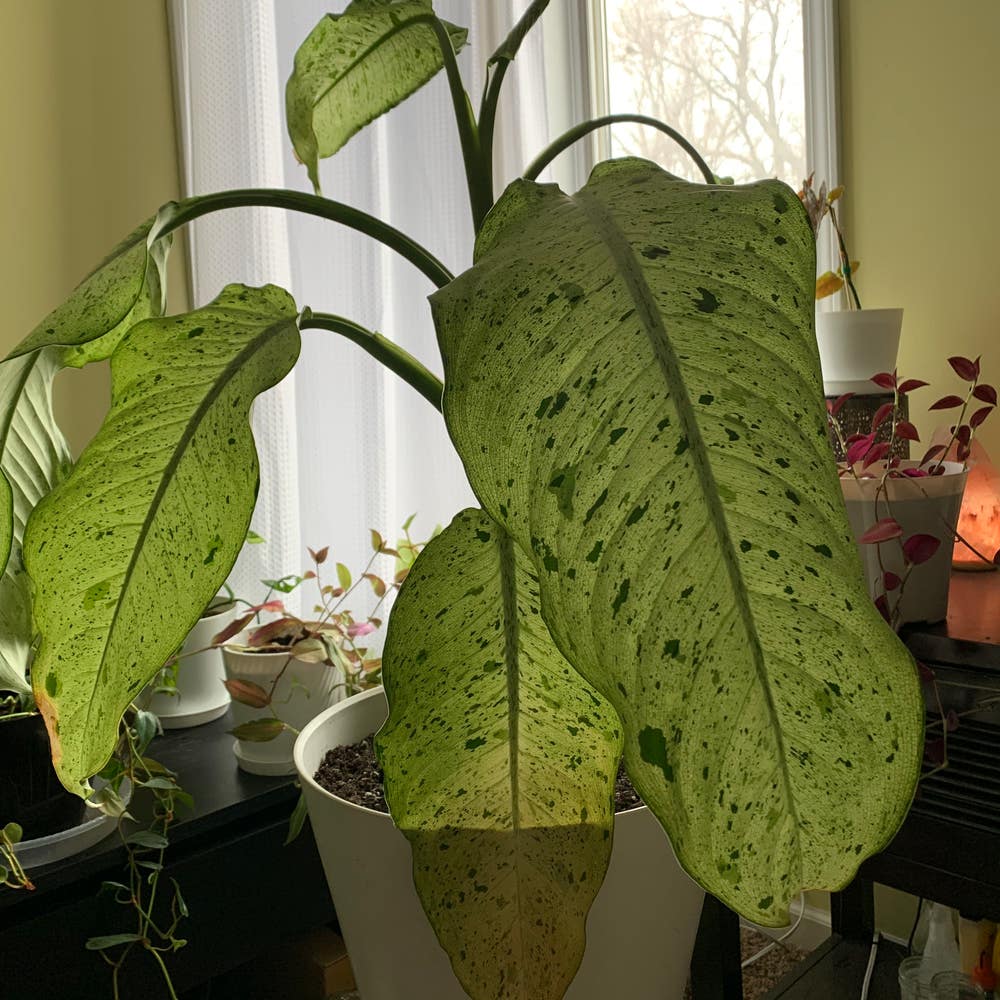
💧 How to Fix Your Dieffenbachia 'Camouflage' Wilting
Dieffenbachia 'Camouflage'
By the Greg Editorial Team
Sep 29, 2024•7 min read
This article was created with the help of AI so we can cover more plants for you. May contain errors. See one? Report it here.
- 💧 Wilting in Dieffenbachia 'Camouflage' often signals water stress—check soil moisture!
- 🌡️ Heat stress causes drooping leaves; relocate to indirect light for relief.
- 🌿 Maintain humidity between 50-70% to keep your plant healthy and thriving.
Common Causes of Wilting Leaves
💧 Water Stress
Wilting leaves can often signal water stress in your Dieffenbachia 'Camouflage'. Look for drooping leaves, dry soil, and yellowing foliage as key symptoms.
Underwatering
When the soil dries out completely, your plant will start to wilt. This lack of moisture leads to drooping leaves that can quickly become a cause for concern.
Overwatering
Conversely, overwatering can create soggy soil, which may lead to root rot. This condition also results in wilting, as the roots struggle to absorb nutrients and water effectively.
🔥 Heat Stress
Heat stress is another common culprit behind wilting leaves. Symptoms include crispy leaf edges and noticeable wilting, especially during hot days.
Direct Sunlight and High Temperatures
Exposure to direct sunlight or extreme temperatures can wreak havoc on your plant. If your Dieffenbachia is in a spot that gets too much sun, it may suffer from heat stress.
Inadequate Humidity
Low humidity levels, particularly in dry indoor environments, can exacerbate wilting. Your plant thrives in humidity levels between 50-70%, so keep an eye on the air around it.
🦠 Uncommon Causes: Disease-Related Wilting
While rare, disease-related wilting can occur in Dieffenbachia 'Camouflage'. Pathogenic wilt is unlikely but can happen due to specific pathogens.
Symptoms of Disease-Related Wilting
If your plant suddenly wilts, shows discoloration, or drops leaves, it may be a sign of disease. However, this cause is uncommon in typical indoor settings, so don’t panic just yet.
Understanding these common causes of wilting leaves is crucial for effective plant care. By identifying the symptoms and their origins, you can take the necessary steps to revive your Dieffenbachia and keep it thriving. Next, we’ll explore how to diagnose wilting effectively.
Diagnosing Wilting
Step-by-Step Guide to Diagnose Wilting 🌱
Assess Soil Moisture: Start by checking the top 2 inches of soil. If it feels dry, your plant may be underwatered; if it's soggy, overwatering could be the issue.
Evaluate Environmental Conditions: Monitor the temperature and humidity levels around your Dieffenbachia 'Camouflage'. Extreme conditions can lead to wilting.
Inspect Leaves: Look closely at the leaves for signs of yellowing, browning, or drooping. These symptoms can provide clues about the plant's health.
Identify Recent Changes: Consider any recent changes in the plant's environment. Have you relocated it, altered your watering routine, or exposed it to drafts? These factors can contribute to wilting.
Signs to Look for in Water Stress vs. Heat Stress 🔍
Water Stress:
- Soil Condition: Check if the soil is either dry or overly wet.
- Leaf Condition: Leaves may appear soft and limp, indicating a need for attention.
Heat Stress:
- Soil Condition: The soil might have normal moisture levels but be subjected to high temperatures.
- Leaf Condition: Look for crispy edges and discoloration, which are telltale signs of heat stress.
Understanding these diagnostic steps can help you pinpoint the cause of your plant's wilting. Once you've identified the issue, you can take appropriate action to revive your Dieffenbachia 'Camouflage'. Next, let’s explore actionable solutions to address these wilting problems effectively.
Solutions for Wilting
🌊 Actionable Advice for Addressing Water Stress
Underwatering
If your Dieffenbachia 'Camouflage' is wilting due to underwatering, the solution is straightforward. Water the plant thoroughly until excess moisture drains out of the bottom.
Check the soil moisture weekly to ensure it doesn’t dry out completely. This simple routine can make a significant difference in keeping your plant healthy.
Overwatering
On the flip side, overwatering can lead to root rot, which is detrimental to your plant. Allow the soil to dry out before re-watering.
If you suspect root rot, consider repotting your plant in well-draining soil to promote recovery. This proactive step can save your plant from further decline.
☀️ Actionable Advice for Addressing Heat Stress
Relocate the Plant
Heat stress can be a sneaky culprit behind wilting leaves. To combat this, move your plant to a location with indirect light and stable temperatures.
This adjustment can help your plant recover from the stress of excessive heat. A little change in environment can go a long way.
Increase Humidity
Low humidity can exacerbate heat stress, especially in dry indoor conditions. To increase humidity, consider using a humidifier or placing a pebble tray filled with water near your plant.
These methods can create a more favorable environment, helping your Dieffenbachia thrive.
🦠 Techniques for Dealing with Disease-Related Wilting
If you suspect disease-related wilting, it's crucial to act quickly. Isolate the affected plant to prevent any potential spread to your other plants.
Consulting a plant expert for diagnosis and treatment options can provide you with the best course of action. This step ensures your plant receives the care it needs to recover effectively.
By addressing these issues promptly, you can help your Dieffenbachia 'Camouflage' bounce back from wilting. Next, let’s explore preventive measures to minimize the risk of future wilting.
Preventive Measures
Best Practices to Minimize Wilting Risk 🌱
Regularly checking soil moisture levels is crucial for keeping your Dieffenbachia 'Camouflage' healthy. Use your finger to feel the top two inches of soil; if it’s dry, it’s time to water.
To stay on top of your plant care, consider using plant care apps for reminders. Consistent watering schedules can make all the difference in preventing wilting.
Environmental Adjustments 🌬️
Placement matters! Avoid direct sunlight and drafts to create a stable environment for your plant.
Humidity control is also key. Aim for 50-70% humidity, especially during dry seasons, to keep your Dieffenbachia thriving.
By implementing these preventive measures, you can significantly reduce the risk of wilting and ensure your plant remains vibrant and healthy. Next, let’s explore how to revive a wilted plant effectively.
Reviving a Wilted Plant
🌊 Techniques for Bottom Watering
Bottom watering is a simple yet effective method to revive your Dieffenbachia 'Camouflage'.
- Place the pot in a basin of water for 30 minutes.
- Allow the soil to absorb moisture from the bottom, ensuring even hydration.
This technique helps prevent overwatering while giving your plant a much-needed drink.
🏡 Temporary Relocation Strategies
Sometimes, a change of scenery can work wonders.
Move your plant to a more suitable environment with stable temperature and humidity.
Avoid sudden changes, as they can add stress to an already struggling plant.
✂️ Pruning Damaged Leaves Effectively
Pruning is essential for helping your plant recover.
Identify and prune leaves that are severely wilted or damaged.
Use clean, sharp scissors to prevent infection and promote healthy growth.
By removing the damaged foliage, you allow the plant to focus its energy on new growth.
Reviving a wilted plant requires patience and care.
With these techniques, you can help your Dieffenbachia thrive once again.
Next, let’s explore when to seek further assistance if your plant doesn’t bounce back.
When to Seek Further Assistance
🚨 Signs That Require Expert Help
If your Dieffenbachia 'Camouflage' continues to wilt despite your best efforts, it may be time to consult an expert. Persistent wilting can indicate underlying issues that simple adjustments won't resolve.
Look for additional signs such as yellowing leaves, unusual spots, or a sticky residue, which may suggest disease or pest infestation. These symptoms can escalate quickly, so don’t hesitate to act.
📚 Resources for Support
Local nurseries are a fantastic resource for expert advice. They often have knowledgeable staff who can provide tailored guidance based on your specific situation.
Online communities can also be invaluable. Engaging with fellow plant enthusiasts can offer fresh perspectives and solutions you might not have considered. Remember, seeking help is a sign of a dedicated plant parent!
⚠️ Safety First
This content is for general information and may contain errors, omissions, or outdated details. It is not medical, veterinary advice, or an endorsement of therapeutic claims.
Always consult a qualified healthcare professional before using any plant as food, medicine, or supplement.
Never eat any plant (or feed one to pets) without confirming its identity with at least two trusted sources.
If you suspect poisoning, call Poison Control (800) 222-1222, the Pet Poison Helpline (800) 213-6680, or your local emergency service immediately.
Spotted an error? Please report it here.
Keep your Dieffenbachia 'Camouflage' thriving 🌱 by using Greg's personalized watering reminders and humidity tracking to prevent wilting and ensure a happy plant!