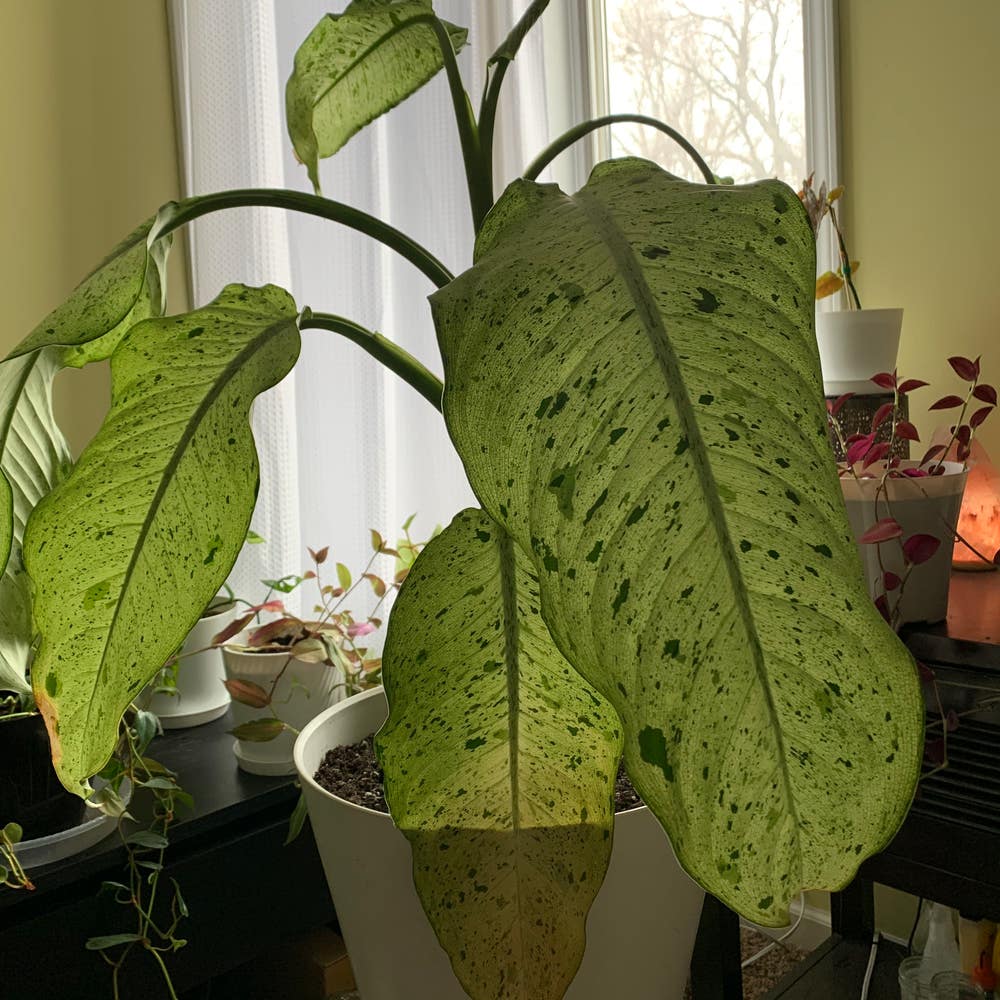
3 Tips for Growing Dieffenbachia 'Camouflage' 💧
Dieffenbachia 'Camouflage'
By the Greg Editorial Team
Sep 29, 2024•4 min read
This article was created with the help of AI so we can cover more plants for you. May contain errors. See one? Report it here.
- 🌞 Bright, indirect sunlight prevents leaf scorch for healthy Dieffenbachia 'Camouflage'.
- 🌡️💧 Maintain 65°F-80°F and humidity above 50% for optimal growth.
- 🌱 Use a well-draining soil mix to ensure moisture retention and root health.
Choosing the Right Location
Light Requirements 🌞
Dieffenbachia 'Camouflage' thrives in bright, indirect sunlight. Direct exposure can scorch its leaves, so aim to place it near east or north-facing windows for optimal growth.
Temperature and Humidity Preferences 🌡️
This plant loves warmth, with an ideal temperature range of 65°F to 80°F (18°C to 27°C). For humidity, keep levels at 50% or higher; using humidifiers or pebble trays can help maintain this environment.
Creating the right conditions for your Dieffenbachia will set the stage for healthy growth. Next, let’s explore how to prepare the soil and plant your new green companion.
Soil Preparation and Planting Techniques
Ideal Soil Mix 🌱
To give your Dieffenbachia 'Camouflage' the best start, use a soil mix of equal parts potting soil, perlite, and peat moss. This combination ensures excellent drainage while retaining essential moisture and nutrients.
Organic matter is crucial for nutrient retention, making your plant healthier and more vibrant. A well-balanced mix will support robust growth and prevent root rot.
Depth and Spacing Considerations 📏
When planting, ensure the base of the stem is level with the soil surface. This positioning helps the plant establish itself without stress.
For outdoor planting, space your Dieffenbachia 2-3 feet apart. This distance allows each plant to thrive without competing for resources, promoting healthy growth and airflow.
With the right soil and spacing, your Dieffenbachia will flourish, setting the stage for the next steps in care.
Watering and Fertilizing Guidelines
💧 Watering Frequency and Method
Watering your Dieffenbachia 'Camouflage' is straightforward. Allow the top inch of soil to dry out between waterings to prevent overwatering, which can lead to root rot.
When you do water, do it thoroughly. Ensure water drains from the bottom of the pot, promoting healthy root growth.
📅 Fertilizing Schedule
During the growing season, a balanced liquid fertilizer is your best friend. Opt for an NPK ratio of 20-20-20 to provide essential nutrients.
To apply, dilute the fertilizer in water and use it on moist soil. This method ensures that your plant absorbs nutrients effectively without the risk of burning its roots.
With proper watering and fertilizing, your Dieffenbachia will thrive, setting the stage for vibrant growth. Next, let’s explore pruning techniques to keep your plant looking its best.
Pruning and Ongoing Care
Pruning Techniques ✂️
Pruning your Dieffenbachia 'Camouflage' is essential for maintaining its shape and health. Aim to prune in early spring or whenever you notice leggy growth that detracts from its aesthetic appeal.
Use clean, sharp scissors for the best results. This ensures a clean cut, which helps prevent disease and promotes healthier regrowth.
Monitoring for Pests and Diseases 🐛
Keeping an eye on your plant for pests is crucial. Common culprits include spider mites, aphids, and mealybugs, which can quickly become a nuisance if not addressed.
Look for signs of infestation, such as sticky residue, webbing, or visible insects on the leaves. Regular inspections can save you a lot of trouble down the line.
Conclusion
By mastering pruning and monitoring for pests, you’ll set your Dieffenbachia up for success. Next, let’s explore common challenges and solutions to keep your plant thriving.
Common Challenges and Solutions
🕵️ Identifying Common Problems
Yellowing Leaves
Yellowing leaves can be a distressing sight for any plant parent. This issue often stems from overwatering, nutrient deficiencies, or insufficient light.
Leaf Drop
If your Dieffenbachia 'Camouflage' is shedding leaves, it might be reacting to sudden temperature changes or underwatering. Both conditions can stress the plant, leading to this common problem.
🛠️ Solutions and Preventive Measures
To tackle pests, consider using neem oil or insecticidal soap. Regular inspections can help catch infestations early, ensuring your plant stays healthy.
Maintaining consistent temperature and humidity is crucial. Small adjustments in your plant's environment can make a significant difference in its overall health.
Advanced Care Techniques
🌱 Propagation Methods
Stem Cuttings
To propagate your Dieffenbachia 'Camouflage', start by cutting healthy stems that are 4-6 inches long. You can root these cuttings in either water or soil, giving you flexibility in your approach.
Division
Another effective method is division. During repotting, simply separate the root clumps to create new plants, ensuring each division has a healthy root system.
🌿 Special Considerations for Container vs. Outdoor Growth
Container Care
If your Dieffenbachia is in a container, keep an eye out for root-bound conditions. Repotting every 1-2 years will help maintain its health and vigor.
Outdoor Care
For outdoor plants, protection from extreme weather and pests is crucial. Mulching can help retain moisture and provide a buffer against temperature fluctuations.
These advanced care techniques will not only enhance the growth of your Dieffenbachia 'Camouflage' but also empower you as a plant parent. With the right methods, you can enjoy a thriving, vibrant plant that brings life to your space.
⚠️ Safety First
This content is for general information and may contain errors, omissions, or outdated details. It is not medical, veterinary advice, or an endorsement of therapeutic claims.
Always consult a qualified healthcare professional before using any plant as food, medicine, or supplement.
Never eat any plant (or feed one to pets) without confirming its identity with at least two trusted sources.
If you suspect poisoning, call Poison Control (800) 222-1222, the Pet Poison Helpline (800) 213-6680, or your local emergency service immediately.
Spotted an error? Please report it here.
Nurture your Dieffenbachia 'Camouflage' to thriving heights 🌱 with Greg's personalized watering reminders and expert care tips that make plant parenting a breeze!