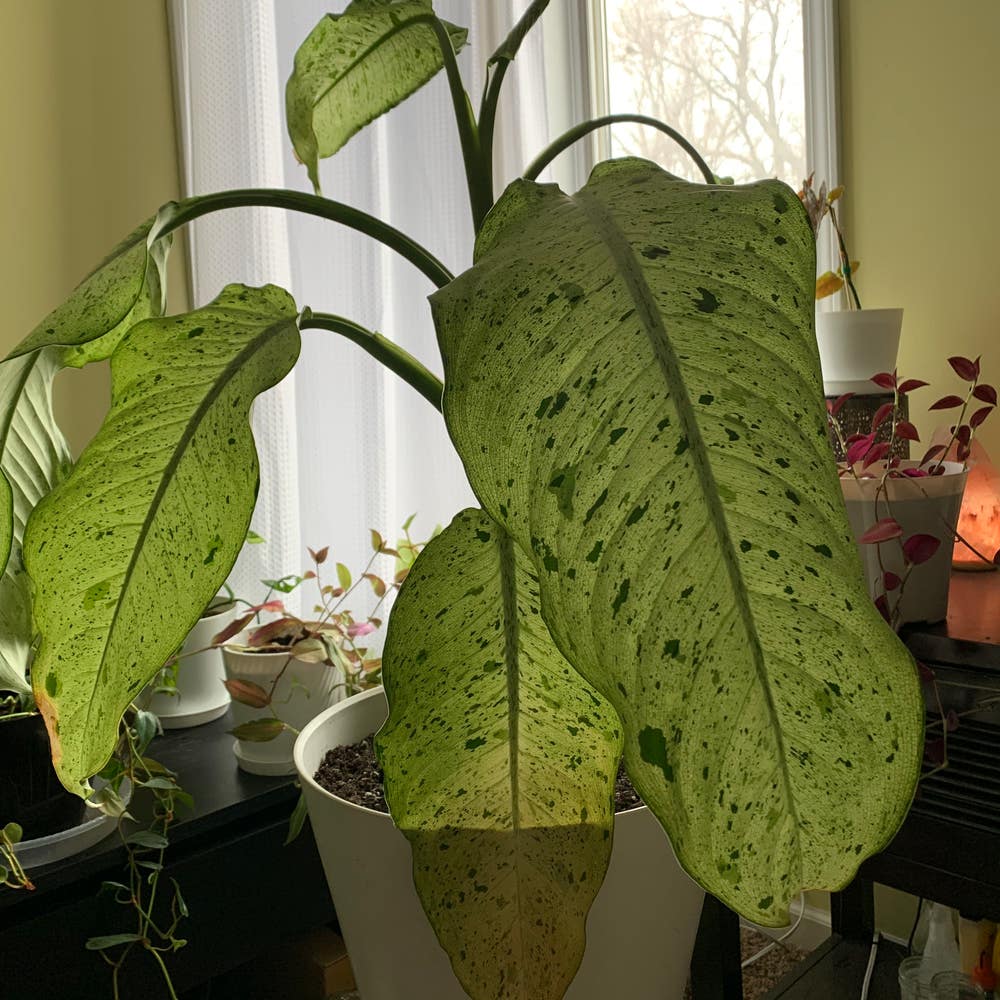
Black Spots on My Dieffenbachia 'Camouflage' Leaves
Dieffenbachia 'Camouflage'
By the Greg Editorial Team
Jun 18, 2024•3 min read
This article was created with the help of AI so we can cover more plants for you. May contain errors. See one? Report it here.
- Black spots signal trouble, often starting underneath leaves and indicating fungal or bacterial issues.
- Overwatering and humidity are common culprits; adjust watering and humidity levels.
- Prune and disinfect to treat, and use proper watering and soil for prevention.
Spotting Trouble: Recognizing Black Spots on Your Plant
🕵️ What Do These Pesky Black Spots Look Like?
Black spots on your Dieffenbachia 'Camouflage' aren't just a minor inconvenience; they're a red flag. These spots can range from tiny specks to larger blotches, often with dark margins or concentric rings. They're the plant world's equivalent of a distress signal, and they're definitely not part of your Dieffenbachia's natural variegation.
📍 Pinpointing the Spots: Where on the Leaves Should You Look?
Underneath the leaves is where the black spot saga often begins. It's a stealthy operation, so flip those leaves and inspect them closely. If you're only admiring your plant from above, you're missing the secret hideout of these potential pathogens. Keep an eye out for changes in leaf texture or the appearance of holes, as these can indicate a problem that's advancing. Remember, catching these spots early is like catching a typo before you hit send—vital for your plant's health.

The Usual Suspects: Causes of Black Spots
🍄 Fungal Foes
Spotting the Signs
Black spots from fungal infections often start small and powdery, expanding into larger blotches. Look for a red or yellow halo surrounding the spot, a telltale sign of fungal shenanigans.
🌧️ Fungal Havoc
Fungi thrive in moist conditions. Overwatering or high humidity sets the stage for these microorganisms to feast on your Dieffenbachia 'Camouflage', leaving behind a spotty mess.
💀 Bacterial Baddies
A Spot of Bother
Bacterial infections create spots that are initially water-soaked, later turning brown and necrotic. A foul smell is a dead giveaway of bacterial activity.
Severity and Spread
Bacterial spots can quickly become severe, spreading across the leaf surface. They exploit wounds and thrive in prolonged wetness.
💦 Water Woes
Too Much Love
Overzealous watering leads to water-induced black spots. These spots are your plant's cry for help, signaling that it's drowning in the love you're pouring.
Tell-Tale Signs
The spots appear as soggy patches that can turn black over time. Ensuring proper drainage and adjusting your watering schedule can prevent these water woes.

Spot Treatment: Remedies and Recovery
🍄 Fighting Fungi
Pruning is your first move against fungal invaders. Remove infected leaves with sterilized tools to prevent spreading. For your fungicide, choose wisely; options range from copper-based to sulfur-based, or even neem oil for organic lovers. Apply thoroughly, covering every leaf, and repeat as necessary.
🦠 Battling Bacteria
When bacteria strike, it's time for a clean cut. Prune away affected areas with sanitized scissors. Post-surgery, disinfect your plant's environment. If the infection's stubborn, copper-based bactericides are your heavy artillery. Use them sparingly, with precision, and only as directed.
💧 Watering Wisdom
Overwatering is a no-no. Let the topsoil dry before the next watering session. It's not stinginess; it's strategy. Ensure your pot has drainage holes and use well-draining soil to avoid waterlogging. This duo is your defense line against black spots.

Section
⚠️ Safety First
This content is for general information and may contain errors, omissions, or outdated details. It is not medical, veterinary advice, or an endorsement of therapeutic claims.
Always consult a qualified healthcare professional before using any plant as food, medicine, or supplement.
Never eat any plant (or feed one to pets) without confirming its identity with at least two trusted sources.
If you suspect poisoning, call Poison Control (800) 222-1222, the Pet Poison Helpline (800) 213-6680, or your local emergency service immediately.
Spotted an error? Please report it here.
Banish black spots 🚫 on your Dieffenbachia by letting Greg tailor a watering plan that prevents overwatering and fungal woes, keeping your plant's leaves spotless.