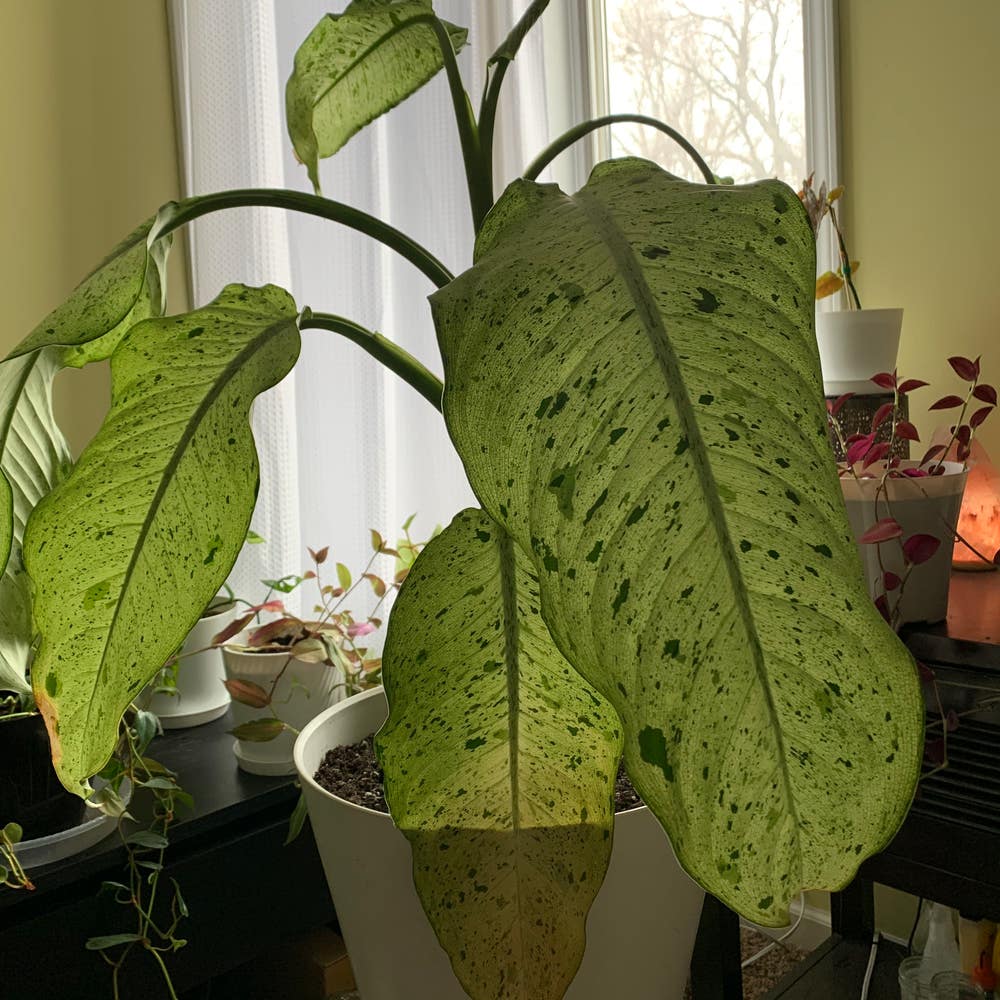
How Much Humidity Does My Dieffenbachia 'Camouflage' Need?
Dieffenbachia 'Camouflage'
By the Greg Editorial Team
Jun 18, 2024•3 min read
This article was created with the help of AI so we can cover more plants for you. May contain errors. See one? Report it here.
- Brown tips mean more humidity needed; yellow leaves signal too much.
- 🌿 Ideal humidity is 60-80% for Dieffenbachia 'Camouflage' to thrive.
- Adjust with seasons using pebble trays, humidifiers, or dehumidifiers.
Spotting the Signs: When Your Dieffenbachia 'Camouflage' is Thirsty for Humidity
🍂 Brown Tips and Droopy Leaves
Leaves with brown tips or edges are your Dieffenbachia 'Camouflage' waving a flag for more humidity. If the leaves resemble crispy autumn foliage, it's time to up the moisture ante.
💛 Too Much of a Good Thing: Yellowing and Fungal Woes
On the flip side, yellow leaves and the presence of mold or fungus are your plant's SOS for less moisture. It's a delicate balance, but your 'Camouflage' isn't shy about showing you when it's had its fill.

The Sweet Spot: Ideal Humidity Levels for Dieffenbachia 'Camouflage'
💦 What Your 'Camouflage' Craves
Dieffenbachia 'Camouflage' is a humidity aficionado, thriving best in the 60-80% range. This tropical beauty doesn't just enjoy moisture; it's practically a necessity for that lush, vibrant look. Keep the temperature steady between 65°F and 75°F to maintain this ideal humidity.
🌍 Local Humidity and Your Plant
Your local climate is the backstage manager of your indoor garden's humidity. Seasonal shifts can turn your home into a desert or a rainforest, affecting your 'Camouflage'. Keep an eye on these changes and adjust your humidity strategies accordingly. Remember, what works in summer may not cut it in winter.

Humidity Helpers: Boosting Moisture for Your 'Camouflage'
💦 Pebble Trays: Simple Yet Effective
Setting up a pebble tray is a no-brainer for your Dieffenbachia 'Camouflage'. Just grab a tray, layer it with pebbles, and fill it with water, making sure the pot sits above the waterline. As water evaporates, it envelops your plant in a humid hug.
🌬️ Humidifiers: Consistent Climate Controllers
A humidifier could become your Dieffenbachia's new best friend, especially during the Sahara-like winter months. Pick one that's quiet enough to keep the peace in your plant sanctuary. It'll maintain that just-right moisture level in the air.
🌿 Plant Buddies: Creating a Mini Jungle
Group your plants to throw a humidity house party. As they transpire, they collectively up the moisture ante, creating a microclimate that your 'Camouflage' will love. It's like a plant potluck where everyone brings a dish of humidity.

Too Damp? Let's Fix That: Reducing Humidity Around Your Dieffenbachia
💨 Airflow is Key: Ventilation for Plant Health
Proper ventilation is crucial for your Dieffenbachia 'Camouflage'. Stagnant air is a breeding ground for mold and mildew, which can wreak havoc on your plant's health. To prevent this, crack a window or employ a fan to keep the air moving. This simple act can significantly reduce the risk of disease and create a more comfortable environment for your plant.
💧 Dehumidifiers: When the Air's Too Rich
Sometimes, the air in your home can feel as heavy as a wet blanket. In these instances, a dehumidifier can be your best ally. It works tirelessly to strip excess moisture from the air, ensuring that your Dieffenbachia 'Camouflage' isn't drowning in humidity. Remember, your plant enjoys moisture but doesn't want to live in a swamp. Use a dehumidifier to maintain that perfect balance of humidity, keeping the air around your plant just right.
⚠️ Safety First
This content is for general information and may contain errors, omissions, or outdated details. It is not medical, veterinary advice, or an endorsement of therapeutic claims.
Always consult a qualified healthcare professional before using any plant as food, medicine, or supplement.
Never eat any plant (or feed one to pets) without confirming its identity with at least two trusted sources.
If you suspect poisoning, call Poison Control (800) 222-1222, the Pet Poison Helpline (800) 213-6680, or your local emergency service immediately.
Spotted an error? Please report it here.
Keep your Dieffenbachia 'Camouflage' thriving with ideal humidity 💧 by using Greg's personalized reminders to adjust your plant's environment with the seasons.