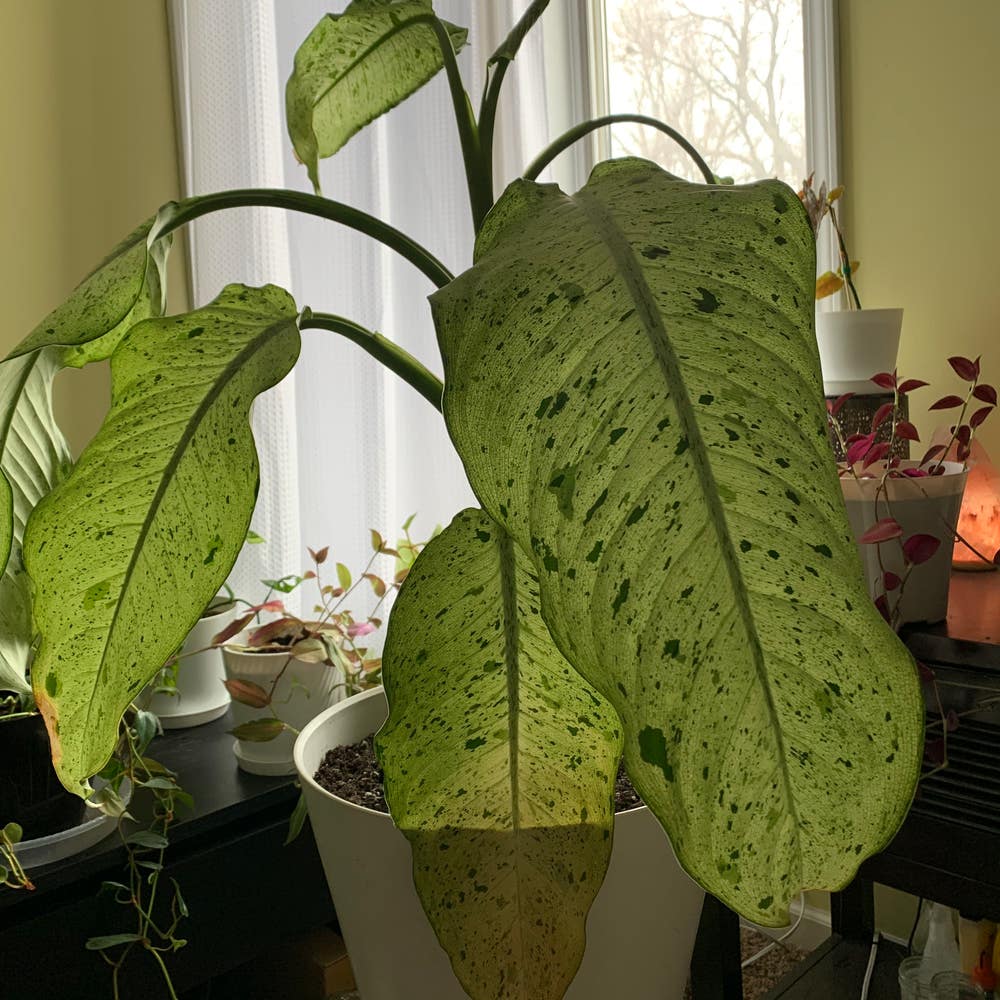
🌼 5 Ways to Boost Your Indoor Dieffenbachia 'Camouflage'
Dieffenbachia 'Camouflage'
By the Greg Editorial Team
Sep 26, 2024•4 min read
This article was created with the help of AI so we can cover more plants for you. May contain errors. See one? Report it here.
- 🌞 Bright, indirect sunlight for 10-12 hours is essential for Dieffenbachia 'Camouflage'.
- 💧 Water every 1-2 weeks, ensuring top soil dries out to prevent overwatering.
- 🌬️ Maintain humidity between 50-70% for optimal growth and health of your plant.
Light Requirements
Optimal Indoor Light Levels 🌞
Dieffenbachia 'Camouflage' thrives in bright, indirect sunlight. While it can tolerate lower light levels, providing optimal light conditions is key to its vibrant growth.
Aim for 10-12 hours of light daily. This duration supports healthy foliage and overall plant vitality.
Role of Grow Lights 💡
Grow lights are essential for supplementing natural light, especially in dimly lit spaces. They encourage robust growth and keep your plant's leaves looking lush and vibrant.
Using grow lights can make a significant difference in your plant's health, especially during the shorter days of winter.
Choosing the Best Grow Light 🛠️
When selecting grow lights, consider LED and fluorescent options. LEDs are often preferred due to their energy efficiency and lower heat output.
For a standard-sized Dieffenbachia, a wattage of 15-30 watts is recommended. Position the light 12-24 inches above the plant to ensure effective coverage and prevent any scorching.
By understanding these light requirements, you can create an ideal environment for your Dieffenbachia 'Camouflage' to flourish. Next, let’s explore the watering needs to keep your plant hydrated and healthy.
Watering Needs
Frequency and Amount 🌊
To keep your Dieffenbachia 'Camouflage' thriving, it's crucial to establish a proper watering schedule. Allow the top 1-2 inches of soil to dry out between waterings, ensuring the roots don’t sit in soggy conditions.
Generally, aim to water every 1-2 weeks. Adjust this frequency based on your home's humidity and temperature levels, as these factors can significantly impact soil moisture.
Signs of Overwatering and Underwatering 🚨
Recognizing the signs of overwatering is essential for maintaining plant health. If you notice yellowing leaves, mushy stems, or root rot, it’s likely that your plant is receiving too much water.
On the flip side, underwatering can also pose a threat. Look out for wilting leaves, dry soil, and leaf drop, which indicate that your plant is thirsty and needs immediate attention.
Understanding these watering needs will help you cultivate a robust and vibrant Dieffenbachia. Next, let’s explore the ideal humidity and temperature conditions to further enhance your plant's growth.
Humidity and Temperature
Ideal Humidity Levels 🌬️
For your Dieffenbachia 'Camouflage' to thrive, aim for humidity levels between 50-70%. If you notice brown tips or edges on the leaves, it’s a clear sign that the humidity is too low.
Temperature Preferences 🌡️
This plant prefers a cozy environment with temperatures ranging from 65°F to 80°F (18°C to 27°C). Be cautious; temperatures below 60°F (15°C) can lead to leaf drop, which is a real bummer for your plant's health.
Humidity Control Methods 💧
To boost humidity, consider using a humidifier, setting up pebble trays, or misting the leaves regularly. Maintaining the right humidity is crucial; it supports healthy growth and helps prevent stress on your plant.
With the right humidity and temperature, your Dieffenbachia will flourish. Next, let’s explore the best soil and fertilization practices to keep your plant thriving.
Soil and Fertilization
Best Soil Type 🌱
For your Dieffenbachia 'Camouflage', a well-draining potting mix enriched with organic matter is essential. This combination ensures that water flows freely while providing the nutrients your plant craves.
The ideal pH level for the soil should be slightly acidic to neutral, ranging from 6.0 to 7.0. This balance promotes optimal nutrient absorption, keeping your plant healthy and vibrant.
Fertilization Schedule 📅
During the growing season, which spans spring and summer, fertilize your plant every 4-6 weeks. This regular feeding helps support robust growth and lush foliage.
When it comes to fertilizers, opt for a balanced liquid fertilizer with an NPK ratio of 20-20-20 or consider slow-release granules. Both options will provide the necessary nutrients without overwhelming your plant.
By ensuring the right soil and fertilization practices, you set the stage for a thriving Dieffenbachia. Next, let’s explore how to tackle common issues that may arise in your indoor garden.
Common Issues and Solutions
🐜 Pests and Prevention
Indoor Dieffenbachia 'Camouflage' can attract pests like spider mites, aphids, and mealybugs. Regular inspections and maintaining cleanliness are key to preventing infestations.
Using insecticidal soap can effectively manage these pests. A proactive approach will keep your plant thriving and pest-free.
🦠 Common Diseases and Treatments
Root rot is a common issue caused by overwatering. If you notice symptoms, repot your plant in fresh, well-draining soil to restore its health.
Leaf spot, a fungal disease, can also affect your Dieffenbachia. Treat it with fungicides and ensure good air circulation around the plant.
🌬️ Environmental Stress Factors
Cold drafts can be detrimental to your plant's health. Keep your Dieffenbachia away from windows and doors during winter to avoid temperature shocks.
Low humidity can also stress your plant. Implement humidity control methods, such as using a humidifier or pebble trays, to create a more favorable environment.
By addressing these common issues, you can ensure your Dieffenbachia 'Camouflage' remains vibrant and healthy. Next, let’s explore the ideal soil and fertilization practices to further support its growth.
⚠️ Safety First
This content is for general information and may contain errors, omissions, or outdated details. It is not medical, veterinary advice, or an endorsement of therapeutic claims.
Always consult a qualified healthcare professional before using any plant as food, medicine, or supplement.
Never eat any plant (or feed one to pets) without confirming its identity with at least two trusted sources.
If you suspect poisoning, call Poison Control (800) 222-1222, the Pet Poison Helpline (800) 213-6680, or your local emergency service immediately.
Spotted an error? Please report it here.
Elevate your Dieffenbachia 'Camouflage' with tailored care tips 🌿 from Greg, ensuring it thrives with the perfect light, water, and humidity!