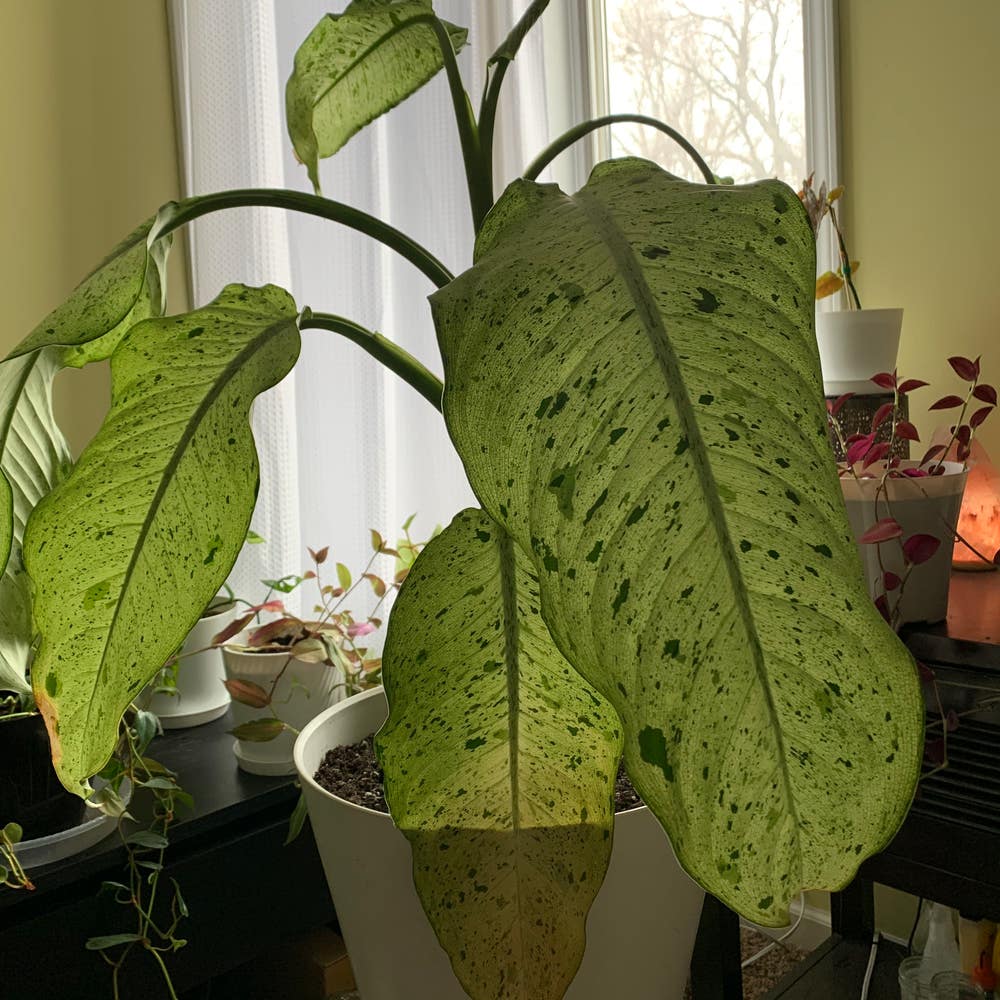
Dieffenbachia 'Camouflage' - Ultimate Guide to Fertilizing
Dieffenbachia 'Camouflage'
By the Greg Editorial Team
Jun 18, 2024•3 min read
This article was created with the help of AI so we can cover more plants for you. May contain errors. See one? Report it here.
- Spring/Summer: Ramp up fertilizing for active growth; reduce in fall/winter.
- Balanced 10-10-10 N-P-K ratio recommended for vibrant Dieffenbachia 'Camouflage'.
- Observe and adjust to avoid over-fertilization; dilute and apply carefully.
When to Feed Your 'Camouflage'
🌱 Understanding the Growth Cycle
Active growth phase: This is when your Dieffenbachia 'Camouflage' is in beast mode, pushing out new leaves and growing taller. Ramp up the fertilizing to support this surge in activity.
Dormancy period: As the growth slows down, so should your feeding schedule. It's time to pull back on the fertilizing, giving your plant a break to chill out.
🌿 Seasonal Fertilizing Tips
Spring and summer: These are the glory days for your 'Camouflage'. It's soaking up the sun and should also be soaking up nutrients. Prime time for fertilizing.
Fall and winter: Your plant is winding down, getting ready for some R&R. Slow down with the nutrients; it's not looking to feast during its slumber party.

Choosing the Right Fertilizer
🌱 N-P-K Ratio: What Does 'Camouflage' Crave?
Dieffenbachia 'Camouflage' has specific dietary preferences when it comes to nutrients. The N-P-K ratio, which stands for nitrogen (N), phosphorus (P), and potassium (K), should be balanced. A 10-10-10 mix is often recommended, providing equal parts of each primary nutrient. Nitrogen promotes leafy growth, phosphorus is essential for root development, and potassium enhances overall plant health. Don't forget the micronutrients; they're like the side dishes that complete the meal.
🌿 The Organic vs. Synthetic Debate
When it comes to feeding your Dieffenbachia 'Camouflage', the organic versus synthetic fertilizer debate is real. Organic options, think worm castings or compost, offer a smorgasbord of nutrients along with beneficial microbes. They release nutrients slowly, reducing the risk of chemical burns. Synthetic fertilizers, on the other hand, are like a fast-food fix—quick and potent. They can accelerate growth, but overuse can lead to nutrient burn. Tailor your choice to your plant's needs and your own care philosophy. Remember, more isn't always better, and balance is key, whether you're going au naturel or full-on lab-made.

How to Fertilize Like a Pro
🌱 Mixing and Application
Dilution is your Dieffenbachia's best friend. To prevent the dreaded chemical burns, mix your fertilizer to half-strength. This isn't a one-size-fits-all; it's a tailored suit. Pour the solution around the plant base, avoiding direct contact with the leaves. Think of it as a gentle rain, not a downpour.
🧐 Observing and Adjusting
Your plant speaks, so listen. Yellowing leaves? Pull back on the fertilizer. Lush growth? You're on the right track. Adjust your fertilizing strategy based on these visual cues. It's a dance, and you're learning the steps as you go. Keep an eye out for signs of distress, and tweak your approach accordingly.

Spotting Trouble: Over-Fertilization and Your 'Camouflage'
🚩 Telltale Signs Your Plant is Overfed
Leaf browning and a white crust on the soil are the plant's way of waving a red flag at you. If your Dieffenbachia 'Camouflage' has stopped growing or if the leaves are sporting crispy tips, it's time to reassess your fertilizing routine. Yellow leaves or a general look of despair, despite your well-meaning care, can also indicate nutrient overload.
🚰 The Recovery Plan
First, stop the fertilizer; your plant's had enough. Flush the soil with water to help dilute the excess nutrients—think of it as a detox for your Dieffenbachia. Moving forward, remember that less is more when it comes to plant food. If you've been heavy-handed, it's time to embrace a minimalist approach. Observe your plant's response and adjust your fertilizing strategy accordingly. It's about finding that sweet spot where your 'Camouflage' can thrive without the chemical gluttony.
⚠️ Safety First
This content is for general information and may contain errors, omissions, or outdated details. It is not medical, veterinary advice, or an endorsement of therapeutic claims.
Always consult a qualified healthcare professional before using any plant as food, medicine, or supplement.
Never eat any plant (or feed one to pets) without confirming its identity with at least two trusted sources.
If you suspect poisoning, call Poison Control (800) 222-1222, the Pet Poison Helpline (800) 213-6680, or your local emergency service immediately.
Spotted an error? Please report it here.
Nurture your Dieffenbachia 'Camouflage' through its growth and rest phases with balanced 🌱 fertilizing, guided by Greg's custom care reminders tailored to your plant's needs.