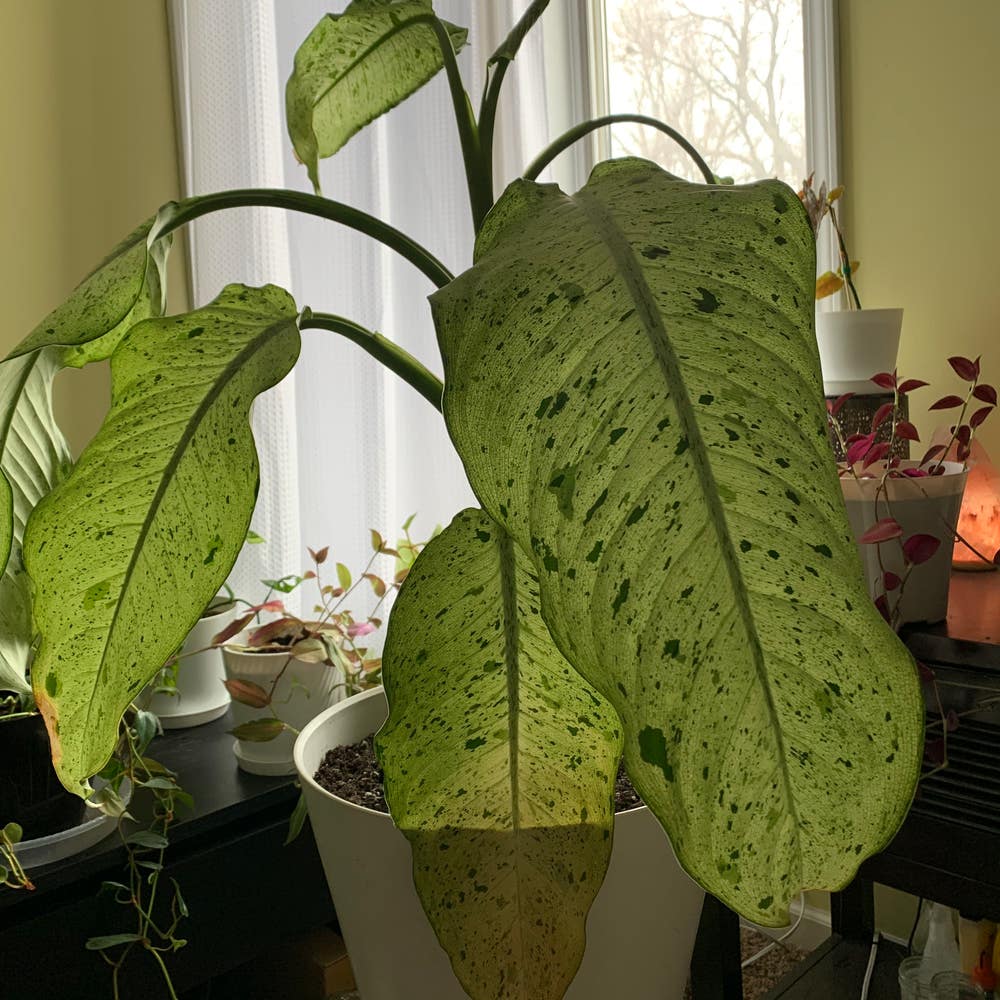
Diagnosing Dieffenbachia 'Camouflage' Root Rot
Dieffenbachia 'Camouflage'
By the Greg Editorial Team
Jun 18, 2024•3 min read
This article was created with the help of AI so we can cover more plants for you. May contain errors. See one? Report it here.
- Yellow leaves, wilting, and foul odor signal Dieffenbachia root rot.
- Sterilize tools, trim rotted roots, and repot for recovery.
- Prevent future rot with well-draining soil and careful watering.
Spotting the Red Flags: Symptoms of Root Rot
🚨 Visual Clues
Yellowing leaves and a wilting demeanor aren't just a plant having a bad day; they're distress signals. When your Dieffenbachia 'Camouflage' starts to look more like a limp salad than a vibrant houseplant, it's time to suspect root rot.
👃 Sniff Test
A foul odor emanating from the soil is your cue to play detective. If the scent of your plant's potting mix is more reminiscent of a swamp than fresh earth, you're likely dealing with root rot.
✋ The Touch Test
Roots should feel firm, not like a soggy sponge. If upon inspection, you find the roots of your Dieffenbachia 'Camouflage' are mushy or discolored, it's a clear sign that root rot has taken hold.

Unearthing the Problem: Examining the Roots
🌱 Gentle Extraction
To safely remove your Dieffenbachia 'Camouflage' for a closer look, think of it as a delicate operation. Tilt the pot and coax the plant out, minimizing stress on the stems.
🕵️♂️ Root Assessment
Once out, gently shake off soil to reveal the roots. Healthy roots are firm and white, while root rot presents as brown and mushy. Use this visual guide to assess the damage.
🧼 Cleaning Up
After the assessment, wash the roots to remove remaining soil and clearly identify which parts are affected. Sterilize your pruning tools with alcohol or heat before and after use to prevent disease spread.

Bouncing Back: Treating Root Rot
🏥 Surgical Precision
When it comes to root rot, think of yourself as a plant surgeon. Sterilize your scissors or shears, because you're about to go in. Snip away the soggy, brown roots with a steady hand. It's a delicate operation, but necessary. Remember, you're removing the dead weight so the plant can focus on healing.
🌱 Repotting for Recovery
Now, let's talk about your plant's new digs. Fresh soil is non-negotiable, and the pot needs drainage holes like a fish needs water. Go for a pot that's cozy for the root ball—too spacious, and you're inviting moisture issues. Think snug, but not tight. It's like choosing the right size of jeans for your plant; you want a fit that's just right.
💧 Watering Wisely
Post-op care is crucial. Your watering can is not a lifeline—it's a tool, so use it wisely. Water only when the top inch of soil is dry. It's tempting to shower your plant with love, but overwatering is what got you here in the first place. Keep it measured, keep it moderate. Your plant will thank you by not drowning.

Keeping It Dry: Preventing Future Root Rot
💧 Watering Do's and Don'ts
Watering your Dieffenbachia 'Camouflage' is less about sticking to a strict schedule and more about adapting to its needs. Check the soil's moisture level before watering—aim for damp, not drenched. Overwatering invites root rot to the party, and trust me, it's a lousy guest.
🌱 Soil and Drainage Mastery
Drainage holes are your plant's best friend; they're as essential as a good pair of jeans. Pair those holes with a well-draining soil mix—think equal parts peat, pine bark, and perlite. This trio is like the ultimate band, keeping the roots oxygenated and the water flowing.
🌍 Environmental Harmony
Your Dieffenbachia 'Camouflage' doesn't just want to survive; it wants to thrive. Keep the temperature and humidity in check—too much moisture in the air is like a sauna for your plant's roots, and not in a good way. Strike a balance that keeps the air moving and the roots breathing easy.
⚠️ Safety First
This content is for general information and may contain errors, omissions, or outdated details. It is not medical, veterinary advice, or an endorsement of therapeutic claims.
Always consult a qualified healthcare professional before using any plant as food, medicine, or supplement.
Never eat any plant (or feed one to pets) without confirming its identity with at least two trusted sources.
If you suspect poisoning, call Poison Control (800) 222-1222, the Pet Poison Helpline (800) 213-6680, or your local emergency service immediately.
Spotted an error? Please report it here.
Banish root rot 🛡 with Greg's personalized soil moisture tracking, ensuring your Dieffenbachia 'Camouflage' thrives with just-right watering reminders.