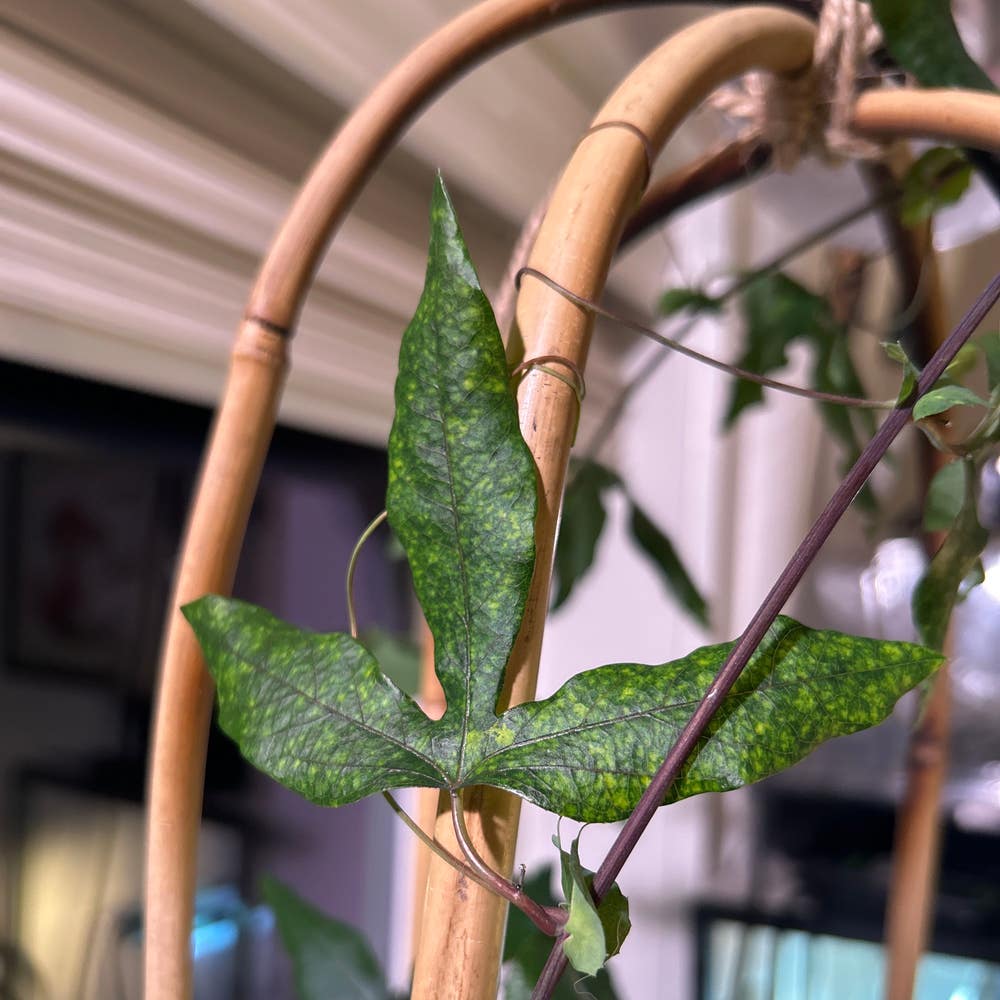
Ultimate Guide to What's Eating Your Bluecrown Passionflower 🐞
Passiflora caerulea
By the Greg Editorial Team
Oct 02, 2024•7 min read
This article was created with the help of AI so we can cover more plants for you. May contain errors. See one? Report it here.
- 🌼 Bluecrown Passionflower attracts herbivores like deer, rabbits, and squirrels—watch out!
- 🐾 Signs of herbivore activity include hoof prints and clean cuts on leaves.
- 🌱 Deterrent methods like fencing and companion plants can protect your passionflower.
Most Appealing Parts to Animals
🌼 Description and Features
The Bluecrown Passionflower is a stunning plant, boasting unique blue and white flowers that resemble a crown. This eye-catching appearance not only attracts human admirers but also draws in various garden animals.
Its vining growth habit allows it to reach impressive lengths of up to 30 feet. This sprawling nature provides ample cover and food sources, making it particularly appealing to herbivores.
Tender young shoots and leaves are especially enticing for many garden animals. These fresh parts are often the first targets for hungry visitors, leading to potential damage if not managed properly.
Understanding what attracts these animals can help you protect your Bluecrown Passionflower while still enjoying its beauty. With the right strategies, you can create a thriving garden ecosystem that balances aesthetics and plant health.
Next, let’s explore the common herbivores that affect this captivating plant.
Common Herbivores Affecting Bluecrown Passionflower
🦌 Deer
Signs of Presence and Damage Caused
Look for hoof prints in muddy areas, which indicate deer activity. They often browse on leaves and stems, leaving behind jagged edges that signal their presence.
Beneficial vs. Harmful Interactions
Deer interactions are generally harmful, as they can severely reduce the plant's vigor and flowering potential.
Deterrent Methods (difficulty: moderate)
To deter deer, consider using commercial repellents. You can also plant deer-resistant companion plants or scatter human hair and soap shavings around the plant for an organic touch.
🐇 Rabbits
Signs of Presence and Damage Caused
Rabbits leave small, round droppings and often nibble on lower leaves. Look for clean cuts on stems and leaves, typically at ground level.
Beneficial vs. Harmful Interactions
Rabbits are generally harmful, capable of decimating young plants and seedlings in no time.
Deterrent Methods (difficulty: easy)
Bitter-tasting sprays can act as chemical deterrents. For organic solutions, erect fencing that’s 2-3 feet high around your garden or plant rabbit-resistant species nearby.
🐿️ Squirrels
Signs of Presence and Damage Caused
Squirrels leave scratches on bark and scattered debris from their digging. They chew on stems and fruits, often causing wilting.
Beneficial vs. Harmful Interactions
Interactions with squirrels are generally harmful, as they can hinder both growth and fruit production.
Deterrent Methods (difficulty: moderate)
Capsaicin-based sprays can deter squirrels effectively. Additionally, installing squirrel-proof feeders or using motion-activated sprinklers can help keep them at bay.
🐦 Birds
Signs of Presence and Damage Caused
Look for feathered visitors and peck marks on fruits. Birds often eat ripe fruits and flowers, which can reduce your yield.
Beneficial vs. Harmful Interactions
Bird interactions are mixed; while they can damage fruits, they also play a crucial role in pollination.
Deterrent Methods (difficulty: easy)
Non-toxic bird repellents can be effective. For organic methods, hang reflective objects or wind chimes, or use netting over fruits during peak ripening.
🐭 Rodents (Mice, Voles, etc.)
Signs of Presence and Damage Caused
Rodents leave small burrows and droppings near the base of plants. They gnaw on roots and stems, leading to significant plant stress.
Beneficial vs. Harmful Interactions
Rodent interactions are generally harmful, often causing considerable damage to your plants.
Deterrent Methods (difficulty: hard)
Consider using rodent bait stations as a chemical deterrent. For organic solutions, trapping methods like snap traps or planting mint and other deterrent herbs nearby can be effective.
🦡 Groundhogs/Woodchucks
Signs of Presence and Damage Caused
Groundhogs create large burrows and often clip plants at ground level. Their extensive feeding on leaves and stems can lead to plant decline.
Beneficial vs. Harmful Interactions
These animals are generally harmful and can devastate entire plants if left unchecked.
Deterrent Methods (difficulty: moderate)
Commercial repellents can help deter groundhogs. Alternatively, consider fencing that’s 3-4 feet high with buried edges or planting strong-smelling herbs around the perimeter for an organic approach.
Understanding these common herbivores and their interactions with your Bluecrown Passionflower is crucial for maintaining a healthy garden. Next, we’ll explore the beneficial animals and insects that can enhance your garden ecosystem.
Beneficial Animals and Insects
🌼 Positive Impacts on the Garden Ecosystem
Pollinators play a crucial role in the health of your garden. By attracting bees and butterflies, the Bluecrown Passionflower enhances pollination, leading to more vibrant blooms and abundant fruit.
Biodiversity is another key benefit. A diverse garden ecosystem supports various species, creating a balanced environment that can naturally mitigate pest issues.
🐝 Pollinators Attracted to Bluecrown Passionflower
Several types of pollinators are drawn to the Bluecrown Passionflower. Honeybees are particularly effective, buzzing from flower to flower, while hummingbirds are captivated by the plant's unique structure and vibrant colors.
The benefits of these pollinators are significant. Increased fruit set and overall plant health are direct results of their activity, making them invaluable allies in your gardening efforts.
Incorporating these beneficial animals into your garden strategy not only enhances plant vitality but also fosters a thriving ecosystem. As you cultivate your Bluecrown Passionflower, remember that these tiny helpers are essential for its success.
Next, let’s explore general strategies for protecting your Bluecrown Passionflower from herbivores while maintaining a healthy ecosystem.
General Strategies for Protection
🛡️ Preventive Measures for Protecting Bluecrown Passionflower
To safeguard your Bluecrown Passionflower, consider implementing physical barriers like fencing. A well-constructed fence can deter many herbivores, keeping your plants safe from hungry visitors.
Companion planting is another effective strategy. By incorporating plants that naturally repel herbivores, you can create a protective environment for your passionflower.
🚨 Reactive Solutions for Managing Animal Interactions
Regular monitoring is crucial for early detection of herbivore activity. Check your plants frequently for signs of nibbling or damage to catch issues before they escalate.
When you notice signs of animal interactions, act quickly. Implement deterrents immediately to protect your plants from further harm.
🌱 Balancing Ecosystem Health While Deterring Herbivores
Maintaining a diverse garden is essential for overall ecosystem health. A variety of plants can attract beneficial insects and pollinators, creating a balanced environment.
Consider strategies for coexistence. Allowing some beneficial interactions while managing harmful ones can lead to a thriving garden ecosystem. Embrace the complexity of nature, and your Bluecrown Passionflower will flourish.
Seasonal Considerations
🐾 Seasonal Variations in Animal Attraction to Bluecrown Passionflower
As spring rolls in, herbivores become more active, drawn to the fresh growth of the Bluecrown Passionflower. This is the time when young shoots and tender leaves are particularly appealing, making your garden a buffet for hungry animals.
Summer brings a different dynamic. The plant bursts into bloom, showcasing its stunning flowers, which attract not just pollinators but also a variety of animals looking for a tasty treat. The vibrant colors signal a feast, leading to increased visits from herbivores.
⏰ Timing of Flowering and Fruiting in Relation to Herbivore Activity
The flowering period typically spans late spring to early summer. During this time, the Bluecrown Passionflower is at its most alluring, making it a prime target for herbivores.
Fruiting occurs from late summer to early fall, coinciding with a peak in animal foraging. As fruits ripen, they become irresistible to various creatures, further heightening the need for protective measures in your garden.
Understanding these seasonal patterns can help you anticipate and manage animal interactions effectively. By being proactive, you can enjoy the beauty of your Bluecrown Passionflower while minimizing damage from hungry visitors.
Toxicity and Safety
🐾 Toxic Effects of Bluecrown Passionflower on Animals
Bluecrown passionflower has mild toxicity, which can deter some animals from excessive feeding. However, certain herbivores may still experience gastrointestinal upset after consuming parts of the plant.
🐶 Safety Considerations for Pets and Wildlife
Understanding which parts of the bluecrown passionflower are safe or harmful is crucial for garden safety. Pet owners should keep their pets away from the plant to prevent any risk of ingestion and potential health issues.
Incorporating these safety measures can help maintain a healthy garden environment while protecting your furry friends. With the right precautions, you can enjoy the beauty of bluecrown passionflower without worry.
As we explore further, let’s look at general strategies for protecting your plants from herbivores while fostering a balanced ecosystem.
⚠️ Safety First
This content is for general information and may contain errors, omissions, or outdated details. It is not medical, veterinary advice, or an endorsement of therapeutic claims.
Always consult a qualified healthcare professional before using any plant as food, medicine, or supplement.
Never eat any plant (or feed one to pets) without confirming its identity with at least two trusted sources.
If you suspect poisoning, call Poison Control (800) 222-1222, the Pet Poison Helpline (800) 213-6680, or your local emergency service immediately.
Spotted an error? Please report it here.
Keep your Bluecrown Passionflower thriving 🌼 by using Greg's tailored care alerts to fend off herbivores and ensure a vibrant garden ecosystem!