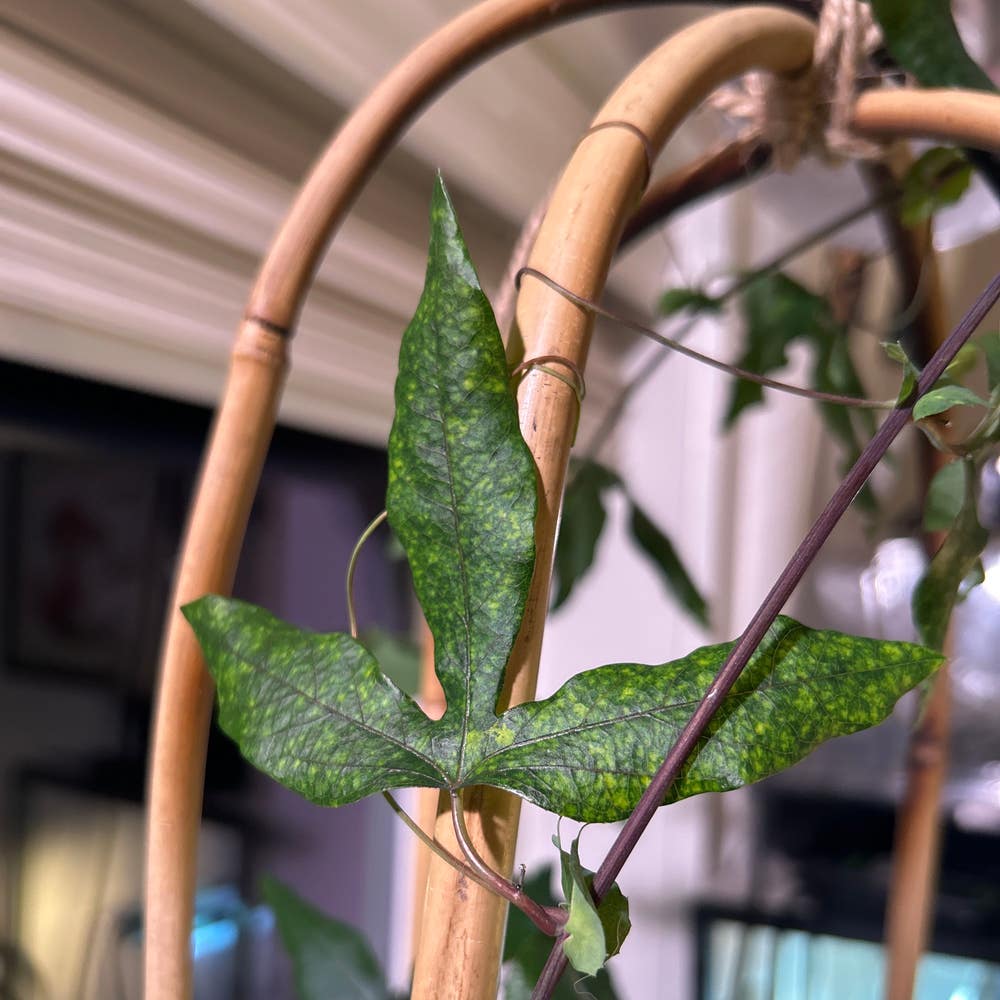
How Much Should I Water My Bluecrown Passionflower?
Passiflora caerulea
By the Greg Editorial Team
Jun 18, 2024•4 min read
This article was created with the help of AI so we can cover more plants for you. May contain errors. See one? Report it here.
- 🌱 Seasons and life stages dictate your passionflower's watering needs.
- 🌧️ Soil type and environmental factors influence how much water to give.
- 🚫 Watch for crispy or yellow leaves to avoid under or overwatering.
When to Water: Timing is Everything
💃 Seasonal Watering Shifts
In the dance of the seasons, your bluecrown passionflower's thirst varies. Summer demands more frequent watering, while winter calls for a restrained approach. Adjust your watering schedule like you're tuning a guitar—gently and with attention to harmony.
🌱 Plant Life Stages
Seedlings are like the new kids on the block, needing regular sips to establish themselves. As your passionflower matures and enters its flowering stage, it may require a more robust drink to support those stunning blooms. Keep a watchful eye on growth phases; your watering can is an essential tool in your plant's life story.

How Much Water Does Your Passionflower Crave?
💧 Size and Soil Speak Volumes
In the realm of passionflower care, pot size and soil type are the twin pillars of proper hydration. A snug pot means less soil, which dries out faster, demanding more frequent water checks. Conversely, a larger home allows for more moisture retention, easing off the watering frequency.
Well-draining soil is non-negotiable; think of it as a safety net against root rot. Mixes rich in organic matter, like coco coir, and aerators such as perlite or vermiculite, keep the roots happy and hydrated without waterlogging them.
🌿 Environmental Influences
Your watering can isn't just a garden tool; it's a barometer for light, temperature, and humidity. More light typically means more water, as the plant works harder photosynthesizing. But don't let the sun dictate everything; feel the soil. If it's dry a few inches down, it's time for a drink.
Temperature swings can turn your watering routine on its head. A hot spell may have your passionflower guzzling water, while cooler days slow down its thirst. Humidity plays its part too; higher humidity can mean less watering, as the plant loses less moisture to the air.
Remember, the goal is moist soil, not a swamp. If the top feels like a parched desert, water; if it's a soggy mess, hold off. And always, always empty those saucer pools after watering—no passionflower enjoys wet feet.

Spotting the Signs: Is Your Passionflower Parched or Drowning?
🚰 SOS from Your Plant: Underwatering Symptoms
Crispy leaves and stunted growth are your passionflower's way of waving a white flag. Underwatering is the culprit when leaves resemble crunchy autumn leaves, minus the charm. If the soil feels like a dry sponge, it's time to show some love with the watering can. A plant that's more droopy than a teenager on chore day is definitely not getting enough H2O.
🌊 Too Much of a Good Thing: Overwatering Red Flags
Yellow leaves and a pot that's heavier than your last dumbbell set? That's a sign of overwatering. If the soil clings to your fingers like wet clay, it's a distress signal to ease up on the water. Roots drowning in moisture turn into a mushy mess, and your passionflower might as well be swimming. Black spots on leaves are like the plant's version of a 'check engine' light - it's time for some damage control.

Watering Techniques: Quenching Thirst Without the Flood
💧 The Art of Bottom Watering
Bottom watering is not just for the lazy gardener. It's a strategic move. Roots stretch and strengthen as they reach for moisture from below. This method minimizes the risk of leaf diseases and fungal nightmares because the foliage stays dry. It's like a covert operation—water sneaks in from the bottom, leaving no trace on the surface.
💦 Direct Soil Watering and Foliar Misting
Direct soil watering is the bread and butter of plant care. Pour until water escapes the drainage hole, then let the soil's top inch dry out before the next round. It's straightforward and effective, like a well-timed joke. For foliar friends, misting is like a spa day—refreshing, but not too much. It's a delicate dance of hydration without the drama of overwatering.
⚠️ Safety First
This content is for general information and may contain errors, omissions, or outdated details. It is not medical, veterinary advice, or an endorsement of therapeutic claims.
Always consult a qualified healthcare professional before using any plant as food, medicine, or supplement.
Never eat any plant (or feed one to pets) without confirming its identity with at least two trusted sources.
If you suspect poisoning, call Poison Control (800) 222-1222, the Pet Poison Helpline (800) 213-6680, or your local emergency service immediately.
Spotted an error? Please report it here.
Flourish your Bluecrown Passionflower with ease 💧 by leveraging Greg's custom watering reminders tailored to your plant's and home's unique characteristics.