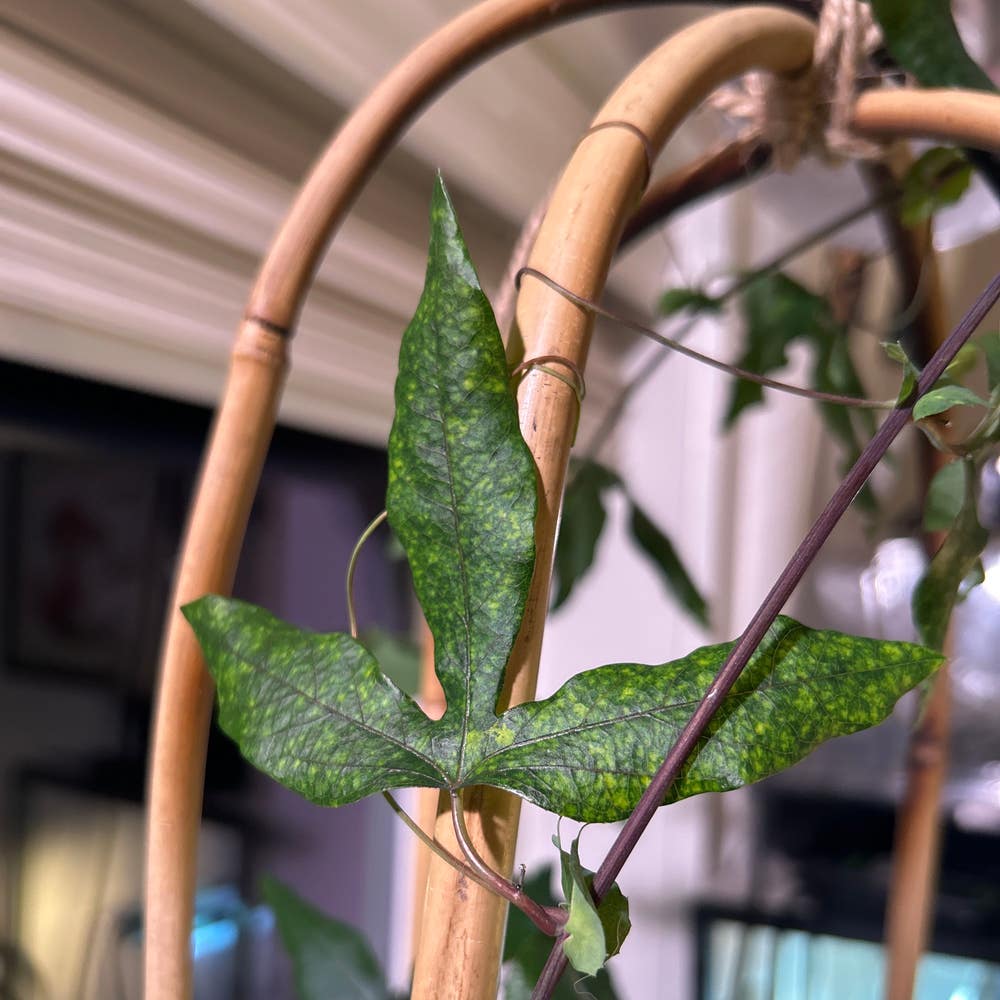
Why Are My Bluecrown Passionflower Leaves Falling Over?
Passiflora caerulea
By the Greg Editorial Team
Jun 18, 2024•5 min read
This article was created with the help of AI so we can cover more plants for you. May contain errors. See one? Report it here.
- 🍂 Droopy leaves signal Passionflower distress; monitor for patterns and color changes.
- 💧 Balance watering to avoid soggy or crispy leaves; use slow-release fertilizer.
- 🌡️ Adjust light, temperature, airflow to create the perfect Passionflower environment.
Spotting the Signs: When Your Passionflower's Leaves Aren't Happy
🚩 Visual Cues: Recognizing the Tell-Tale Signs
Droopy leaves are the Bluecrown Passionflower's version of a white flag. When leaves lose their usual perky posture and start to hang like limp noodles, it's a clear visual cue that something's amiss. Look for leaves that seem to have given up the ghost, with a faded color or a texture that's as firm as overcooked spaghetti.
⏰ Timing and Patterns: Decoding the Droop
The droop drama often follows a daily pattern. If your Passionflower perks up at night but slumps by day, it's likely screaming for water. Consistent drooping, on the other hand, might mean your plant's environment is more out of balance than a teenager's hormones. Keep a log of these patterns; they're the breadcrumbs leading to the root of the problem.
🚨 Early Warning Signals
Yellowing leaves aren't trying to keep up with autumn trends; they're sounding the alarm. A Passionflower with leaves more droopy than a Monday morning is begging for a closer look. Regular inspections can catch these cries for help before they turn into a full-blown plant tantrum.
Remember, your Passionflower won't slide into your DMs to tell you it's struggling. It's on you to spot these visual cues and act before your plant's performance takes a final bow.

Rooting Out the Causes: What's Making Your Passionflower Slouch
💧 Thirsty Roots or Drowning Sorrows: The Watering Balancing Act
Signs of overwatering and underwatering
Overwatering turns your passionflower's roots into unwilling aquanauts, leading to a soggy demise. Yellow leaves and a musty soil scent are your red flags. Underwatering? That's when the leaves start impersonating potato chips, all crispy and curled. The soil will feel like a dry, barren wasteland under your fingertips.
How to get watering just right
The sweet spot is soil that hints at moisture without being a swamp. Check the top inch; if it's dry, it's time to water. If it's consistently soggy, cut back. Your passionflower isn't trying to swim.
🌱 Hungry for Nutrients: Feeding Your Passionflower Properly
Identifying nutrient deficiencies
Leaves turning more yellow than a school bus? That's a cry for nitrogen. Spindly growth and poor flowering scream for phosphorus. And if the edges of the leaves are looking like they've been sunburned, potassium is your missing piece.
The best feeds for a flourishing plant
A balanced, slow-release fertilizer is your passionflower's best friend. Apply it as directed, and remember, it's a meal, not an all-you-can-eat buffet. Overfeeding is just as bad as starving.
🐛 Unwanted Guests and Unseen Illnesses: Pests and Diseases
Common culprits to look out for
Aphids, spider mites, and whiteflies are the usual suspects, treating your plant like a 24/7 diner. Diseases like fungal leaf spot come uninvited when conditions are too damp.
Effective treatments to nip problems in the bud
For pests, neem oil or insecticidal soap can be your knights in shining armor. With diseases, remove affected areas and consider a fungicide. Always ensure good air circulation; it's like giving your plant a personal space bubble.
🏡 Not Feeling at Home: Environmental Stress Factors
The impact of light, temperature, and airflow
Too little light, and your passionflower will stretch like it's trying to reach the sun. Too much, and it's a recipe for leaf burn. Aim for bright, indirect sunlight. Keep the temperature consistent, and avoid drafts. Your plant isn't a fan of surprises.
Creating the ideal home environment for your Passionflower
Think of your home as a passionflower spa. The right amount of light, a comfy range of 65-75°F (18-24°C), and gentle airflow make for a happy plant. Keep it away from air conditioners, heaters, and open windows that could cause dramatic temperature shifts. Your passionflower will thank you by not slouching.

Turning Over a New Leaf: Solutions to Strengthen Your Passionflower
💧 Water Wisdom: Perfecting Your Passionflower's Hydration
Overwatering can turn your passionflower's roots into a swampy mess, while underwatering leaves it gasping for moisture. Here's how to strike the right balance:
- Check the top inch of soil; if it's dry, it's time to water.
- Water deeply until you see runoff, then let it be. Your plant's thirst should be quenched without drowning it.
🍽️ Nutrient Know-How: A Diet Plan for Robust Leaves
Yellow, lackluster leaves? Might be a cry for nutrients. Fertilize your passionflower with a balanced, slow-release feed during the growing season. Less is more—avoid the temptation to overfeed, which can do more harm than good.
🐜 Pest Patrol and Disease Defense: Proactive and Reactive Measures
Keep pests and diseases at bay with regular inspections. Aphids or spider mites? A blast of water or insecticidal soap can send them packing. For fungal foes, ensure good air circulation and consider a fungicide if things get dicey.
🌿 Environmental Tweaks: Fine-Tuning Your Plant's Surroundings
Passionflowers are divas when it comes to their environment. They crave bright, indirect light and a consistent temperature. If your plant is slouching, consider a spot where it can bask in the morning sun and chill in the afternoon shade.

⚠️ Safety First
This content is for general information and may contain errors, omissions, or outdated details. It is not medical, veterinary advice, or an endorsement of therapeutic claims.
Always consult a qualified healthcare professional before using any plant as food, medicine, or supplement.
Never eat any plant (or feed one to pets) without confirming its identity with at least two trusted sources.
If you suspect poisoning, call Poison Control (800) 222-1222, the Pet Poison Helpline (800) 213-6680, or your local emergency service immediately.
Spotted an error? Please report it here.
Revive your Passionflower's droopy leaves and ensure they stay perky and healthy 🌿 with Greg's custom reminders for watering, pest control, and creating the perfect environment.