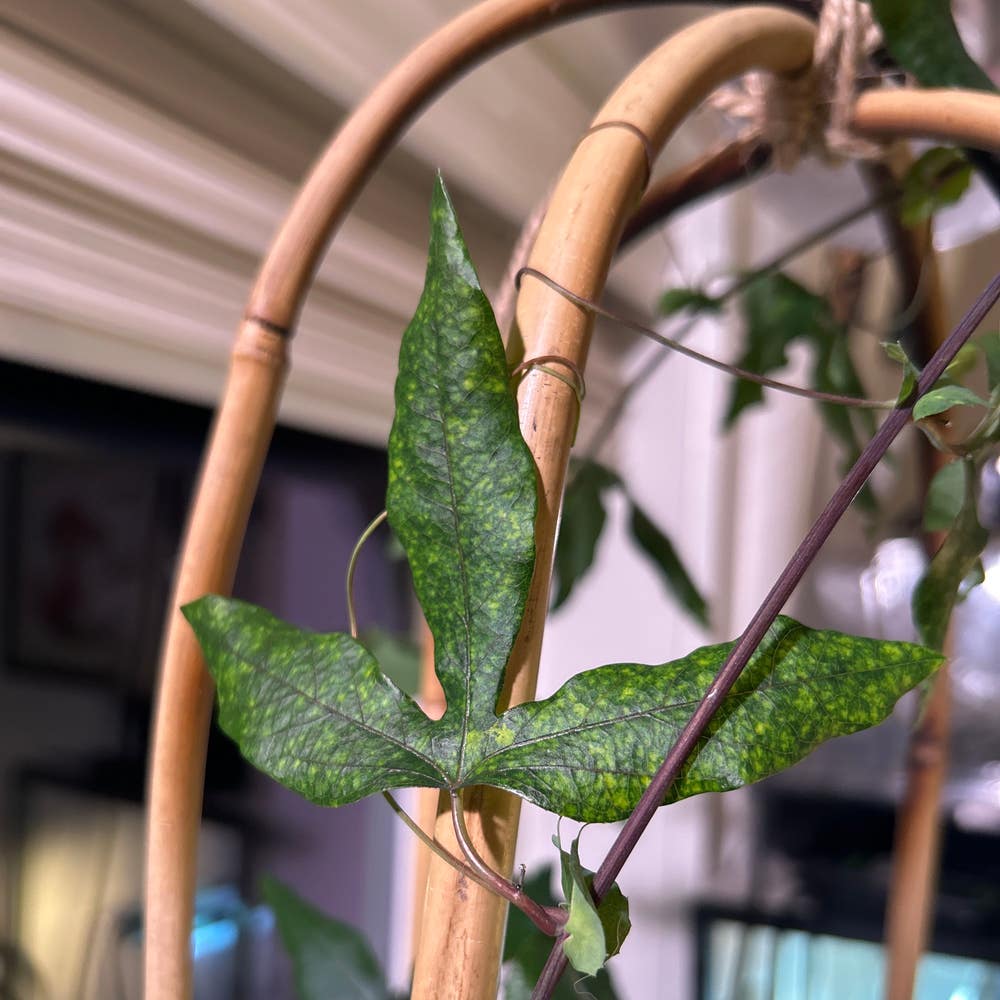
Why Are My Bluecrown Passionflower Leaves Dropping?
Passiflora caerulea
By the Greg Editorial Team
Jun 18, 2024•3 min read
This article was created with the help of AI so we can cover more plants for you. May contain errors. See one? Report it here.
- Overwatering and temperature swings lead to leaf drop; monitor soil and environment.
- 🐛 Inspect for pests regularly and act fast to prevent leaf loss.
- Use balanced fertilizer during growing season for nutrient-rich soil.
Spotting the Signs: When Your Passionflower Starts Shedding
🍂 Recognizing Leaf Drop Symptoms
A solitary yellow leaf on your Bluecrown Passionflower might not raise alarms, but a pattern of yellowing is your cue to get curious. Leaf drop can be as subtle as a plant's version of a silent protest or as loud as a botanical SOS. Watch for leaves that detach too easily or exhibit discoloration, spots, or wilting—these are the red flags waving in your green oasis.
📉 Assessing the Severity
Determining if your passionflower's leaf drop is just a phase or a full-blown plant crisis involves context. A few leaves hitting the dirt? Could be normal. But if your plant is shedding like it's preparing for a leafless winter in the tropics, you've got a problem. Consistency in leaf drop patterns is like the heartbeat of your plant—erratic is bad news. And if the leaves feel as limp as overcooked spaghetti, it's time to spring into action.

The Usual Suspects: Common Culprits Behind Leaf Drop
💧 Too Much Love: Overwatering Woes
Overwatering can suffocate your Bluecrown Passionflower's roots, leading to leaf drop. It's a delicate dance to keep the soil moist but not waterlogged. Check the soil with your finger; if it's soggy, hold off on the H2O.
🌡 Feeling the Heat: Temperature and Environmental Stress
Temperature swings are like silent alarms for your Passionflower. Too hot or too cold, and the leaves might fall as if saying, "I'm out." Aim for a stable environment to keep your plant from throwing in the towel.
🐜 Uninvited Guests: Pest Infestations
Pests are the party crashers no one wants. They can cause your Passionflower to shed leaves in distress. Inspect regularly for signs of infestation, such as discolored or damaged leaves, and take action swiftly.
🌿 Hungry for Nutrients: The Role of Fertilization
Nutrient deficiencies can leave your Passionflower feeling underfed and dropping leaves. A balanced fertilizer can be a game-changer. Feed carefully, though; too much, and you might overstimulate your plant, causing further stress.

Turning Over a New Leaf: Solutions and Prevention
💧 Fine-Tuning Watering Practices
Watering isn't guesswork; it's a science. Your Bluecrown Passionflower craves consistency. Here's how to nail it:
- Check the soil moisture before watering—only water when the top inch is dry.
- Use lukewarm water to avoid shocking the roots.
- Ensure excellent drainage; soggy soil is a no-go zone for healthy roots.
🌿 Creating a Stable Home: Environmental Control
Your Passionflower isn't a fan of surprises. Maintain a steady temperature and humidity level to keep it from throwing a fit. Here's the drill:
- Keep it away from drafts and sudden temperature changes.
- Use a humidifier if your air is drier than a stand-up comedian's wit.
🐜 Keeping Pests at Bay
Pests are party crashers. Show them the door with these tactics:
- Inspect regularly for the telltale signs: sticky leaves, webbing, or uninvited crawlers.
- Use neem oil or insecticidal soap as a preventative measure.
- Isolate new plants to prevent a full-blown pest rave.
🌱 Feeding Your Plant Right
A well-fed Passionflower is a happy one. But overdo it, and you'll have a nutrient hangover on your hands. Here's how to feed responsibly:
- Use a balanced, water-soluble fertilizer during the growing season.
- Ease up in the winter—your plant's on a diet.
- Observe your plant's response and adjust accordingly; it's a dialogue, not a monologue.

⚠️ Safety First
This content is for general information and may contain errors, omissions, or outdated details. It is not medical, veterinary advice, or an endorsement of therapeutic claims.
Always consult a qualified healthcare professional before using any plant as food, medicine, or supplement.
Never eat any plant (or feed one to pets) without confirming its identity with at least two trusted sources.
If you suspect poisoning, call Poison Control (800) 222-1222, the Pet Poison Helpline (800) 213-6680, or your local emergency service immediately.
Spotted an error? Please report it here.
Keep your passionflower thriving 🌿 with Greg's personalized care reminders, preventing leaf drop and promoting lush growth.