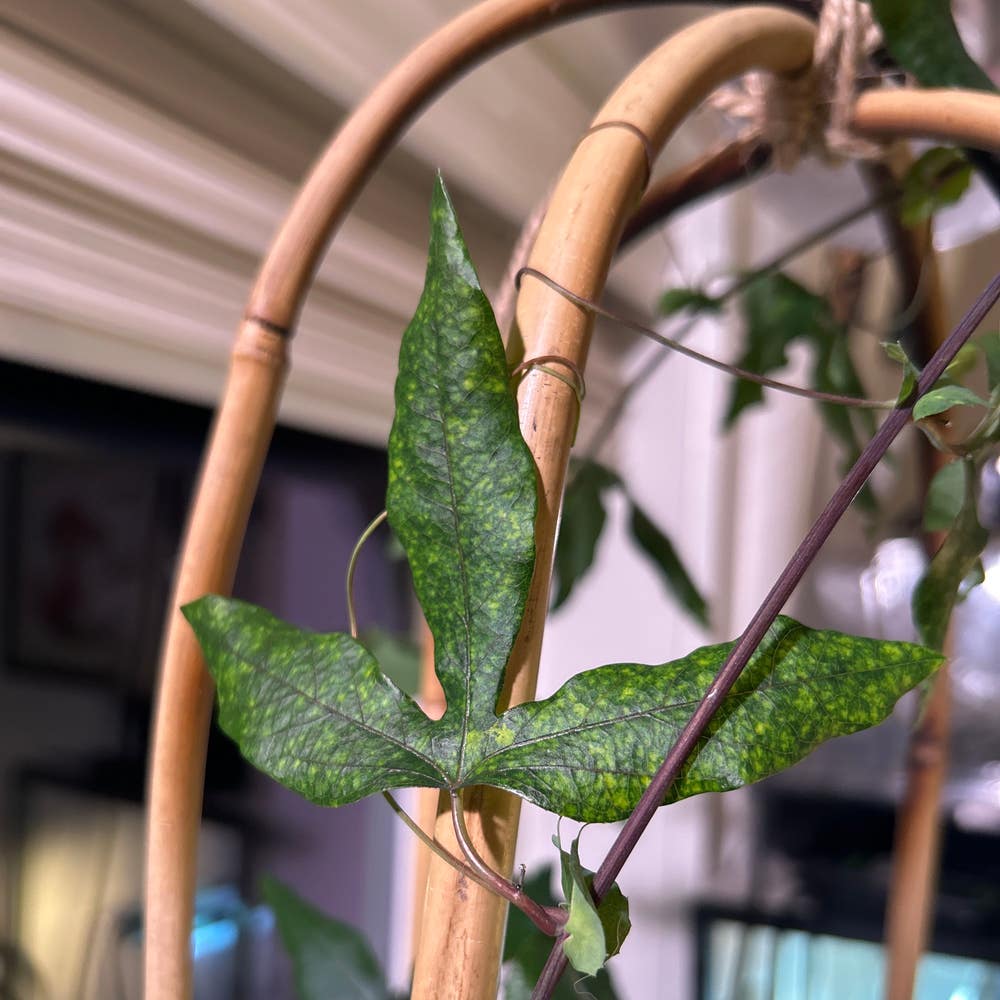
🌱 How Do I Propagate My Bluecrown Passionflower?
Passiflora caerulea
By the Greg Editorial Team
Jun 18, 2024•6 min read
This article was created with the help of AI so we can cover more plants for you. May contain errors. See one? Report it here.
- 🌱 Spring/summer best for cuttings: Choose healthy stems and use rooting hormone.
- 🌞🌱 Perfect spot is key: Full sun to partial shade, well-drained soil.
- 🛠️ Provide growth support: Use trellises or wires for climbing vines.
Snip & Root: Stem Cutting Propagation
🌱 Choosing Your Champion Stem
In the quest for vigorous growth, select a healthy Bluecrown Passionflower stem—free from pests and disease. Spring or early summer is your best bet for snipping, as plants are in their prime growing phase.
🌿 Prepping Your Cuttings
Sharp shears are a must. Cut a 4- to 6-inch length just below a node, strip the lower leaves, and consider a dip in rooting hormone—it's not Hogwarts, but it might as well be for the rooting magic it induces.
🌱 Rooting Your Cuttings
Create a cozy nook with well-draining soil and a mini greenhouse effect using a plastic bag. Patience is key; roots take time. When the cutting resists a gentle tug, it's ready to graduate to its own pot.

Layering: A Natural Approach
🌱 Ground Layering Made Simple
Ground layering is a propagation technique that capitalizes on a plant's natural tendency to root where stems touch the ground. Here's how to coax your Bluecrown Passionflower into creating new plants:
- Select a flexible stem that can easily bend to the soil without breaking.
- Make a small incision or remove a strip of bark on the stem's underside to encourage rooting.
- Bend the stem down to the ground and secure it in place with a U-shaped pin.
- Cover the wounded section with soil, leaving the tip of the stem exposed.
- Keep the area moist to promote root growth.
Roots typically form within a few months. You'll know it's time to sever the new plant from the mother when you see a robust root system.
✨ Air Layering: The Suspenseful Method
Air layering is like a magic trick for plant propagation, creating new plants out of thin air—well, almost. It's perfect for stems that are too rigid to bend to the ground. Here's the gist:
- Choose a healthy stem and remove a ring of bark to expose the inner tissue.
- Apply rooting hormone to the wound to jump-start root development.
- Wrap the area with moist sphagnum moss, then cover with clear plastic wrap to retain moisture.
- Secure everything in place with wire or twist ties.
Patience is key: roots can take 3 to 4 months to appear. Once they're visible and well-formed, cut the stem below the new roots and pot your brand-new passionflower. Keep a close eye on moisture levels throughout the process—too dry, and roots won't form; too wet, and rot might set in.

From Tiny Seeds to Lush Vines
🌱 Harvesting Seeds Like a Pro
Harvesting Bluecrown Passionflower seeds is a bit like a treasure hunt, where timing is everything. Wait for the pods to shift from green to a ripe, silvery hue. Patience is your ally here; snatch them up too early, and you'll have empty hands. When the pods are plump and give off a dry rustle, they're ready for collection. Crack them open, and you'll find the seeds snug inside, waiting to start their journey.
🌱 Germinating Your Seeds
Creating the perfect germination environment is like setting the stage for a grand performance. Soak your seeds for 24 hours to soften their tough exterior, which whispers a promise of future growth. Then, plant them in a seed-starting mix that's kept warm and moist, like a tropical embrace for your future vines. Once those tiny green shoots appear, it's time for their first big move. Transplant the seedlings when they're sturdy enough to handle the real world, or at least a bigger pot.

Aftercare: Ensuring Propagation Success
🌞 The Right Spot for Your New Plants
Finding the perfect spot for your young Bluecrown Passionflower is like setting up a new home for a pet; it needs to be just right. Full sun to partial shade is ideal, mimicking their natural tropical habitat. However, in scorching climates, a bit of afternoon shade won't hurt. The soil should be well-drained yet rich, a balance that ensures the roots are cozy but not drowning. Watering is a Goldilocks game: aim for soil that's consistently moist but never soggy. Overwatering is the fast track to root rot, while underwatering will have your plant gasping for a drink.
🌱 Growth Support
As your passionflower begins its ascent, it's going to need something to cling to. Think of it as a helping hand to reach its full potential. Trellises, fences, or wires across a wall will do the trick. Guide the young vines with a gentle touch; they're armed with tendrils ready to latch on and climb. Remember, these plants don't just grow; they can sprint upwards when happy. Pruning after flowering keeps them in check, so don't be shy with the shears. Just a snip here and there to a healthy bud will encourage more vigorous growth and prevent your garden from turning into a passionflower jungle.
Troubleshooting: Overcoming Propagation Pitfalls
🌱 Common Stem Cutting Challenges
🍄 Rot and Unsuccessful Rooting
Root rot turns your stem cuttings into mushy casualties of overenthusiastic watering. If you spot the dreaded sludge, snip above the rot and start over, this time with a lighter touch on the watering can. Callusing the cut end is a waiting game; let it air out to prevent rot. But hey, if you're feeling bold, plant immediately—just brace for the risk.
🧼 Sanitation and Care
Cleanliness isn't just for show; it's a must. Sterilize your tools to avoid giving your cuttings the plant equivalent of a cold. Watch for yellowing leaves or stunted growth—early warning signs that beg for swift action.
🌿 Layering Lapses
🌱 Ground and Air Layering Issues
Layering not going as planned? Check for root development. No roots? Perhaps you're smothering the plant with love. Ease up on the moisture and give it some breathing space. Encountering mold? That's excess moisture's autograph. Dial it back.
🛡️ Preventative Measures
Prevention is your best defense. Ensure the layering site is healthy and maintain good airflow to ward off fungal party crashers. If they gatecrash, remove the affected areas with ninja-like precision and consider a fungicide.
🌱 Seedling Struggles
🌱 Germination Woes
Seedlings giving you the cold shoulder? It's time to play Goldilocks—temperature and moisture need to be just right. Use a quality medium, sterilize your gear, and remember that good ventilation is key. Overwatering is a no-go; water from the bottom to keep things in check.
🌱 Early Growth Support
If your seedlings are more flop than pop, they might be craving more light. Bright, indirect sunlight is the sweet spot. And patience—roots need to be a few inches long before they graduate to their own pot.
Remember, propagation is part art, part science, and all patience. Keep these tips handy, and you'll navigate through the pitfalls like a pro.
⚠️ Safety First
This content is for general information and may contain errors, omissions, or outdated details. It is not medical, veterinary advice, or an endorsement of therapeutic claims.
Always consult a qualified healthcare professional before using any plant as food, medicine, or supplement.
Never eat any plant (or feed one to pets) without confirming its identity with at least two trusted sources.
If you suspect poisoning, call Poison Control (800) 222-1222, the Pet Poison Helpline (800) 213-6680, or your local emergency service immediately.
Spotted an error? Please report it here.
Turn your Bluecrown Passionflower propagation into a success story 🌟 with Greg's custom care reminders and expert community advice every step of the way!