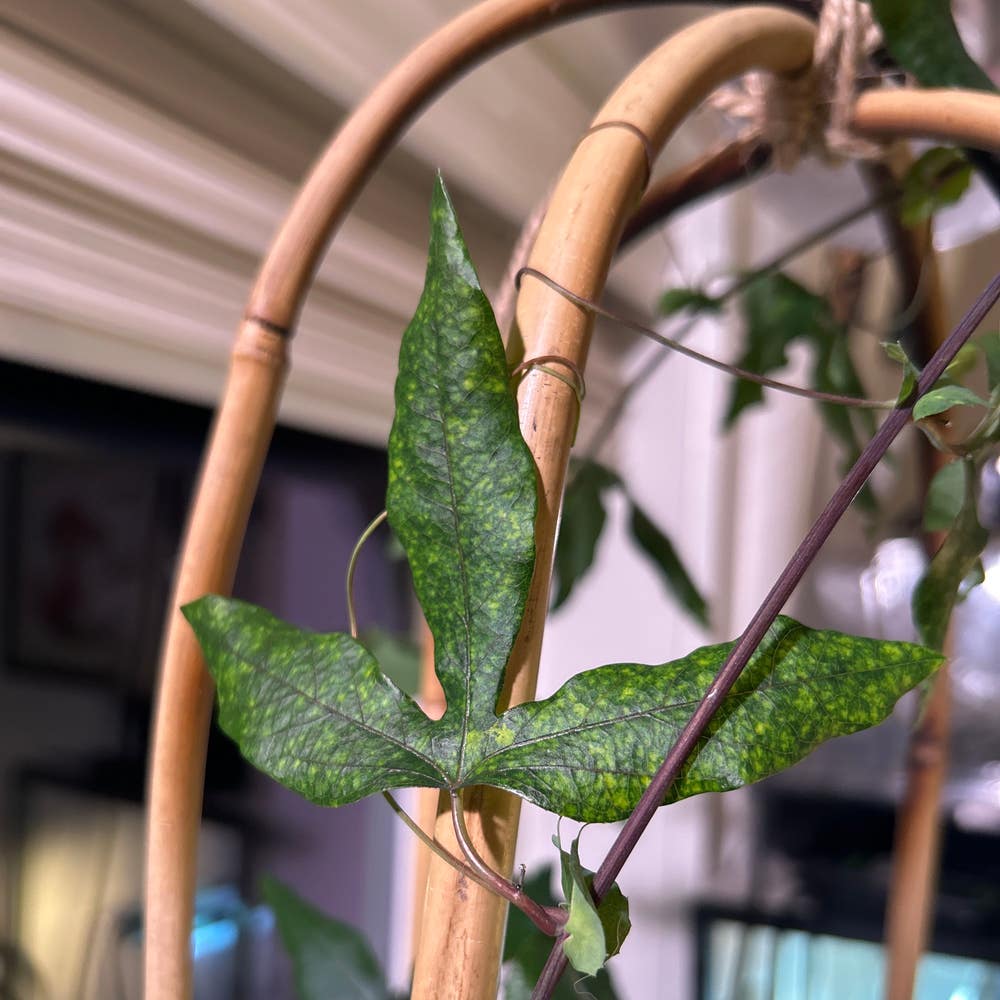
How Can You Tell If A Bluecrown Passionflower Is Dying?
Passiflora caerulea
By the Greg Editorial Team
Jun 18, 2024•4 min read
This article was created with the help of AI so we can cover more plants for you. May contain errors. See one? Report it here.
- Wilting or discolored leaves signal a distressed Bluecrown Passionflower.
- Balance watering; avoid extremes to maintain plant health.
- Protect from pests, sunburn, and cold for a thriving plant.
Spot the SOS Signals: Unhealthy Bluecrown Passionflower
🚩 Wilting, Yellowing, or Browning Leaves
Wilting leaves are the plant's white flag; they signal surrender to unfavorable conditions. Yellowing or browning indicates various distresses, from nutrient deficiencies to overwatering.
🚩 Reduced Flowering and Stunted Growth
A Bluecrown Passionflower's lack of enthusiasm for blooming is a red flag. Stunted growth and sparse flowering suggest your plant's environment is less than ideal.

Water Woes: Too Much or Too Little
💧 Over-watering and Under-watering
Navigating the watering balance for your Bluecrown Passionflower can be as crucial as the plant itself.
Spotting the Signs: From Swampy to Parched
Over-watering turns your plant's soil into a soggy mess. If leaves look more like a sad salad than vibrant greenery, it's time to ease up on the H2O. When the soil feels like it's hosting a miniature lake, you've gone too far.
Under-watering leaves your plant thirstier than a marathon runner. Dry, crumbly soil and droopy leaves are your plant's way of crying out for a drink.
The Goldilocks Zone: Finding the Watering Sweet Spot
Achieving the Goldilocks zone means keeping the soil moist, not drenched. Think of the ideal soil moisture as a wrung-out sponge—damp but not dripping.
Consistency is your best friend here. Adapt your watering to the seasons—less in winter, more in summer. And if you're forgetful, set a reminder; your plant won't tap you on the shoulder when it's thirsty.
Switching to a well-draining soil mix can be a game-changer if overwatering is a recurring theme. And for the love of greenery, ensure your pot has proper drainage.
Remember, watering is not a set-it-and-forget-it deal. It's an ongoing dialogue with your plant, so stay observant and responsive to its needs.

Light and Temperature Tango
🌞 Too Much Sun or Not Enough Warmth
Bright, indirect sunlight is the sweet spot for Bluecrown Passionflowers. Direct sun can lead to sunburn, where leaves develop bleached, crispy patches. It's a clear sign your plant is shouting for shade.
Temperature is just as critical. These tropical beauties need warmth, ideally between 60 to 85 degrees Fahrenheit. Too cold, and you'll see a Passionflower that's less passionate, more pouty.
🏜️ Sunburn and Chill: Keeping Your Passionflower Comfy
Relocate your Passionflower if it's catching too many rays. A spot with filtered light, like behind a sheer curtain, can prevent the leaves from looking like they've had a bad day at the beach.
Winter protection is a must. If you're in a cooler climate, bring your Passionflower indoors to avoid the chill. Keep it away from drafts and heat vents, which can cause as much drama as a reality TV show.
Remember, consistency is key. Sudden temperature drops at night can leave your plant feeling as groggy as you before your first coffee. Keep it stable to avoid a botanical meltdown.

Unwelcome Guests: Pests and Diseases
🐛 Pest Infestations
Aphids, spider mites, and mealybugs are the usual suspects when it comes to pest infestations in Bluecrown Passionflowers. These tiny invaders suck the life out of your plant by feasting on its sap, leaving it weakened and vulnerable.
Check the undersides of leaves and stems for any signs of these pests, such as sticky honeydew or fine webbing. If you spot them, it's time for action. Insecticidal soap or neem oil can be effective bouncers, showing these freeloaders the door. For a more natural approach, consider introducing predator mites or ladybugs to your plant's ecosystem.
🍄 Mold, Fungus, and Root Rot
Mold and fungus can be just as destructive as pests, often more sneaky in their approach. White or black spots on leaves and a musty smell can indicate a fungal problem.
Airflow is critical in preventing these issues; it's like opening the windows to clear out a stuffy room. If mold or fungus is already present, fungicides may be necessary to clean house. Root rot, on the other hand, is a sign of overwatering. Ensure your plant isn't sitting in soggy soil to avoid this silent killer.
Environmental Stress: Leaf Scorching and More
🌞 Leaf Scorching
Leaf bleaching and burn are distress signals from your Bluecrown Passionflower indicating too much sun. The pale or brown crisped tips won't bounce back, but you can prevent future damage. Ensure consistent watering and protect the plant from harsh rays to encourage new, healthy growth. Pruning the damaged areas redirects the plant's energy to the good stuff.
🌬️ Other Environmental Stresses
Drafts and heat vents are like kryptonite to your Passionflower's superpowers. Find a stable spot away from temperature swings and gusts to prevent a leafy meltdown. Regular rotation can prevent one-sided drama, ensuring every leaf gets its moment in the spotlight. Keep the air around your Passionflower as steady as a rock, and consider a humidifier to combat dryness, making your plant's environment feel like a tropical retreat.
⚠️ Safety First
This content is for general information and may contain errors, omissions, or outdated details. It is not medical, veterinary advice, or an endorsement of therapeutic claims.
Always consult a qualified healthcare professional before using any plant as food, medicine, or supplement.
Never eat any plant (or feed one to pets) without confirming its identity with at least two trusted sources.
If you suspect poisoning, call Poison Control (800) 222-1222, the Pet Poison Helpline (800) 213-6680, or your local emergency service immediately.
Spotted an error? Please report it here.
Avoid the heartache of a dying Bluecrown Passionflower by letting Greg remind you when to water and where to place your plant for the perfect environment 🌡️.