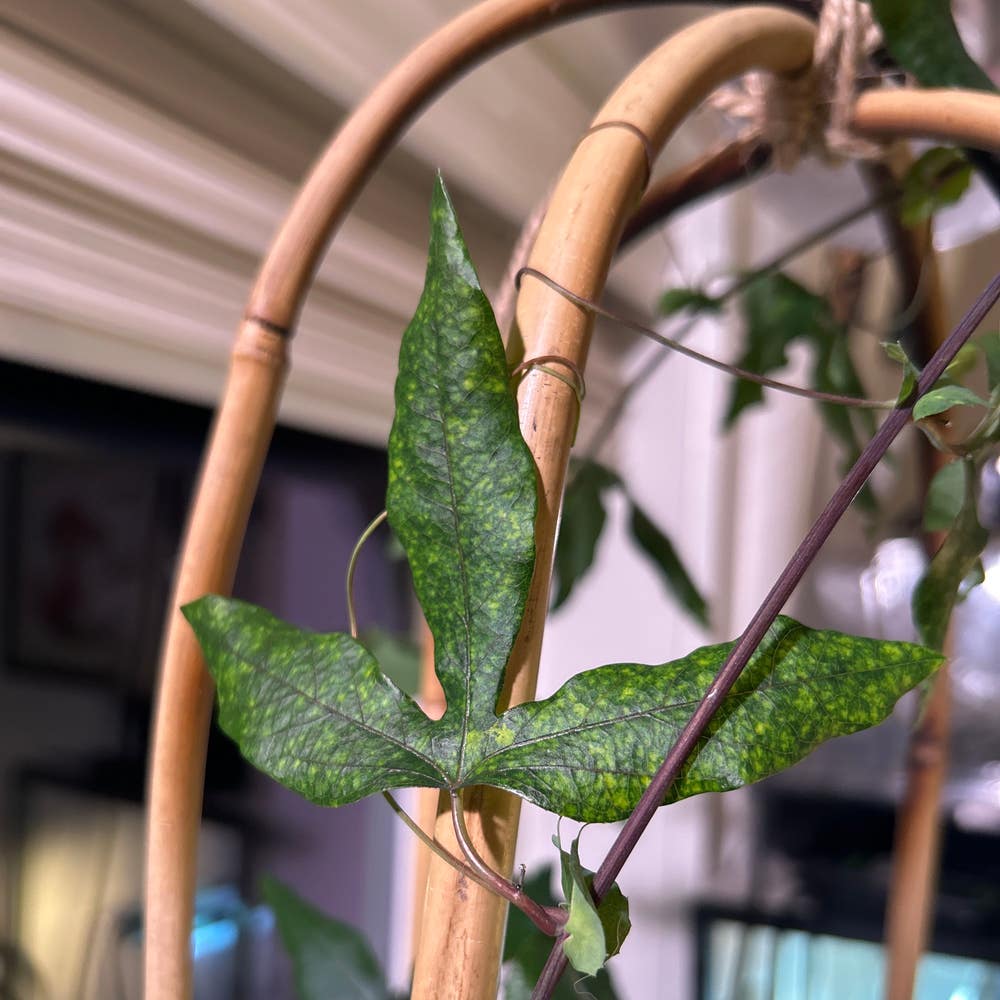
How to Know When to Repot a Bluecrown Passionflower?
Passiflora caerulea
By the Greg Editorial Team
Jun 18, 2024•4 min read
This article was created with the help of AI so we can cover more plants for you. May contain errors. See one? Report it here.
- Roots circling or exiting drainage holes? Time to repot your passionflower.
- 🌱 Spring repotting aligns with natural growth spurts for healthier plants.
- Post-repotting tip: Wait a day before watering, monitor for stress.
Spotting the Telltale Signs for Repotting
🌱 Root Check: The Tangled Tale
Roots circling the pot's interior or making a break for it through drainage holes are your plant's version of a white flag. It's a non-verbal SOS; the Bluecrown Passionflower is root-bound and gasping for space.
💧 Water Woes: Drainage Drama
If watering your plant feels like a pointless endeavor because the water rushes through like a kid on a waterslide, it's time to take action. Poor drainage can be deceptive, often mistaken for the need for more water when it's actually a cry for repotting.
🌿 Growth Gaps: When Your Plant's Size Stalls
When your Bluecrown Passionflower's growth hits a wall, it's not just being lazy. Stunted growth is a telltale sign that the current pot is a growth straitjacket. It's time to provide a new home that allows for expansion and flourishing.

Timing is Everything: When to Repot
🌸 Seasonal Smarts: Picking the Perfect Time
Spring is the season of choice for repotting your Bluecrown Passionflower. It's not just about warmer weather; it's about tapping into the plant's natural growth spurt. During spring, the plant is primed to expand its roots and burst with new foliage, making it the ideal time to give it a fresh home.
🌱 Plant's Pace: Aligning with Growth Cycles
To repot in harmony with your plant's rhythm, observe its growth cycle. Post-flowering is a golden window. The plant is recovering, eager for nutrients, and less likely to suffer from transplant shock. It's like giving it a second wind—a chance to thrive in a new pot with room to grow.

The Repotting Rundown: A Step-by-Step Guide
🌱 Gentle Extraction: Safely Uprooting Your Plant
Before you start, gather your tools: a new pot, fresh potting mix, a trowel, and scissors. Water the Bluecrown Passionflower lightly to ease extraction. Tilt the pot and support the plant's base. Gently coax the plant out, avoiding a tug-of-war with stubborn roots.
🌿 Vine Care: Handling the Climber
Bluecrown Passionflower vines can be lengthy and delicate. Support the vines as you work to prevent tangling or snapping. If necessary, prune excessively long vines with sterilized scissors, but only as a last resort. Remember, the goal is to preserve as much of the plant's structure as possible.

Picking the Perfect Pot
💨 Material Matters: Breathability and Drainage
Terracotta or clay pots breathe. They're the gym shorts of the pot world, offering air flow that keeps roots happy and soil moisture in check. Plastic pots, on the other hand, are the raincoats; great for keeping moisture in, but watch out for overwatering. Ceramic pots? They're the stylish yet functional choice, but can be heavy on the wallet.
📏 Size Up: Finding the Right Fit
Size is crucial. A pot too large is like a teenager wearing dad's suit—awkward and too roomy. Aim for a pot that gives your Bluecrown Passionflower a bit more space than its current digs, but not so much that it's drowning in soil. Always check for drainage holes; they're non-negotiable unless you fancy root rot. If you're smitten with a pot sans holes, get your DIY on—drill some or layer gravel at the bottom.
Post-Repotting Care: The First Few Weeks
💧 Watering Wisdom: Hydration After the Move
After repotting your Bluecrown Passionflower, pause before watering. Give it a day or two to let any damaged roots heal. When it's time, water thoroughly but ensure excellent drainage. This first watering is crucial for new root growth and helping your plant settle.
Settling In: Monitoring and Adjusting Care
Keep a close eye on your Passionflower as it acclimates. Direct sunlight? Not yet. It's like a vampire avoiding daylight; too much can be overwhelming. Temperature should be stable, avoiding the shock of sudden changes. No fertilizer for the first month—think of it as a dietary cleanse for your plant's roots. Observe for stress signals: droopy leaves are your plant's way of saying, "I'm not okay." Adjust care as needed, and remember, this isn't a sprint; it's a marathon to recovery.
⚠️ Safety First
This content is for general information and may contain errors, omissions, or outdated details. It is not medical, veterinary advice, or an endorsement of therapeutic claims.
Always consult a qualified healthcare professional before using any plant as food, medicine, or supplement.
Never eat any plant (or feed one to pets) without confirming its identity with at least two trusted sources.
If you suspect poisoning, call Poison Control (800) 222-1222, the Pet Poison Helpline (800) 213-6680, or your local emergency service immediately.
Spotted an error? Please report it here.
Ensure your Bluecrown Passionflower never feels cramped by using Greg to get timely repotting alerts 🌿.