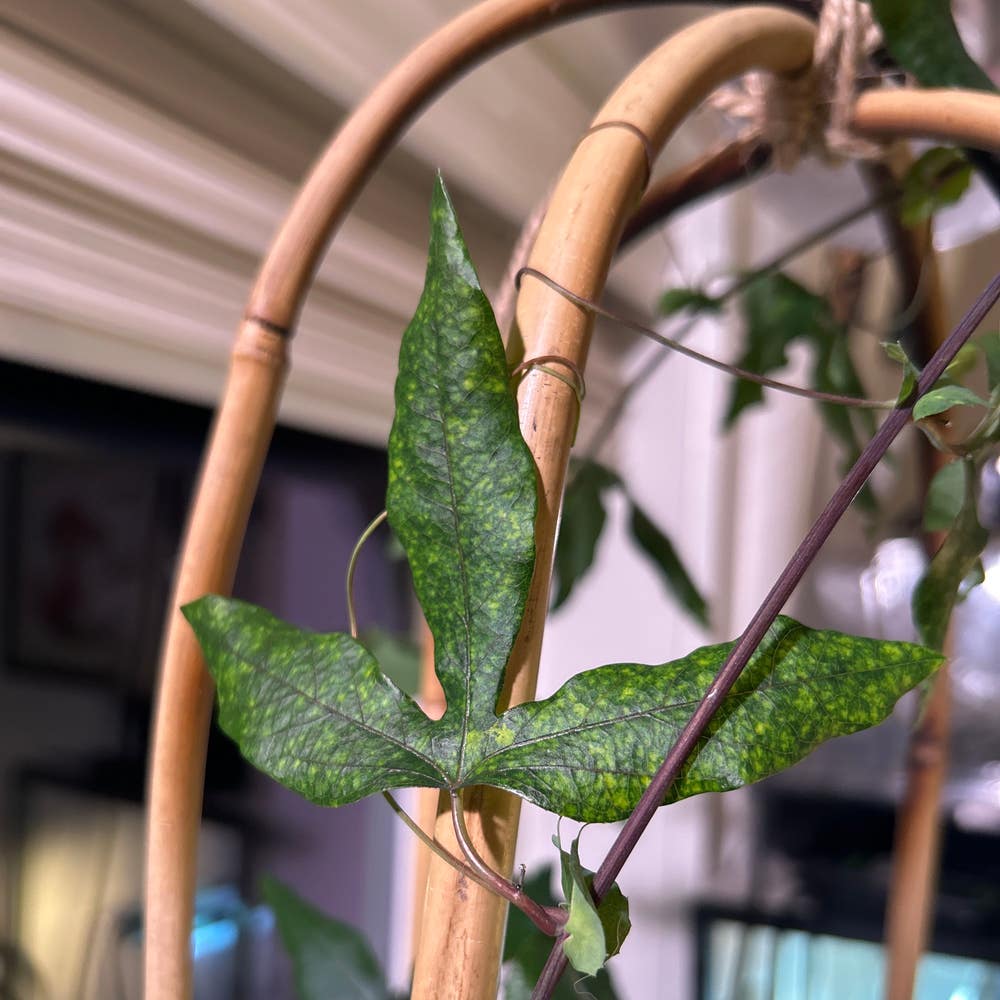
How to Fertilize Your Bluecrown Passionflower
Passiflora caerulea
By the Greg Editorial Team
Jun 18, 2024•3 min read
This article was created with the help of AI so we can cover more plants for you. May contain errors. See one? Report it here.
- 🌸 Early spring fertilization ensures vibrant Bluecrown Passionflower blooms.
- Balance N-P-K for passionflowers: lower nitrogen, higher phosphorus and potassium.
- Avoid over-fertilization: spot signs and apply correct dosage.
Timing is Everything: When to Fertilize Your Passionflower
🌷 Spring into Action: Pre-Bloom Fertilization
Spring marks the kickoff for fertilizing your Bluecrown Passionflower. As the plant shakes off dormancy, it's hungry for nutrients. Early spring is your starting line, right when the soil warms and new growth appears. This early boost sets the stage for vibrant blooms and, for fruiting varieties, a bountiful harvest.
☀️ Summer Lovin': Maintaining Nutrient Levels
As summer heats up, so does your passionflower's appetite. Adjust your fertilizing routine to maintain peak nutrient levels during this prime growing season. Look for cues like slow growth or fewer blooms—your plant's way of nudging you for another feed. Keep the nutrients coming every 4 to 6 weeks until fall, but watch for signs of overindulgence like excessive foliage or fruit drop.

Choosing the Right Food for Your Flower
💡 Breaking Down the N-P-K Ratio
Nitrogen (N), phosphorus (P), and potassium (K) are the holy trinity in fertilizer lingo. For Bluecrown Passionflowers, you want to dial down on nitrogen and turn up phosphorus and potassium. Why? Because nitrogen is the leafy green machine, while the other two are the bloom-boosting bad boys.
Selecting the right N-P-K balance is like crafting a bespoke suit; it should fit your plant's blooming needs perfectly. Aim for a lower N and higher P-K ratio, like a 2-3-1, to get those flowers popping.
💡 Liquid vs. Granular: Pros and Cons
Liquid fertilizers hit your plants like an espresso shot—fast and furious. They're great for a quick nutrient boost but expect to be on a refill run soon. Granular fertilizers, on the other hand, are the slow burners. They release nutrients over time, like a time-release capsule of plant goodness.
Your gardening style dictates your pick here. If you're a set-it-and-forget-it type, granular might be your jam. But if you're all about that hands-on life, liquid's your game. Just remember, overdoing it is a no-go. Stick to the script—aka the instructions on the package.

Feeding Your Passionflower Without Overdoing It
🚨 Spotting the Signs of Overindulgence
Over-fertilization is like a silent plant killer; it creeps up unnoticed until the damage is done. Keep your eyes peeled for warning signs: a sudden drop in fruit, an overabundance of leaves with no flowers, or roots that look burned. These are your passionflower's cry for help, signaling that it's time to ease up on the nutrient love.
🍹 The Art of Dosage
Getting the right amount of fertilizer is a bit like making the perfect cocktail—it's all about the measurements. Use a general-purpose fertilizer and follow the instructions to a T. Remember, your passionflower's roots are as delicate as fine lace; too strong a mix can cause more harm than good. Water thoroughly after applying to prevent any build-up of those pesky salts.

Fertilizer Application Techniques
💧 The Perfect Pour: Liquid Fertilizer Application
Mixing liquid fertilizer requires precision. Start with a half-strength solution to prevent fertilizer burn. Apply this diluted mixture directly to moist soil, which helps with even nutrient distribution and safeguards against root burn. Always ensure the soil is not dry before application to avoid a "plant salt overdose."
🌾 Going Granular: Even Distribution Matters
Granular fertilizers are the slow-release option, providing a steady supply of nutrients. When applying, sprinkle evenly around the plant's base, over the root zone, but not directly against the roots or stems. Water thoroughly post-application to activate the nutrient release and prevent potential salt buildup. Regular watering also helps avoid the leaching of nutrients that can occur with granular fertilizers.
⚠️ Safety First
This content is for general information and may contain errors, omissions, or outdated details. It is not medical, veterinary advice, or an endorsement of therapeutic claims.
Always consult a qualified healthcare professional before using any plant as food, medicine, or supplement.
Never eat any plant (or feed one to pets) without confirming its identity with at least two trusted sources.
If you suspect poisoning, call Poison Control (800) 222-1222, the Pet Poison Helpline (800) 213-6680, or your local emergency service immediately.
Spotted an error? Please report it here.
Nurture a flourishing passionflower 🌸 with Greg's tailored fertilizing schedule alerts, ensuring your plant gets just the right nutrients without the guesswork.